NEW DELHI: Pakistan appears to be undergoing one of the most severe talent exoduses in its history, with thousands of highly trained professionals leaving the country over the past two years amid deepening economic distress, political instability and governance failures. A recent government report has revealed that the country has lost around 5,000 doctors, 11,000 engineers and nearly 13,000 accountants in just 24 months, underscoring the scale of the crisis facing the nation’s human capital.
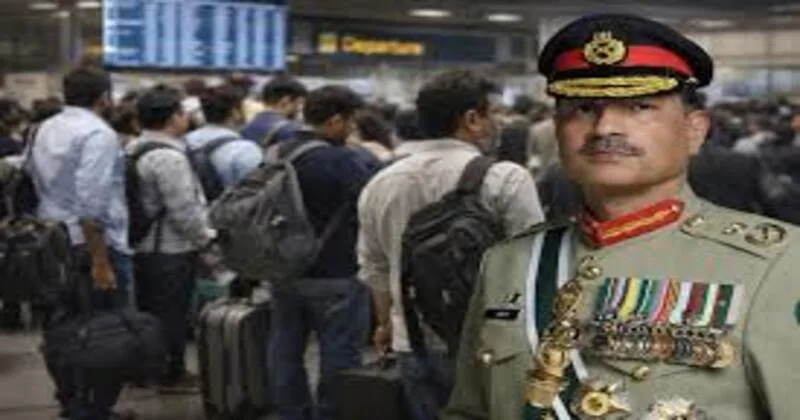
The findings have triggered widespread criticism and ridicule within Pakistan, particularly directed at the country’s powerful army chief, Asim Munir, who had earlier attempted to frame the mass migration of professionals in positive terms. Munir had publicly dismissed concerns over “brain drain,” instead characterising overseas migration as a form of “brain gain.” The stark data now emerging, however, has sharply undercut that narrative. The report and its implications were highlighted by former Pakistani senator Mustafa Nawaz Khokhar, who drew attention to the broader economic and political consequences of the exodus. He pointed out that Pakistan, despite being the world’s fourth-largest freelancing hub, has suffered massive losses due to prolonged internet shutdowns, estimated at $1.62 billion. These disruptions, he noted, have placed nearly 2.37 million freelancing jobs at risk, compounding the damage caused by the outflow of skilled professionals.
Official data released by the Bureau of Emigration and Overseas Employment paints a grim picture of accelerating emigration. In 2024 alone, 727,381 Pakistanis registered for overseas employment. In 2025, up to November, another 687,246 individuals have already registered, indicating that the trend shows little sign of slowing. What is particularly alarming is that this migration is no longer confined to low-wage labourers seeking work in the Gulf or individuals attempting to leave the country through illegal means. Increasingly, it is Pakistan’s educated middle class and professional workforce that is exiting. The healthcare sector has been among the worst affected. Between 2011 and 2024, nurse migration increased by an extraordinary 2,144 per cent, according to figures reported by the Express Tribune. This trend has continued into the current year, raising serious concerns about the sustainability of Pakistan’s already strained healthcare system. The departure of doctors and nurses has intensified shortages in hospitals and clinics, particularly in rural and underdeveloped regions.
The growing outflow of white-collar professionals has prompted the government, led by Prime Minister Shehbaz Sharif, to impose stricter controls at airports. In 2025, as many as 66,154 passengers were offloaded from Pakistani airports, nearly double the figure recorded the previous year. Authorities have cited concerns over illegal migration, smuggling networks and organised begging rackets as reasons for the clampdown. At the same time, tens of thousands of Pakistani nationals have been deported from Gulf countries and elsewhere for illegal migration and begging-related offences.
In response, Interior Minister Mohsin Naqvi announced a ban on “professional beggars” and travellers carrying incomplete documentation from leaving the country. The move was presented as part of a broader effort to curb illegal migration and protect Pakistan’s international image.
Despite these measures, the latest emigration figures showing the departure of doctors, engineers and other skilled professionals have fuelled a wave of online criticism and sarcasm. Much of the commentary has focused on remarks Asim Munir made in August during an interaction with expatriate Pakistanis in the United States, in which he argued that overseas migration should be viewed as a strategic advantage rather than a loss.
Social media reactions have increasingly questioned this assertion, with critics highlighting the widening gap between official rhetoric and lived reality. Many have argued that educated and skilled individuals are leaving not for opportunity alone, but to escape a system marked by economic uncertainty, political repression and weak rule of law. Concerns over enforced disappearances, curbs on dissent and the shrinking space for free expression have been cited as key factors driving professionals away.
As Pakistan continues to lose its trained workforce, analysts warn that the consequences will extend far beyond immediate labour shortages. The growing disconnect between official claims and on-the-ground realities is deepening public cynicism, while the sustained outflow of talent threatens long-term economic recovery and institutional capacity. What is becoming increasingly clear is that Pakistan is facing not only a widening skills gap, but also a widening credibility gap between its leadership’s assertions and the country’s unfolding reality.