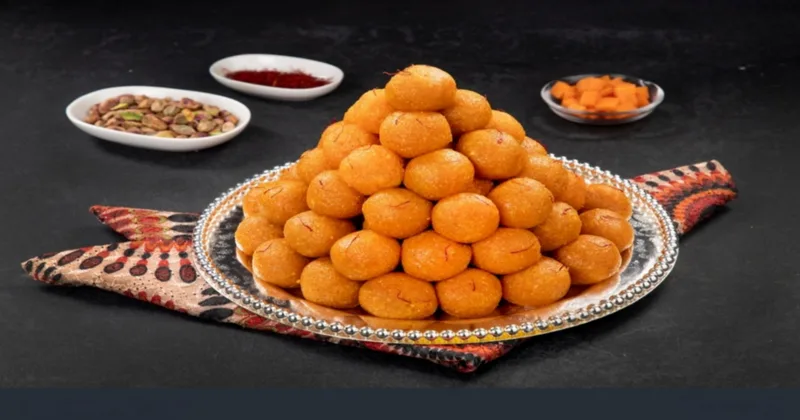
In contemporary nutrition debates, sugar is treated as a villain. Ultra-processed sweets, refined sugars and artificial sweeteners are responsible for India’s growing burden of diabetes and metabolic disorders. But Indian culinary traditions present a more subtle approach, one that does not reject sweetness outright, but consciously designs it. The humble laddu dismissed today as a festive sweet, offers a powerful illustration of how Bharatiya food systems reflect the understanding of metabolism and balance, long before modern biochemistry formalised these concepts.
From Ayurvedic clinics to kitchens
The laddu’s origins lie not in celebration alone but in classical medicine also. The term ladduka appears in Sanskrit texts and in the Sushruta Samhita, which is dated roughly to the 3rd–4th century CE manuscripts, it mentions small spherical preparations of jaggery, sesame and herbs used to make medicines and aid recovery after surgical procedures. These were functional foods designed to restore strength, prevent infection and ensure nutrient absorption rather than to merely satisfy taste
Over a century this medicinal format migrated from the vaidya’s dispensary to ritual and mandir spaces. Mandir records from Tirumala mention sweet preparations resembling laddus, while later inscriptions confirm their role as prasada, implementing the idea that food was a source of nourishment, medicine and sacred offering. The mention of sweet balls made of flour and ghee that are consumed during yajñas in the Rigvedic texts, establishes that nutritional logic was incorporated into rituals in ancient Indian society.
Designed food, not a sugar bomb
Question has to be asked in what way does the traditional laddu differ from other sweets in its incorporation of sugar? also what is contextually of sugar in traditional laddu function? In fact, a laddu can be termed as a food matrix composed of carefully chosen ingredients like besan or moong dal, whole grains like wheat or rava, sugar and nuts and seeds. Each food component in a laddu serves a definite function in the context of physiology.
Pulses provide protein and fibers, which regulate digestion and delay glucose intake. Whole grains contribute to complex carbohydrates and are responsible for slow energizing. Nuts and seeds contain healthy nutrients such as fats, as well as bio-active ingredients. Ghee a carrier of healthy nutrients, acts as an energy Boosting agent, which helps to convert sweetness into nourishment instead of a body shock to the metabolism.
Today this would be considered a low-glycemic index, high-satiety formula, not by any laboratory engineering, but by folk knowledge borrowed from the culinary tradition over the centuries.
Clove in the Laddu: Ancient metabolic wisdom
Among the most fascinating demonstrations of the above stated empirical knowledge is the seemingly insignificant detail of the clove being embedded in traditional laddus. The embedding of the clove has been explained as a method for its preservation. Several document highlights how this choice had deep metabolic implications.
Ayurvedic physicians like Charaka and Sushruta recognised that excessive sweetness could aggravate kapha and lead to metabolic imbalance, a condition that closely mirrors modern understandings of insulin resistance. Instead of banning sugar, they paired it with specific spices. Modern studies have shown that Clove contains compounds such as ellagitannins that inhibit the enzyme alpha-glucosidase, which is responsible for breaking down sucrose into absorbable glucose units.
Laboratory research published in Bioscience, Biotechnology and Biochemistry first isolated these compounds in 2000 and subsequent human trials in 2019 demonstrated that clove extract could significantly reduce post-meal blood glucose spikes, working in a manner comparable to the anti-diabetic drug acarbose through natural means
The traditional laddu was designed as a “time-release” sugar delivery system, slowing glucose absorption and reducing metabolic stress. This was not superstition, it was observational science embedded in cuisine.
Traditional sweeteners vs Modern sugar systems
The differences regarding sweeting in ancient and new sweeting processes are quite interesting. The old-fashioned laddus were sweetened either by cane sugar or jaggery. Both these sweeteners are sucrose that requires the action of an enzyme to make it possible to absorb. The purpose of this was that the other components that accompanied the sweeting could then regulate the rate of metabolism. This is not the case when new ultra-refined foods are consumed, these have a large amount of sugar and also fructose syrups. Glucose and fructose are both present in them and are separated.
There are epidemiological studies that associate ultra-processed sugar consumption with obesity, fatty liver disease and diabetes type 2. Artificial sweeteners are not harmful in that they contain calories. On this merit, the laddu appears not as an adversary of health but rather a gesture of portion-controlled sweetness.
Food as pharmacology: The bharatiya perspective
The most important takeaway, is to be found in the worldview implicit in the laddu. “No cuisine in India has ever regarded food as fuel. Each diet consisted in a biochemical process, which required balance and intelligence”. In Western cuisines this balancing act is still done today. If a person wanted to eat comfort foods, Laddu holds a great significance. Bhartiya Parampara of food focuses on integrative nutrition science that considers food matrices, food composition and eating patterns over nutrients. Large-scale studies on nuts, pulses and traditional fats increasingly validate what Indian kitchens practised instinctively, that health outcomes depend not just on “what” is eaten, but on “how” ingredients interact.
For a society fighting with rising lifestyle diseases, the answer may not lie solely in pharmaceutical innovation or imported dietary fats. It may also lie in re-examining of indigenous food systems with intellectual honesty. The laddu does not argue for indiscriminate sugar consumption but it argues for its moderation with ultra refined form, context and design.
In choosing a traditionally prepared laddu over an industrial dessert or artificially sweetened snack, it will be nostalgia. Individual will be aligning with a food philosophy that integrates taste, health and cultural continuity. Thus, the laddu is not just a sweet, it is a quiet assertion of Bharatiya civilisational intelligence, which reminds us that long before calorie charts and glucose monitors, Indians had already learned how to eat sugar without letting sugar to eat them.