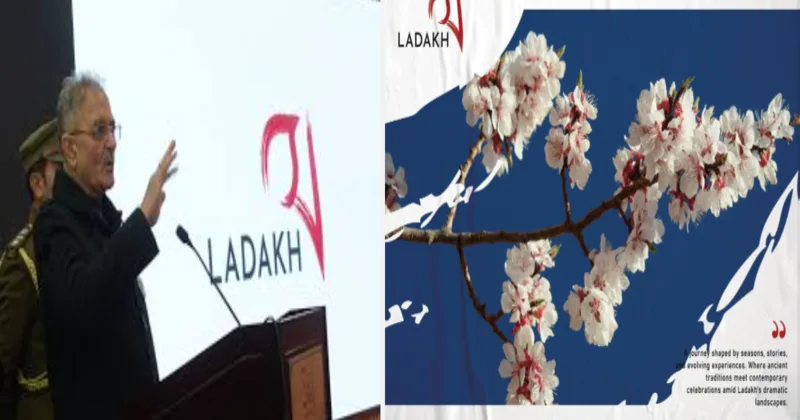
LADAKH: To boost tourist footfalls to the Union Territory (UT) of Ladakh, a ‘Celebrate Ladakh’ Tourism Calendar, aimed at strengthening cultural branding and promoting year-round tourism, has been prepared by the Tourism Department. This calendar is based on nine major UT-level festivals aimed at creating a strong, structured, and globally recognisable tourism identity for Ladakh, Lieutenant Governor Kavinder Gupta said.
Tourism Secretary Sanjit Rodrigues stated in Leh on Thursday that Ladakh currently celebrates 70 festivals across the districts and different seasons, but this many festivals cannot be branded properly. To address this, the Department of Tourism has identified nine high-impact festivals to be designated as UT-Level Festivals, with fixed locations and dates for the next three years. These nine high-impact festivals have been selected based on their cultural significance, tourism potential, geographic reach, and economic impact, and aligned with national and international tourism calendars.
The nine UT-Level Festivals include the Apricot Blossom Festival, Ladakh Astro Week, Changthang Nomadic Festival, Suru Summer Festival, Zanskar Festival, Ladakh Festival, Himalayan Film Festival, Ladakh Bike Week, and Ethnic Food Festival. Director of Tourism, Tsering Paldan, stated that this initiative will enable tour operators, travel platforms, media partners, and airlines to promote Ladakh more effectively as a year-round tourism destination through predictable, well-publicised events. He further informed that two flagship festivals — the Ladakh Festival in Leh and the Suru Summer Festival in Kargil- have been proposed for national-level promotion under the Ministry of Tourism’s Two Festivals per State promotion scheme, with partial Central government support to maximise visibility and tourist inflow.
“While these nine festivals will receive priority branding, marketing support, and coordinated resource allocation, all other local and regional, numbering approximately 70, will continue to be celebrated in accordance with community traditions and district-level planning,” he added. Festivals such as the Zanskar Festival, Changthang Nomadic Festival, and Himalayan Film Festival will be organised in close coordination with the Departments of Culture and Information, ensuring unified branding under the “Ladakh Tourism” identity while respecting departmental mandates.
The declaration of fixed festival dates for the next three years is expected to significantly enhance interdepartmental coordination, enable timely promotional campaigns, and eliminate challenges arising from ad hoc or last-minute scheduling. By prioritising these UT-Level Festivals, the UT Administration aims to strengthen Ladakh’s cultural appeal, attract domestic and international tourists, and generate sustained economic opportunities for local communities, LG Kavinder Gupta stressed.
Through the launch of the ‘Celebrate Ladakh’ Calendar and the structured festival framework, Ladakh has taken a decisive step towards harmonising its rich cultural traditions with strategic tourism promotion, reinforcing its position as a premier destination for culture, adventure, gastronomy, and sustainable tourism.
To strengthen tourist safety and advance Ladakh’s adventure tourism ecosystem, a streamlined process for procuring satellite phones has been implemented.
Ladakh, globally recognised for its vast remote landscapes, high-altitude adventure tourism, mountaineering expeditions, and off-grid travel experiences, has long faced communication challenges in areas with limited or no mobile connectivity. The operationalisation of satellite phone services for tourism is a significant step towards addressing these challenges, benefiting tourists, tour operators, and emergency response agencies alike, LG Kavinder Gupta
The Ministry of Defence, Government of India, has permitted the use of satellite phones for tourism purposes by tour operators in Ladakh, acknowledging the region’s unique geographical and operational realities.
Earlier, the Department of Tourism undertook sustained coordination and consultations with BSNL to develop a clear, secure, and practical mechanism for procuring satellite phones. With the issuance of this SOP, tour operators can now directly approach BSNL, Leh, and procure satellite phones through an approved, transparent, and streamlined process.
This landmark development represents a first-of-its-kind initiative for Ladakh’s tourism industry, significantly enhancing preparedness, safety standards, and operational confidence for tourism activities in remote regions. The availability of satellite phones is expected to greatly improve emergency communication, strengthen rescue coordination, and reinforce Ladakh’s position as a responsible, safe, and globally competitive adventure tourism destination.