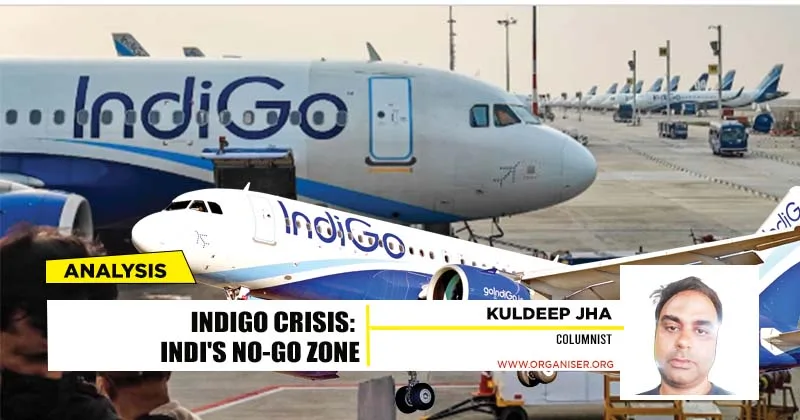
The profiteering impulse of corporate capitalism and the interventionist reflex of the Socialist regulatory mindset have together engineered the perfect storm in Bharatiya aviation. It is against this backdrop that the meltdown at IndiGo in late 2025 must be understood.
In the aftermath of Bharat’s worst aviation disruption in recent memory, a startling allegation has emerged from within the cockpit community. According to a former IndiGo captain, who wants to keep his identify under wraps, the massive disruption of November–December 2025 was not merely the consequence of mismanagement, technological failure or regulatory oversight gaps. He alleges it was a crisis that was ‘wilfully allowed to spiral’ to force a rollback of the newly implemented Flight Duty Time Limitations (FDTL) regime. The crisis uncannily coincided with Russian President Vladimir Putin’s state visit to Bharat.
“IndiGo knew exactly where the system was headed,” he says. “They knew they didn’t have the pilots for the new FDTL norms. They knew SmartLynx was collapsing. And they still pushed an impossible winter schedule. The only explanation is that the chaos suited them.”His accusation centres on a series of interconnected failures that now appear far less accidental than they did in the early days of the collapse. The first shock hit on October 24, when SmartLynx—IndiGo’s wet-lease partner operating 11 aircraft—filed for bankruptcy protection. Those 11 A320s flew nearly 150 daily flights, and their loss instantly destabilised IndiGo’s capacity planning. Yet instead of trimming schedules, the airline proceeded with a winter timetable that was 900 flights per week heavier than the summer season.
Pilots repeatedly flagged that rosters were “fractured,” “unrealistic,” and incompatible with the new FDTL regulations, which mandated more rest and better fatigue management.Despite having had two years to prepare for these rules, IndiGo’s aircraft-to-pilot ratio remained one of the lowest in the industry.
According to insiders, the new FDTL regime would significantly strain the airline’s balance sheet unless staffing was increased—something the airline was reluctant to do. As November progressed, cancellations mounted—over 1,200 by month’s end. Then, in early December, IndiGo’s operations backbone, the Hands On Throttle And Stick (HOTAS) system, collapsed outright. Communication between the operations control centre, crew tracking, logistics, and airport teams broke down simultaneously.
The airline could not locate many of its own pilots. Some were stranded in hotels, others stuck in transit, others waiting helplessly in crew rooms unable to receive duties. Several were forced to pay out-of-pocket for layover hotels and transportation, something unheard of at IndiGo.
Timeline of Turbulence
- January 2024: FDTL (Flight Duty Time Limitations) caps pilot duty at 10-11 hours daily (down from 13 with extensions), mandates 48-hour weekly rest (up from 36), freezes rosters 15 days early, and demands quarterly fatigue reports. These rules became mandatory
- June 1, 2024: Original deadline given to airlines to comply with new duty/rest norms
November 1, 2025: DGCA’s Phase-II FDTL rules (night-duty caps, longer weekly rest) come into force
The second phase of the DGCA’s FDTL, which extended the definition of “night”, capped consecutive night duties, cut permitted night landings (from six to two) and raised weekly rest to 48 hours — took effect on November 1, 2025. This change began straining airlines that run night-heavy schedules. This impacted IndiGo’s flight operations - November 17, 2025: PIL in the Supreme Court on dynamic airfares
A public interest petition challenging algorithm-based dynamic pricing (and
seeking restoration of a 25 kg free checked baggage allowance) was flagged in the Supreme Court; the bench issued notices to the Centre, DGCA and other participants - December 2025: IndiGo operations severely disrupted Following the Phase-II FDTL rollout, IndiGo experienced massive cancellations (over 1,000 cancellations reported, stranding passengers. IndiGo asked DGCA for operational relief
- December 5, 2025: DGCA grants a one-time temporary exemption to IndiGo
To stabilise flights, DGCA issued a temporary, one-time exemption for IndiGo’s A320 operations: - Redefinition of “night” for IndiGo (midnight–5:00 am instead of midnight–6:00 am) and allowing up to six-night landings for the carrier
- Withdrawal (temporarily) of the strict 48-hour weekly rest clause industry-wide to avoid cascading disruptions
The exemption was reported as being in place till Feb 10, 2026, with fortnightly DGCA reviews and mandatory biweekly reports and a 30-day roadmap from IndiGo - December 6, 2025: Pilots’ unions and rival airlines protets
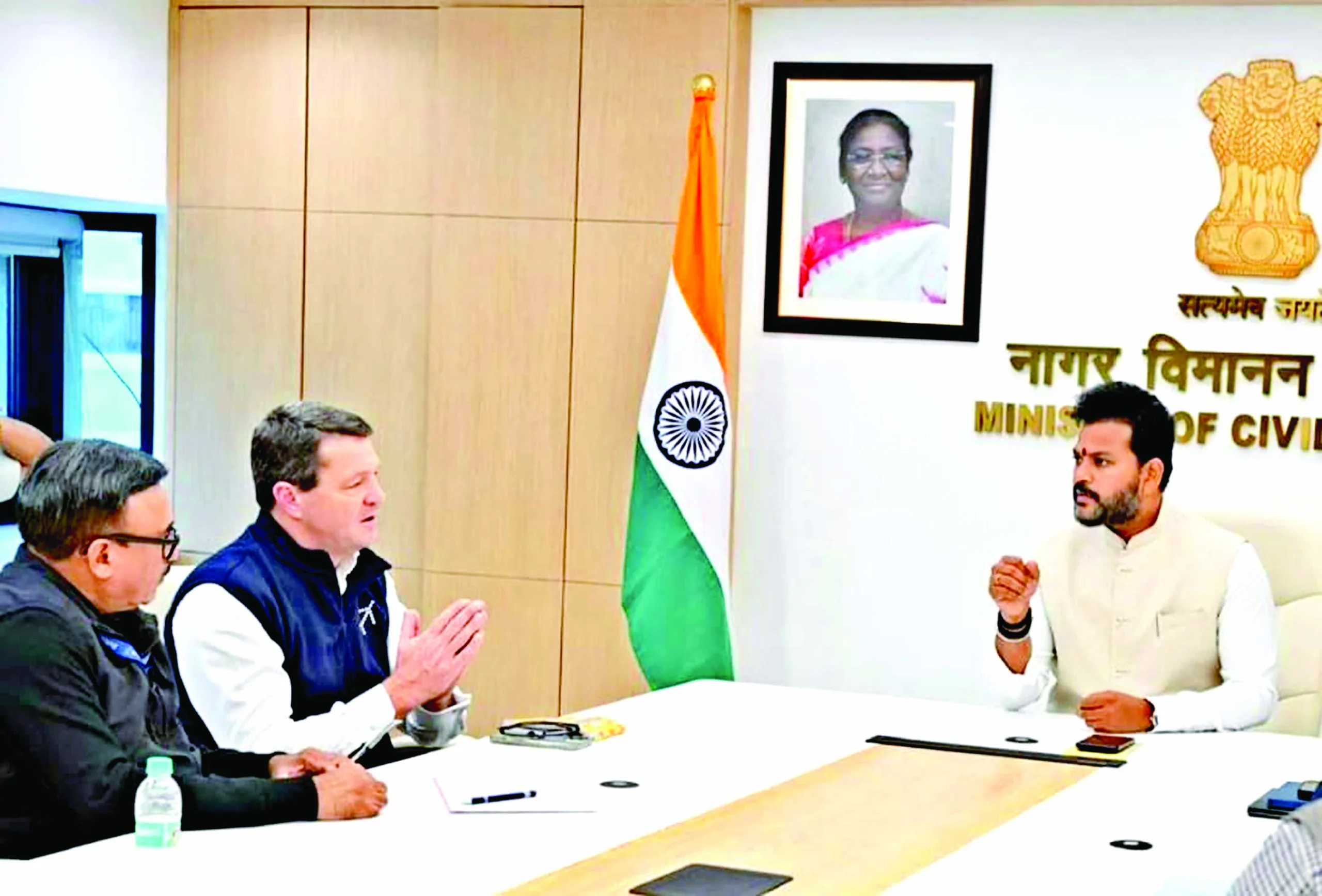
Pilot associations and rival airlines condemned the selective exemption, alleging unfair regulatory favouritism and raising safety/fatigue concerns. DGCA imposed strict monitoring — fortnightly reviews, biweekly crew-utilisation reports, and a 30-day compliance roadmap from IndiGo — and the Ministry of Civil Aviation set up inquiries/reviews - December 9, 2025: IndiGo begins operations with reductions in flight IndiGo cut down its operations by 10 per cent, the Government has decided in view of the massive crisis sparked by its 2000-plus flight cancellations. The government crackdown came despite IndiGo’s assertions that its operations are now running smoothly
Passengers, meanwhile, received almost no information. Between December 1 and 5, the airline issued no clear warnings regarding cancellations, delays, crew shortages or the internal systems breakdown. The result was swelling, distressed crowds at airports across the country. People slept on terminal floors, queued in futile lines at non-functional counters, and refreshed dead apps in desperation. The ex-captain argues that this communication blackout was not merely a failure—it was an escalation tactic.
“They let the chaos build,” he alleges. “They knew the media would beam these visuals non-stop, especially during a high-profile diplomatic week. The timing was perfect for maximum pressure.”
No Contingency Protocol
As delays cascaded into cancellations and key operations teams lost all functional control, the entire aviation grid began to suffocate. Airside coaches were not deployed even for flights with full crew present. Ground operations stalled. Crew logistics broke down. Pilots could not be reached because the airline had no backup to the 6 Exkai digital systems. Some departments, insiders say, were critically understaffed at the worst possible moment.
The absence of immediate national support deepened the crisis. Despite the collapse of a carrier that operates nearly 65 per cent of Bharat’s domestic flights, neither Air India’s widebody fleet nor Indian Air Force transport aircraft nor augmented rail or State Road Transport systems were mobilised to rescue stranded passengers. For many aviation professionals, this exposed a glaring absence of contingency protocols in a country disproportionately dependent on a single airline.
The new rules were unambiguous: pilots would require 48 consecutive hours of rest, the definition of night duty would extend to 6:00 AM, no pilot could perform more than two-night landings or more than two consecutive night duties, and quarterly fatigue data would mandate roster adjustments. All of this was known to IndiGo. All of it was predictable. Yet, the airline ramped up schedules instead of building staffing buffers. Compounding concerns over regulatory capture is IndiGo’s hiring of a retired senior civil aviation secretary several years ago. Even during the meltdown, IndiGo appeared confident he would deliver—and he did. Within days, the airline secured yet another exemption from the FDTL norms, valid until February, effectively undoing the very fatigue protections introduced for pilot and passenger safety.
Need for Accountability & Reform
The ex-captain believes the entire sequence—SmartLynx collapse, inflated winter schedules, insufficient pilot staffing, broken communication systems, a total HOTAS failure, and a prolonged blackout toward passengers—must be investigated not as isolated missteps, but as a connected chain of events that may reveal intentional brinkmanship.
He is calling for sweeping accountability beginning with IndiGo’s top management. Those responsible for scheduling decisions, pilot forecasting errors, operational planning, crisis response, and passenger communication should, he says, be immediately removed. He argues that only a criminal investigation can uncover whether the collapse was wilfully engineered. He demands FIRs, a CBI-led probe, and arrests if evidence of conspiracy, fraud or deliberate dereliction emerges.
Passengers, he insists, must not be forgotten. He supports a Government-mandated, EU-style compensation regime offering reimbursement for delays, cancellations, food, lodging, rebooking, missed connections, and all out-of-pocket expenses. “If passengers were used as leverage, even indirectly, there must be restitution,” he says.
He also urges the Competition Commission of India to investigate IndiGo’s 68 per cent market share and assess the risks of duopolistic dominance. In a system where one airline holds the nation’s aviation network in its grasp, any single failure becomes a national disaster.
Central to his recommendations is the creation of a National Aviation Contingency Framework—a legally binding protocol governing roles for airlines, regulators, airports, and government bodies during major disruptions.
He argues that Air India, the IAF, Indian Railways, and state transport fleets should automatically be deployed during such collapses, rather than left idle.
Finally, he calls for a PMO-supervised, impartial investigation into the entire episode—from IndiGo’s internal decisions and DGCA’s approvals to any evidence of collusion or concealment. “Aviation safety is not political. It is national integrity,” he says. To him, the IndiGo meltdown was not a lightning strike. It was a convergence of structural weaknesses, operational mis-judgements, inadequate staffing, technological fragility, regulatory lapses, and—possibly—deliberate escalation.
Only transparent investigation, structural correction, and uncompromising safety standards can ensure that such a collapse never again happened in the country.