





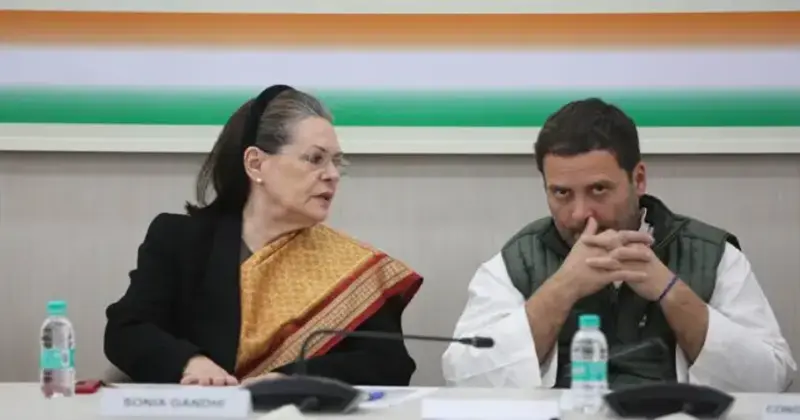
The Special Intensive Revision has become a red rag to a bull for the opposition. Their exaggerated outrage only reinforces the suspicion that electoral scrutiny unsettles those most accustomed to exploiting loopholes. The Leader of the Opposition, Rahul Gandhi, spoke at length in Parliament about “vote chori”—a charge in which his party appears, prima facie, to possess considerable expertise. His remarks revealed an unmistakable anxiety over the Special Intensive Revision, an exercise that seeks transparency and credibility in the electoral process.
What Mr. Gandhi conveniently overlooked is his party’s own legacy of undermining democracy. It was the Congress that imposed the emergency, throttling civil liberties under the regime of the self-proclaimed Prime Minister, Indira Gandhi. During that dark phase, President Zail Singh was reduced to a rubber stamp, opposition leaders were jailed en masse and constitutional norms were brazenly subverted.
Following Indira Gandhi’s assassination, thousands of Sikhs were brutally killed in what remains one of independent India’s gravest moral failures. Her assassination itself was a tragic consequence of Operation Blue Star—an ill-advised military action carried out at the Golden Temple complex in Amritsar. Instead of healing wounds, the operation united Sikhs across the world in fury and grief. The insensitivity of the Congress leadership was later epitomised by Rajiv Gandhi’s infamous remark: “When a big tree falls, the earth shakes a little”.
Rajiv Gandhi’s tenure too was marked by critical errors. His decision to send Indian troops to Sri Lanka embroiled the country in a foreign conflict, leading to the killing of Sri Lankans amidst the struggle against Tamil militants. This misadventure ultimately ended in his tragic assassination by the very militants the intervention sought to neutralise.
Thereafter, the Congress attempted to install his Italian-born widow as Prime Minister—an ambition rightly resisted by democratic opposition parties. What emerged clearly was not a commitment to national interest, but an obsessive attachment to the perpetuation of the Nehru–Gandhi dynasty.
Over the years, appeasement politics, dishonest practices and scam after scam came to define the Congress brand of governance. Perhaps the most damaging episode was the premeditated partition of the country, widely perceived as a political arrangement that enabled Pandit Nehru to become independent India’s first Prime Minister, while sidelining Sardar Vallabhbhai Patel—the people’s choice and the architect of national integration.
Thus, from the very inception of the first government, deceit and manipulation became symbolic of Congress governance. In this historical context, the opposition’s nervous reaction to the Special Intensive Revision is hardly surprising. Transparency has always been an enemy of those who thrive in ambiguity.











Comments