The Union Cabinet chaired by Prime Minister Narendra Modi on 12 December 2025 approved the Rs 11,718.24-crore scheme for conducting the Census of India 2027, marking the launch of the country’s first fully digital census and the world’s largest administrative and statistical enumeration exercise.
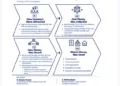
The census will take place in two phases: the Houselisting and Housing Census will be conducted from April to September 2026, followed by the Population Enumeration in February 2027.
For Ladakh and the snow-bound non-synchronous regions of Jammu & Kashmir, Himachal Pradesh and Uttarakhand, Population Enumeration will instead be carried out in September 2026.
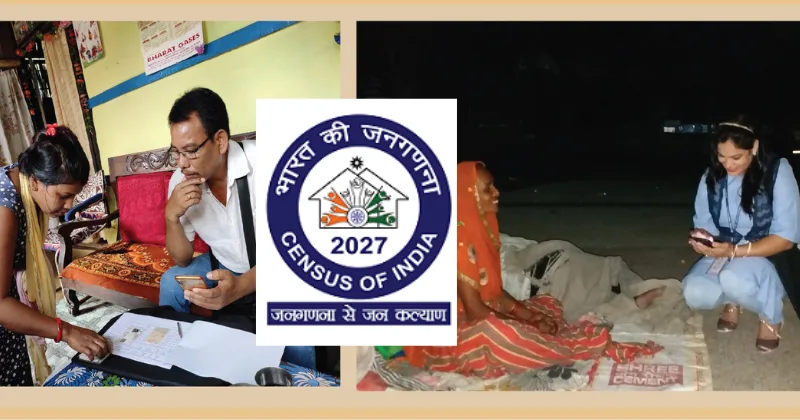
Nearly 30 lakh field functionaries will be deployed nationwide to complete this massive exercise.
The government has announced several digital innovations for Census 2027, including mobile applications for data collection available on both Android and iOS, along with a dedicated Census Management & Monitoring System (CMMS) portal for real-time supervision.
A new Houselisting Block Creator web-map application will assist Charge Officers in mapping and demarcation, while the public will, for the first time, have the option of self-enumeration.
Furthermore, the census will incorporate caste enumeration in the Population Enumeration phase, following the Cabinet Committee on Political Affairs’ decision of 30 April 2025.
Enumerators, primarily government teachers appointed by state administrations, will undertake household visits and fill out separate questionnaires for the two phases, alongside their regular duties.
Additional supervisory roles across sub-district, district and state levels will also be assigned, and all census functionaries will receive an honorarium.
The government emphasised that the upcoming census will ensure better data quality, faster data dissemination, and machine-readable datasets for ministries under the Census-as-a-Service (CaaS) framework, enabling quicker and more effective policymaking.
Dissemination tools are also being upgraded to provide customised visualisation and easy access down to the village and ward level.
The Census 2027 exercise is expected to generate around 1.02 crore man-days of employment, with approximately 18,600 technical personnel to be engaged at local levels for around 550 days.
Census 2027 will be the 16th national census and the 8th after Independence, is set to serve as the primary source of micro-level data on population characteristics including housing, amenities, religion, language, literacy, economic activity, migration, SC/ST details and fertility patterns.