





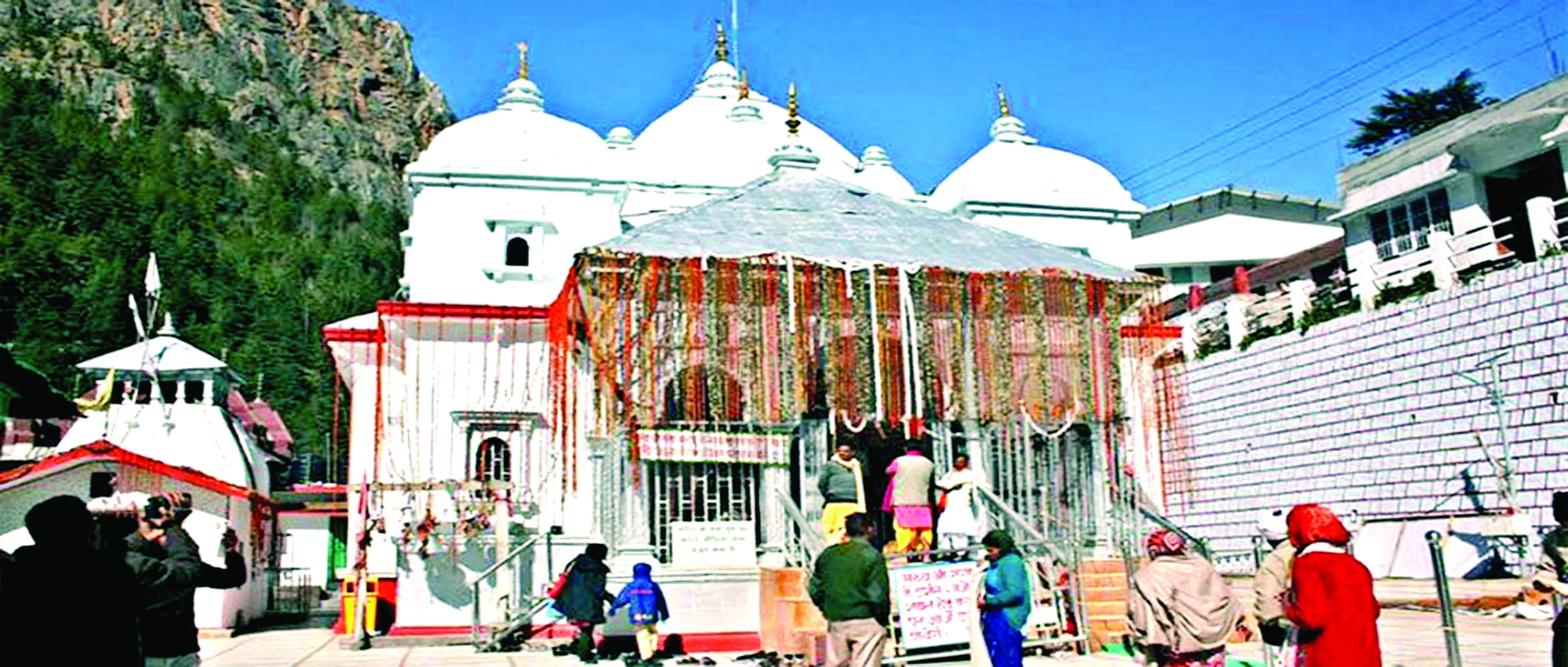
Last week, I wrote about Gaumukh, the natural temple where spirituality of Bharat originates and thrives on the banks of the holy Ganga. If Gaumukh is the womb of divine energy, then Gangotri Mandir is its first sacred manifestation in the world of built forms. Standing quietly amidst the rugged grandeur of the Garhwal Himalayas, the temple marks the point where spirituality, nature, and human devotion meet in perfect harmony. The original Gangotri Mandir was built in the early 18th century by General Amar Singh Thapa of the Gorkha forces and later renovated by Maharaja Madho Singh of Jaipur. Its modest height of six metres and pure white stone construction reflect a simplicity that befits the sanctity of the river it venerates.
Dedicated to Goddess Ganga, the temple also houses images of Lakshmi, Saraswati, Yamuna, Annapurna, and Mahadurga, symbolising the nurturing, sustaining and protective aspects of the divine feminine.
What makes Gangotri Mandir truly special is its intimate dialogue with the natural surroundings. Rising against snow-clad peaks and the roar of the Bhagirathi, the temple does not dominate the landscape; rather, it blends into it. This quiet architecture mirrors the humility with which King Bhagirath is believed to have prayed on the nearby Bhagirath Shila to bring Ganga down to earth. The spot where the river first touched the land is revered even today.
The legends associated with Gangotri add profound layers to its spiritual importance. It is said that the Pandavas performed a Deva Yagna here to atone for the sins of the Kurukshetra war. Even today, Hindus believe that performing ancestral rites on the banks of Bhagirathi liberates the departed from the cycle of rebirth.
Nineteen kilometres upstream lies Gaumukh, the glacier from which the river emerges as Bhagirathi. From Devprayag onwards, it becomes Ganga. Each year, the temple opens on Akshaya Tritiya and closes on Bhai Dooj, with the idol shifting to Mukhba village during winter. The grand celebration of Ganga Dussehra in May marks the river’s divine descent.
Simple, serene, and deeply symbolic, the Gangotri Mandir stands as the first architectural expression of Bharat’s timeless spirituality.














Comments