





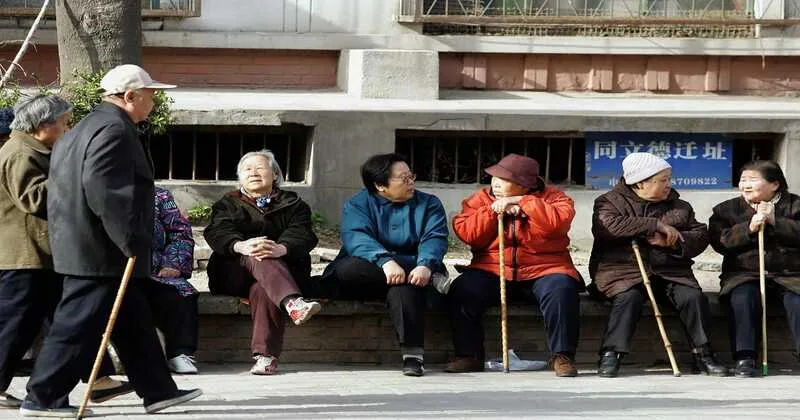
Earlier this year, a grim expression began circulating widely across Chinese social media platforms. It captured a sense of national anxiety, summarising a future where China is set to age rapidly long before it attains the income levels of advanced economies. The phrase reflected a growing realisation that China’s long-cherished vision of prosperity, often described as the Chinese Dream, may be faltering under the weight of demographic decline.
Demographers and economists frequently invoked this formulation between 2023 and 2025 to describe a troubling reality: China is entering old age without first becoming rich. Although the symptoms are starkly visible in the country’s population structure and gender imbalance, the roots of the crisis reach back more than four decades to a transformative, and ultimately damaging, national policy.
The legacy of the one-child policy, a demographic disaster
When China introduced the one-child policy in the late 1970s, it represented one of the most intrusive interventions ever imposed on private family life. The state sought to control reproduction at a national level, restricting most families to a single child. Few modern policies have so dramatically regulated women’s fertility or reached so deeply into domestic life.
The policy was framed as necessary to accelerate development and ensure economic progress. Yet, in a striking irony, it is now widely regarded within China as the biggest barrier to sustaining long-term prosperity. China’s present demographic squeeze, rapid aging, shrinking workforce, and stark gender imbalance, is an outcome of that era’s authoritarian approach. Despite ending the policy in 2015 and subsequently allowing couples to have two and even three children, China now confronts consequences that may no longer be reversible. China’s population profile reveals the scale of the challenge ahead. The country’s median age has already climbed to 40.2, placing it alongside developed nations such as the United Kingdom, where the median age stands at 40.6, and ahead of the United States, at 38.5. However, China’s per capita income remains far below those countries. IMF estimates show that Britain’s per capita income is more than twice China’s, and America’s is more than triple.
Projections indicate that China will continue aging rapidly. Data from global demographic databases estimate that the median age will rise to nearly 43 by 2030, close to 49 by 2040, and over 52 by mid-century. Combined with low fertility, this trend points toward a shrinking and increasingly elderly population. China’s fertility rate currently stands at around 1.1, barely half the level needed to maintain population stability. Forecasts suggest it will stay around this level until mid-century, rising only marginally afterward. Birth numbers are steadily falling: from nearly 18 million in 2010 to just over 11 million by 2020. The figure is expected to drop further to about 8 million in 2030 and 7 million by 2050, potentially falling to just 3 million annually by the end of the century.
The implications are stark. China’s population, now roughly 1.42 billion, is projected to fall to about 1.26 billion by 2050 and nearly halve to around 633 million by 2100. A shrinking workforce will be required to sustain a rapidly growing elderly population, placing immense pressure on social welfare systems. In response, Chinese authorities have tried introducing a variety of incentives, from tax breaks to childcare subsidies, to encourage larger families. But unlike other countries facing low birth rates, China must also contend with a severe gender imbalance rooted in decades of sex-selective abortion driven by the cultural preference for sons.
A nation of leftover men
China reports an excess of roughly 35 million men, an imbalance particularly pronounced among citizens of childbearing age. This asymmetry is expected to persist well into the 2040s, even if the situation improves modestly in later decades. According to the UN’s World Population Prospects 2024, men significantly outnumber women across every major age cohort. In the key 25–29 age group, China has more than 44 million men compared to about 38 million women. While the gap becomes slightly smaller in subsequent cohorts, the disparity remains substantial. For a large number of these men, marriage within China is increasingly an impossibility. The imbalance undermines Beijing’s push for higher birth rates and exacerbates social tensions. In China’s public discourse, these unmarried men are often described as the nation’s “surplus bachelors.” Unable to find partners domestically, a growing number of young Chinese men are now looking abroad, particularly to poorer neighbouring countries, for marriage.
Pakistan and Bangladesh: New frontiers for marriage migration
Pakistan and Bangladesh have emerged as primary destinations for Chinese men seeking brides. Both countries are geographically close, maintain warm ties with Beijing, and face widespread poverty, making cross-border marriages financially attractive for families hoping to secure stability for their daughters. However, this trend has created fertile ground for exploitation. Human trafficking networks, posing as marriage agents, have infiltrated the system. These groups lure vulnerable women, often from poor or minority communities, by promising stable marriages, only to sell them into prostitution or abusive households.Even in cases where the marriage is genuine, serious challenges persist. Many women arrive in China unable to speak the language and unfamiliar with local customs, leaving them dependent on husbands and in-laws in unfamiliar environments. Language barriers, isolation, and cultural dislocation remain major concerns.
Cross-border marriage trafficking gained international attention in 2019, when Pakistan’s Federal Investigation Agency (FIA) uncovered a trafficking network funnelling Pakistani women into China under the guise of marriage. At the time, the agency reported that it had dismantled a ring involved in sending women abroad for sexual exploitation. An extensive Associated Press investigation later that year revealed that Pakistani authorities had identified more than 600 cases in which women and girls married Chinese men through these networks, with many coerced into prostitution after arrival. Pakistan arrested dozens of suspected Chinese nationals, but most were soon released, indicating the political sensitivities surrounding China-Pakistan relations.
This practice is not confined to South Asia. Similar trafficking patterns have been observed in Laos, Cambodia, Myanmar, Vietnam, and North Korea. Yet the problem appears particularly entrenched in Pakistan and Bangladesh, where poverty and geopolitical alliances shape state responses. A 2022 analysis by the Brookings Institution noted that Pakistan’s deep strategic dependence on China has constrained its ability to confront the issue. Researchers argued that while initial media reports and public outrage compelled action, political considerations and economic reliance on Beijing quickly overshadowed these concerns. According to the study, authorities eventually suppressed further scrutiny to avoid jeopardising the bilateral relationship.
Bangladesh has also witnessed an increasing incidents. In May this year, the Chinese Embassy in Dhaka issued an advisory urging Chinese nationals to be cautious about marrying local women, warning them about scams run by criminal groups that exploit both sides of the marriage arrangement. Journalists documenting the phenomenon have highlighted the vulnerability of minority Christian women in Pakistan in particular. Reporting from the field, some have described how these women see marriage to Chinese men as a path out of poverty or religious persecution. There are also accounts of Pakistani women entering multiple marriages to receive financial compensation more than once, reflecting the transactional nature of such arrangements. Despite sporadic crackdowns and diplomatic statements, the underlying drivers of cross-border marriage remain strong: China’s demographic imbalance, economic desperation in neighbouring countries, and limited regulatory oversight. With China’s aging accelerating and the gender gap continuing, such practices are likely to persist.
















Comments