





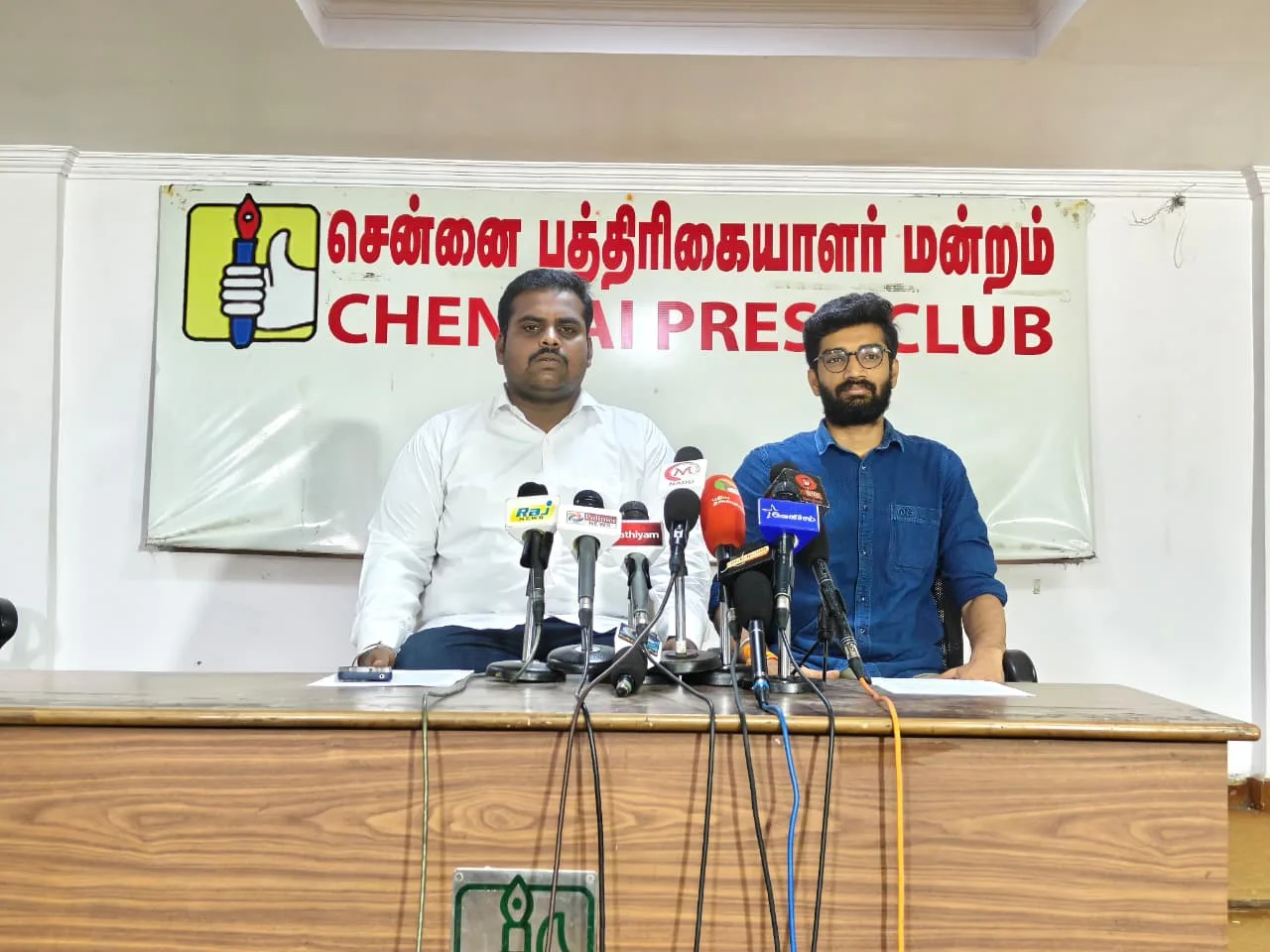
ABVP Uttar Tamil Nadu, in its State Executive Council Meeting held in Hosur on November 15 and 16 2025, adopted multiple key resolutions, the first two of which focus on the National Education Policy (NEP) and the deteriorating law and order situation in Tamil Nadu. Speaking to the media on November 19 in Chennai, North Tamil Nadu ABVP State Secretary Yuvaraj Dhamodharan and National Media Team Member Karthik H detailed the resolutions passed by the council.
The first resolution strongly criticises the DMK government for rejecting NEP 2020, accusing it of “raking up the outdated bogey of ‘Hindi imposition’ for narrow political gains” and denying Tamil Nadu’s government school students the opportunities opened up by the policy.
Adding further, Karthik said, “although the so-called State Education Policy (SEP) was released in August 2025, it does not contain any of the constructive features of NEP 2020 such as the Multiple Entry–Exit System, interdisciplinary learning, true multilingualism, and the promotion of the Indian Knowledge System. The committee notes that the SEP is an utter failure and nothing more than a political drama that has wasted the hard-earned tax money of the people of Tamil Nadu”.
Yuvaraj Dhamodharan blamed the Tamil Nadu government for refusing to implement the PM SHRI scheme, which aims to modernise government schools across the country and provide world-class infrastructure and learning environments to students. By resisting key components linked to NEP 2020, he said the state has caused the loss of thousands of crores in central funds that could have come to Tamil Nadu under Samagra Shiksha and other programmes. “This is a grave betrayal of students in government schools and a severe setback to the educational infrastructure of the state”.
The ABVP State Executive Council has demanded that “the Tamil Nadu government and the ruling DMK immediately stop playing with the future of government school students. The politically motivated, ineffective, and failed ‘State Education Policy (SEP) 2025’, drafted under the influence of Dravidian and leftist ideologues without meaningful participation of educationists, professors, student representatives or other stakeholders, should be abandoned forthwith”. It urged the DMK government to implement NEP 2020 fully, adopt the PM SHRI Schools scheme, obtain the requisite central funds, and take concrete steps to upgrade the quality of government schools in Tamil Nadu in the true interest of students’ welfare.
The second resolution criticises the current law and order situation in Tamil Nadu, alleging a collapse due to political interference and negligence by the DMK government. It also raised concerns regarding student safety and accused the government of spreading misinformation against the Election Commission’s Special Intensive Revision (SIR) of electoral rolls, calling on students to actively support the SIR process to protect democracy.
On the law and order situation, the resolution states: “recent data and media reports offer a complex picture. Official statistics indicate that certain crimes such as murders have decreased by 7% in 2024 compared to the previous year, with police crediting proactive monitoring systems for this improvement. However, the perception of declining law and order persists, largely fuelled by high-profile incidents such as killings and organised crimes in cities like Coimbatore and Trichy, as well as incidents of caste violence and crimes against Dalits.
Opposition parties and activists cite such events to argue for a broader deterioration in public safety. There has also been a reported rise in cyber and drug-related crimes in urban centres, with state officials launching various initiatives to tackle these issues”.
The ABVP, in its resolution, said “the DMK government and top police officials have publicly rejected claims of a total collapse, emphasising statistical improvements and new measures to address crime and women’s safety. Despite the government’s efforts and claims, the ground reality remains the same with recurring incidents. The overall atmosphere remains unsafe for students and youth, which reflects poorly on the so-called ‘Dravidian model’ of governance”.
They added that the Election Commission’s Special Intensive Revision (SIR) exercise aims to address widespread allegations of duplicate and ineligible entries. The process reportedly found over five lakh duplicate or illegal entries in Tamil Nadu’s rolls.
While DMK leaders have criticised aspects of the SIR, framing it as politically motivated, the EC maintains that the exercise is in line with constitutional guidelines and Supreme Court directions to ensure electoral integrity. “DMK’s opposition is an effort to protect their vote bank, whereas the government contends the process may disenfranchise legitimate voters through bureaucratic errors”.
ABVP’s resolution calls upon students and youth to become active participants in the SIR exercise to “protect democracy from fake voters”. This demand positions the ongoing electoral reforms as not just administrative but a cause for student activism and civic engagement. The SIR issue remains deeply politicised, with both sides using it to mobilise public sentiment and youth participation.














Comments