Delhi: Govt may cut water connection costs by 10% annually, Jal Board plans big reform of infrastructure charges
June 6, 2026
  • Read Ecopy
  • Circulation
  • Advertise
  • Careers
  • About Us
  • Contact Us
Android AppiPhone AppArattai
Organiser
  • ‌
  • Bharat
    • Assam
    • Bihar
    • Chhattisgarh
    • Jharkhand
    • Maharashtra
    • View All States
  • World
    • Asia
    • Europe
    • North America
    • South America
    • Africa
    • Australia
  • Editorial
  • International
  • Opinion
  • RSS @ 100
  • More
    • Op Sindoor
    • Analysis
    • Sports
    • Defence
    • Politics
    • Business
    • Economy
    • Culture
    • Special Report
    • Sci & Tech
    • Entertainment
    • G20
    • Azadi Ka Amrit Mahotsav
    • Vocal4Local
    • Web Stories
    • Education
    • Employment
    • Books
    • Interviews
    • Travel
    • Law
    • Health
    • Obituary
  • Subscribe
    • Subscribe Print Edition
    • Subscribe Ecopy
    • Read Ecopy
  • ‌
  • Bharat
    • Assam
    • Bihar
    • Chhattisgarh
    • Jharkhand
    • Maharashtra
    • View All States
  • World
    • Asia
    • Europe
    • North America
    • South America
    • Africa
    • Australia
  • Editorial
  • International
  • Opinion
  • RSS @ 100
  • More
    • Op Sindoor
    • Analysis
    • Sports
    • Defence
    • Politics
    • Business
    • Economy
    • Culture
    • Special Report
    • Sci & Tech
    • Entertainment
    • G20
    • Azadi Ka Amrit Mahotsav
    • Vocal4Local
    • Web Stories
    • Education
    • Employment
    • Books
    • Interviews
    • Travel
    • Law
    • Health
    • Obituary
  • Subscribe
    • Subscribe Print Edition
    • Subscribe Ecopy
    • Read Ecopy
Organiser
  • Home
  • Bharat
  • World
  • Operation Sindoor
  • Editorial
  • Analysis
  • Opinion
  • Culture
  • Defence
  • International Edition
  • RSS @ 100
  • Magazine
  • Read Ecopy
Home Bharat

Delhi: Govt may cut water connection costs by 10% annually, Jal Board plans big reform of infrastructure charges

The Delhi government is working on major reforms to the water infrastructure charge system, an upfront fee that residents pay to access piped water connections during house construction. The proposed overhaul aims to fix long-standing disparities between colonies and offer immediate relief to families struggling with rising costs

Shashank Kumar DwivediShashank Kumar Dwivedi
Nov 21, 2025, 08:00 pm IST
in Bharat, Delhi
Follow on Google News
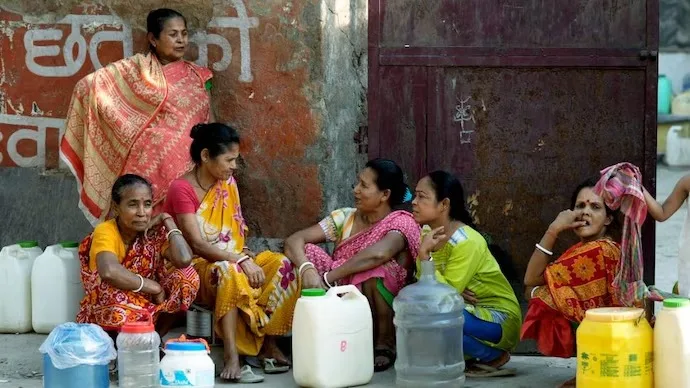
Women waiting for their turns to fetch driniking water in Delhi (Representative image)

Women waiting for their turns to fetch driniking water in Delhi (Representative image)

FacebookTwitterWhatsAppTelegramEmail

The Delhi government has begun the process of rationalising the water infrastructure charges levied by the Delhi Jal Board (DJB), a move that could bring much-needed relief to thousands of households across the national capital. These charges, payable during house construction or when applying for a new water connection, vary significantly depending on whether a property lies in a planned or unplanned colony and whether it is residential, commercial, or institutional in nature.

At present, the disparities are stark: domestic users in A and B category colonies, regularised, high-value neighbourhoods, pay Rs 255.27 per sq ft, while residents in E, F, G and H category areas, many of which remain unregularised, pay a much lower Rs 63.81 per sq ft. The difference becomes even more pronounced in commercial categories, where occupants of A and B colonies pay Rs 446.70 per sq ft compared with Rs 127.63 in lower-category colonies. Institutional users, too, pay widely different amounts, with Rs 319.07 per sq ft in higher-category colonies and Rs 95.72 in the lower ones.

According to a report in the Times of India (TOI), this uneven structure has long forced people with similar water consumption needs to pay wildly different amounts simply because of where they live. A senior DJB official told TOI that the government is actively exploring ways to smooth out these long-standing inequities. A high-level meeting was recently held to discuss how the system can be redesigned in line with the government’s larger water-sector reforms. One major step under consideration is the removal of the rule that mandates a 10 percent annual hike in water infrastructure charges.

This yearly increase has steadily raised the cost of applying for new water connections and has discouraged many households from seeking piped water access. Officials argue that discontinuing the annual hike would offer immediate relief and encourage more residents to formalise their water connections.

As part of the reform process, the Delhi government is evaluating two possible models to replace or run parallel to the existing category-based structure. The first model proposes a consumption-based framework in which the infrastructure charge would be linked directly to the number of residents in a household, rather than the colony or the size of the built-up property.

In the case of multi-floor buildings, DJB would assume a minimum of five people per floor to calculate the expected consumption. This approach, officials note, would align Delhi with global best practices where infrastructure fees are calculated based on usage rather than postal codes. It also proposes a one-time payment structure that would eliminate the long-term burden of annual increases, simplify billing mechanisms, and reduce disputes between residents and the water board.

The second model retains the existing A-to-H colony classification system but introduces major rate reductions for the highest-paying colonies. Under this option, A-category colonies could see their infrastructure rates reduced by as much as 50 percent, dramatically lowering the initial cost of applying for a water connection in upscale neighbourhoods.

Additionally, plots up to 200 square metres could be fully exempted from paying water infrastructure charges, a move intended to relieve smaller households that often face disproportionate burdens under the current system. According to officials, both models are being evaluated not only for financial viability but also for fairness, ease of implementation, and their ability to reduce the sharp cost disparities that have existed for decades.

These proposed reforms follow a tumultuous history of water infrastructure charges in Delhi. In 2019, the charges were completely abolished, offering much-needed relief to residents. But in 2020, shortly after the assembly elections, the charges were reinstated based on built-up area and colony classification. Because the charges were calculated on the constructed area, the cost skyrocketed for many households, with residents in some cases being asked to pay up to Rs 15 lakh just to obtain a legal water connection. The steep hikes caused widespread public anger and brought allegations of corruption and manipulation.

TOI reported that, in several cases, built-up areas were deliberately under-reported in official documents to reduce the payable charge, creating opportunities for middlemen and officials to profit from illegal adjustments.

The need for reform is being driven by several interconnected factors. High upfront costs in A and B category colonies have discouraged many families from applying for legal water connections, even though these households have similar usage patterns to those in lower-category colonies. The annual 10 percent escalation rule has turned the infrastructure fee into a recurring financial burden, making long-term planning difficult for property owners.

Colony-based classification has created inequity across neighbourhoods, leaving some residents paying four to five times more than others despite comparable needs. Meanwhile, loopholes in the built-up-area system have fuelled corruption and undermined public trust in the DJB. Beyond these immediate concerns, Delhi’s growing population and rising demand for water require a transparent, fair, and predictable pricing framework that encourages formal access to piped water.

Officials familiar with the matter told TOI that both proposed models are now in an advanced evaluation stage, and the government will soon place a final proposal before the DJB and the Delhi cabinet. Public consultations are also likely, allowing residents, RWAs, urban planners, and consumer-rights groups to weigh in before the new structure is finalised. If approved, the reforms would mark one of the most significant overhauls of Delhi’s water governance system in recent years, potentially easing financial pressure for thousands of households and improving transparency in service delivery.

The Delhi government’s attempt to rationalise water infrastructure charges reflects a larger push toward equity and accountability in the capital’s urban-services framework. By rethinking colony-based rates, removing the unpopular annual hike, and considering consumption-linked alternatives, policymakers hope to create a system that reflects real usage patterns and reduces the financial strain on families.

As highlighted by the TOI report, the current system has long been a source of frustration for residents, leading to unfair billing and corruption. The proposed reforms, if implemented, could mark a major shift toward fairness, making clean, piped water more accessible, affordable, and transparent for the people of Delhi.

Topics: Infrastructure FeeWater Connection CostConsumption-Based ChargesDelhi Jal BoardDJBDelhi Water Charges
ShareTweetSendShareSend
✮ Subscribe Organiser YouTube Channel. ✮
✮ Join Organiser's WhatsApp channel for Nationalist views beyond the news. ✮
Previous News

Bihar: CM Nitish Kumar allocates portfolio, deputy CM Samrat Choudhary gets Home Department

Next News

Maharashtra GCC Policy 2025: Devabhau’s stunning response to Trump’s anti-India actions

Related News

Delhi Jal Board pit death: Sub-contractor arrested in Janakpuri

Janakpuri Tragedy: Delhi Jal Board sub-contractor arrested in biker’s death, FIR filed for culpable homicide

Cleaning of Yamuna in Delhi

Delhi: Jal Board gets Rs 3,000 crore boost to build 27 sewage plants; push to clean Yamuna gains pace

Delhi Jal Board refutes fals claims made by Arvind Kejriwal of Yamuna water being poisoned

Delhi Jal Board CEO debunks Arvind Kejriwal’s claims, calls “poisoned water” remark “factually incorrect”

Delhi’s Water Crisis Sparks Controversy: AAP’s Rs 2000 Fine Policy for water wastage draws public ire

Delhi Chief Minister Arvind Kejriwal (Left)

Delhi Jal Board Scam: Know how Arvind Kejriwal’s policy of freebies pushed DJB’s debt to Rs 73,000 crore

SC seeks Delhi Jal Board’s reply over issues related to non-release of water board funds

Load More

Latest News

Union Home Minister Amit Shah addressing BSF personnel at the Lankamura Border Outpost along the India-Bangladesh border in West Tripura district on June 5, 2026

Amit Shah at Bangladesh Border: “India will have an impregnable security grid soon”

India slams Pakistan’s bid to hold elections in Gilgit-Baltistan, demands end to illegal occupation

Maharashtra government approves central wage structure for Pune Metro Contract Workers; Major victory for BMS

India seals robust 7.7% GDP Growth in FY26: Reflects economic resilience amid West Asia crisis & other global headwinds

A representative image

After TCS, Corporate Jihad allegations reach SBI: Married Hindu employee conversion claims trigger FIR in Mumbai

MEA spokesperson Randhir Jaiswal highlights India's resolve to deport illegal Bangladeshi migrants via bilateral mechanisms

India reiterates strong resolve to deport illegal Bangladeshis; Flags delay of bilateral procedures from Dhaka

Kerala HC rejects CMRL appeal, clears way for ED probe against Pinarayi Vijayan’s daughter in money laundering case

Uttar Pradesh leads in Bharat's green transformation

World Environment Day 2026: On his birthday, Yogi Adityanath’s green vision powers Uttar Pradesh’s transformation

As Khalistani networks seek new platforms beyond the West, Azerbaijan has emerged as a key venue for conferences, campaigns and narratives aligned with the Pakistan-Turkey axis against India.

Khalistan’s New Grazing Ground: Azerbaijan emerges as new hub for Turkey-Pakistan backed anti-India networks

Kochi IPL Mystery: Why Did Sunanda Pushkar Surrender Stake Amid Benami Claims Tied to Shashi Tharoor, Sonia Gandhi?

Kochi IPL Mystery: Why Did Sunanda Pushkar Surrender Stake Amid Benami Claims Tied to Shashi Tharoor, Sonia Gandhi?

Load More
  • Privacy
  • Terms
  • Cookie Policy
  • Refund and Cancellation
  • Delivery and Shipping

© Bharat Prakashan (Delhi) Limited.
Tech-enabled by Ananthapuri Technologies

  • Home
  • Search Organiser
  • Bharat
    • Assam
    • Bihar
    • Chhattisgarh
    • Jharkhand
    • Maharashtra
    • View All States
  • World
    • Asia
    • Africa
    • North America
    • South America
    • Europe
    • Australia
  • Editorial
  • Operation Sindoor
  • Opinion
  • Analysis
  • Defence
  • Culture
  • Sports
  • Business
  • RSS @ 100
  • Entertainment
  • More ..
    • Sci & Tech
    • Vocal4Local
    • Special Report
    • Education
    • Employment
    • Books
    • Interviews
    • Travel
    • Health
    • Politics
    • Law
    • Economy
    • Obituary
  • Subscribe Magazine
  • Read Ecopy
  • Advertise
  • Circulation
  • Careers
  • About Us
  • Contact Us
  • Policies & Terms
    • Privacy Policy
    • Cookie Policy
    • Refund and Cancellation
    • Terms of Use

© Bharat Prakashan (Delhi) Limited.
Tech-enabled by Ananthapuri Technologies