





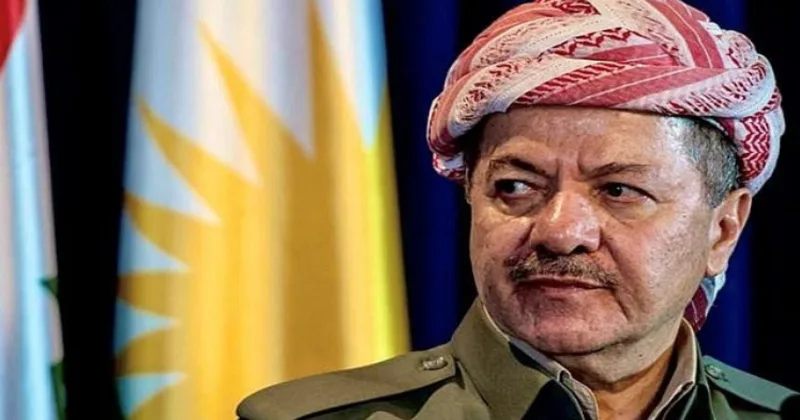
In the recently concluded Iraqi federal legislative elections, the Kurdistan Democratic Party (KDP) has emerged as a significant victor, obtaining over 9.4 percent of the total votes cast. KDP received over 1,080,000 votes, the greatest total of any party in the country. Among parties in the Kurdistan Region and disputed areas, the KDP emerged as the leading party. Furthermore, five minority-quota candidates supported by the KDP nationwide also secured seats, thereby enhancing the party’s influence at the federal level.
Despite obtaining over one million votes, the KDP secured 27 parliamentary seats, whereas Prime Minister Mohammed Shia al-Sudani’s bloc, with 1.32 million votes, secured 46 seats. This is due to Iraq’s multi-constituency electoral system, whereby each province functions as a distinct voting district, which persistently disadvantages high-turnout regions such as the Kurdistan Region. Notably, despite a boycott by Muqtada al-Sadr’s influential movement, voter participation increased to 56 per cent, representing a 13-point rise from the 2021 low of 43 per cent. This plainly demonstrates that Al-Sadr is diminishing in the widespread support he once commanded.
To explore in greater depth the factors responsible for electoral success, I conversed with Mr. Aram Nasih, a political commentator and member of the KDP based in Erbil. Mr. Nasih stated that, in his view, numerous factors have contributed to this success. He stated that the KDP advocates a nationalist discourse and regards itself as the guardian of the legitimate Kurdish cause, which leads the party to vigorously defend the rights of the Kurds.
This has prompted all individuals with strong Kurdish patriotic sentiments to align themselves with the discourse of the KDP. Nasih emphasized that KDP promoted sound governance and prioritized infrastructure development, which was duly recognized by the populace. He further stated that the KDP is a centralized party, which enables it to execute policy decisions with a high degree of accuracy. Commenting further, Nasih stated that the charisma of President Masoud Barzani significantly contributes to the party’s success. During the election campaign, the KDP emphasized its insistence on the complete enforcement of the Iraqi Constitution, particularly concerning federalism and the autonomy of the Kurdistan Region.
This message resonated strongly with electors who perceive that constitutional commitments have yet to be fulfilled. By positioning itself as the custodian of constitutional equilibrium and the advocate for Kurdish rights within Iraq’s federal framework, the KDP reaffirmed its position as the defender of both regional sovereignty and national stability. Furthermore, a significant factor contributing to the KDP’s electoral strength was its focus on inclusivity and coexistence. The party’s outreach extended beyond Kurdish electors, resonating with Turkmen, Christians, and Yazidis, many of whom endorsed or supported the KDP’s List 275. This cross-community appeal facilitated the expansion of the KDP’s support base and strengthened its reputation as a party dedicated to collective progress, diversity, and peaceful coexistence—values that propelled the momentum of one million votes.
These results are likely to encourage the KDP to maintain its stance regarding the formation of the new Kurdistan Regional Government (KRG) cabinet. This, in turn, could also impact the formation of the government in Baghdad, as the KDP now ranks among the top three blocs in terms of seats at the federal level and may exert considerable influence over the Iraqi presidency, a position traditionally held by the Patriotic Union of Kurdistan (PUK) since 2003. Simultaneously, negotiations concerning the new federal government in Baghdad could expand the opportunities for the KDP and PUK, allowing them to negotiate compromises on critical issues and ministerial portfolios that may aid in the formation of a government within the KRG.
Iraq’s political landscape has historically been defined by a complex triangulation among Baghdad’s central authority, the autonomous Kurdistan Region, and various sectarian power brokers. The electoral successes of the Kurdish Democratic Party signify more than mere regional political developments; they indicate a possible shift in the power dynamics that have shaped post-Saddam Iraq.
Prime Minister Mohammed Shia Al-Sudani, who has endeavoured to sustain a delicate balance among rival factions, now confronts an empowered Kurdish bloc that may seek increased concessions or pose a risk to the stability of his coalition government. The enhanced standing of Barzani’s party may encourage Kurdish calls for a greater portion of oil revenues, increased autonomy in international oil agreements, or even renewed debates regarding independence—a prospect that has long loomed over Iraq since the 2017 Kurdish referendum. Political actors aiming to exert influence in Baghdad must now engage with Erbil more assertively, possibly providing concessions that could undermine federal authority or provoke opposition from other ethnic and sectarian communities.
Conversely, KDP’s supporters will also closely scrutinize the party’s performance, particularly in its core strongholds. Within Kurdistan, voters will evaluate the KDP’s mandate in terms of its capacity to foster stable relations with other Kurdish parties, resolve economic challenges, and respond to public concerns regarding governance, transparency, and opportunities for the younger generation. Opponents and critics will assess whether the party employs its newfound influence to exert dominance over institutions or to redefine power-sharing based on more explicit, rule-based principles. In Baghdad, the party’s effectiveness will be evaluated during coalition negotiations: will it be able to establish enduring agreements regarding oil, budget allocations, and salary assurances that mitigate recurring crises between Erbil and the federal government? Or will it be limited by wider national negotiations involving Shiite factions, Sunni coalitions, and external stakeholders?











Comments