





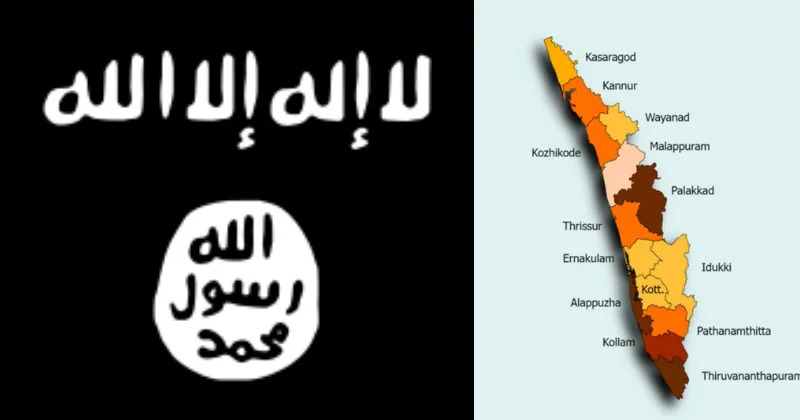
Reports from Thiruvananthapuram indicate that a case has been registered under the Unlawful Activities (Prevention) Act (UAPA) against a couple accused of persuading a sixteen-year-old boy to join the Islamic State (ISIS). The accused, Mohammed Ali and his wife Fida Ahmmed Ali, are alleged to have attempted to radicalise the boy, who is the woman’s son from her first marriage. The investigation is currently under way under the supervision of the Attingal Deputy Superintendent of Police.
According to the case details, Mohammed Ali, a native of Vembayam, married a young woman from Pathanamthitta in an interfaith marriage. After the wedding, she converted to Islam and took the name Fida. The couple then allegedly tried to influence her son from the previous marriage and persuade him to join ISIS.
The complaint states that the couple had been living in the UK and, upon returning to Kerala, showed the boy ISIS propaganda videos in an attempt to shape his ideological outlook. They later admitted him to an Islamic religious school for further religious studies.
Unable to tolerate the unfamiliar and distressing environment at the institution, the boy eventually escaped and sought refuge at the home of his mother’s relatives. His disclosure of the events exposed the alleged plot.
Following the complaint by the relatives, the Venjarammod police registered a UAPA case against the couple. UAPA is one of India’s most stringent anti-terror laws, invoked only in cases with clear implications for national security.
Central agencies have taken the matter seriously, and both national-level investigative teams and the National Investigation Agency (NIA) have begun a detailed assessment. The boy is presently under the care and protection of the relatives from his mother’s first marriage.
Investigators are now examining whether this incident is linked to the resurgence of ISIS recruitment activities within the state. The attempt to draw a sixteen-year-old into the orbit of extremist ideology raises worrying questions for internal security and highlights growing concerns about systematic Islamic indoctrination at the grassroots level.
Kerala has previously witnessed instances of men and women being indoctrinated into radical Islam, with several eventually joining global terrorist organisations such as ISIS. Investigations and testimonies over the years have pointed to a systematic pattern in which non-Muslims were allegedly targeted as recruits, while sections of the local Muslim community were accused of fostering an ecosystem that offered ideological cover and discreet support to extremist elements.
The film The Kerala Files, based on real incidents, revisited these concerns and portrayed how a carefully constructed and manipulated network operated within the state, gradually drawing vulnerable individuals into the fold of Islamic extremism.
















Comments