





For months, the prediction machines hummed the same tune. Commentators on screens, consultants in studios, and the usual panels of professional pessimists declared that India’s Gen-Z was drifting—pulled by global discontent, seduced by digital anarchy, softened by imported theories that promised liberation through chaos. A radical ideological ecosystem, scattered across campuses, hashtags, and cleverly disguised think-pieces, believed it had found the perfect battleground: the Indian youth, plugged in, restless, hungry for identity.
They were certain this generation could be separated from its roots.
They were certain Bharat’s cultural spine could be bent.
They were certain Gen-Z would choose rebellion over responsibility.
They were wrong. And the proof did not come from Delhi or Mumbai. It came from Bihar—quietly, firmly, unmistakably. It came in the form of a soft-spoken girl who sings like dawn breaking over a river and stands with the steadiness of someone who knows exactly where she belongs.
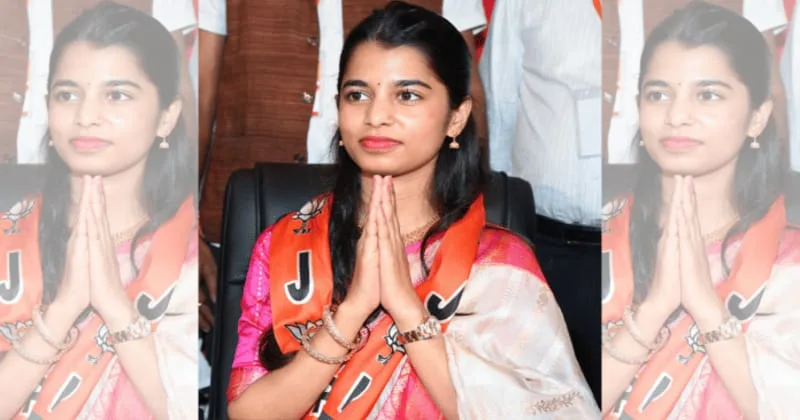
Maithili Thakur did not storm politics. She stepped into it with the grace of someone entering a temple. She did not come armed with slogans; she came with purpose. She did not arrive with the noise of entitlement; she arrived with the weight of a calling. In an age where ambition often masquerades as virtue, she walked in with an old-fashioned word on her lips—seva. And that single word rewrote the script the radical ecosystem had prepared for her generation.
To understand how extraordinary her rise is, one must first understand the landscape she walked into. Bihar is a state that carries history not like a burden but like a heartbeat. Every election here is a collision of memory and aspiration. Every vote is cast not only in response to the present but in conversation with the past. The youth of Bihar—mocked, underestimated, misunderstood—have always carried a quiet intensity: a desire to rise without losing themselves.
For years, they were told that success required shedding their identity. Then Maithili arrived, carrying her identity like a lamp. She didn’t market herself as modern. She was modern, on her own terms. She didn’t reject tradition. She translated it. She didn’t abandon her dialect. She amplified it until the country listened. And in doing so, she showed every young Indian something revolutionary in its simplicity: that roots are not weights—they are wings.
While certain radical forces online tried to convince the youth that nationalism was an outdated idea best left in textbooks, Maithili demonstrated a different kind of rastrabhakti—one that did not shout, one that did not attack, one that did not divide. Her nationalism was built of quieter material: language, gratitude, continuity, discipline, memory. The kind of nationalism that does not need declaration because it is lived.
It was this lived nationalism that collided directly with the narrative crafted by those who believed India’s Gen-Z was waiting to erupt into ideological rebellion. These groups painted confusion as enlightenment, detachment as progress, unrest as courage. They assumed that by destabilising identity, they could destabilise the nation.
But Bihar refused to cooperate.
Gen-Z refused to fracture.
And Maithili refused to drift.
Her entry into electoral politics was the moment the story flipped. Suddenly, the same youth who had been judged as directionless stood behind a girl who represented direction. A girl who represented clarity in a world allergic to it. A girl who reminded them not of what they were told to be but of who they already were.
During the campaign, something remarkable happened. You could see it in dusty roads lined with bicycles and curious faces. You could hear it in murmured conversations between grandmothers and schoolchildren. You could sense it in crowds that grew not because of spectacle but because of sincerity. Her presence carried the persuasive power of authenticity—something the radical ecosystem has never been able to manufacture, no matter how many influencers it hires or how many narratives it seeds.
And when the ballots were finally counted, the verdict was not merely political. It was cultural. It was generational. It was historic. It was Gen-Z looking the radical ecosystem in the eye and saying: We are not your blank slate.
Maithili’s victory was not the victory of a candidate. It was the victory of an idea, that India’s youth can be modern without being uprooted, confident without being cynical, ambitious without being angry. The Bihar mandate was a reminder that the next chapter of this country will not be written by those who want to destabilise it but by those who want to serve it.
Her story is not just an election story. It is a character story, the kind that newspapers rarely get to print anymore. A story of a young woman who walked into the storm with nothing but her values—and the storm parted. A story of a generation that was supposed to be confused but turned out to be astonishingly clear. A story of a nation that was supposed to be vulnerable but revealed its spine.
In the days to come, many analysts will attempt to intellectualise her success. They will try to fit it into familiar boxes—caste, demography, strategy, anti-incumbency, pro-incumbency, social media engagement. They will miss the truth. The real force behind Maithili’s rise is the oldest force of all: a people recognising themselves in the person standing before them.
Maithili did not win because she is Gen-Z. She won because she showed Gen-Z who they truly are. Not confused. Not drifting. Not captured by radical winds. But steady. Rooted. Her journey is a reminder that when India’s youth finally speak for themselves, really speak, their voice does not echo chaos. It echoes civilisation. And in Bihar, for one extraordinary election, it echoed through the voice of a girl who sings like morning and stands like a mountain.




![Folk singer Maithili Thakur joining the BJP in Patna, Image X [maithilithakur]](https://organiser.org/wp-content/uploads/2025/10/folk-singer-maithili-thakur-joining-the-bjp-in-patna-image-x-maithilithakur-120x86.webp)











Comments