





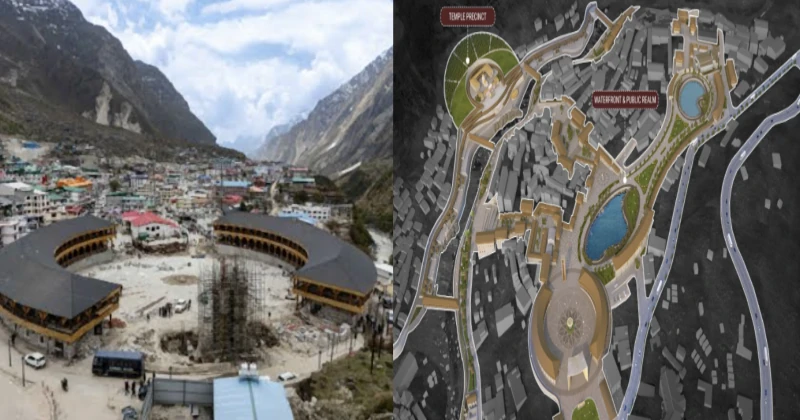
The transformation of Shri Badrinath Dham one of Hinduism’s most sacred pilgrimage sites is now visibly accelerating, with the ambitious Rs 481-crore Badrinath Master Plan steadily taking shape under continuous monitoring by Prime Minister Narendra Modi and Uttarakhand Chief Minister Pushkar Singh Dhami. After the successful redevelopment of Kashi Vishwanath, Ujjain’s Mahakaleshwar corridor, the Ram Mandir precinct in Ayodhya, and the Kedarnath reconstruction, Badrinath is emerging as the next major spiritual centre undergoing large-scale modernisation rooted in heritage.
The redevelopment project is envisioned as a balanced, holistic model of spiritual urban development in the Himalayas, transforming the ancient pilgrimage town into a smart, environmentally sustainable, culturally rooted destination capable of serving generations of pilgrims. Both Modi and Dhami have been reviewing the progress at frequent intervals, with the PMO maintaining close oversight and the state administration conducting constant on-ground assessments.
The Badrinath Master Plan spans 85 hectares and is being executed in three phases, designed to meet the expected surge in pilgrims over the next 50 years. Key components include:
- Redevelopment of the mandir complex with improved crowd flow and congestion management
- Environmental protection measures and strict enforcement of land-use laws
- Seismic safety and climate-sensitive architectural norms suited for the fragile Himalayan ecosystem
- Road widening and upgraded pedestrian pathways to improve mobility for visitors
- Construction of a riverfront and plaza along the Alaknanda River, creating a serene devotional space
- Enhanced public amenities, such as modern electricity, water supply, toilets, and sanitation systems
- Public parks and open spaces that add to the cultural and spiritual character of the town
The holistic design ensures that modernisation does not compromise Badrinath’s traditional charm and religious importance. Importantly, the plan prioritises local livelihoods, cultural preservation, and a spiritually enriching experience for pilgrims.
One of the project’s core strengths is its focus on local employment generation and strengthening Badrinath’s traditional market economy. The Badri Nagari market is being reorganised to help pilgrims access and purchase locally made products, while new accommodation facilities are being built to meet rising demand.
With the rail network soon extending to Karnaprayag and the possibility of further expansion in the next phase, the upgradation of passenger amenities has become essential. The expanded roads and improved facilities aim to prepare Badrinath Dham for the future of Himalayan pilgrimage tourism.
- Modi–Dhami Oversight Ensures Speed and Quality
- Chief Minister Pushkar Singh Dhami has emphasised the collaborative and high-priority nature of the project.
- “Whenever I meet Prime Minister Narendra Modi, we discuss the development of Badri-Kedar,” Dhami said.
He noted that the Prime Minister’s Office is actively monitoring progress, while he himself frequently visits the site. The Chief Secretary and Garhwal Commissioner also conduct regular inspections, reviewing construction quality, unfinished tasks, and the concerns of local residents and stakeholders.
Once completed, the Shri Badrinath Dham Master Plan is expected to set a national benchmark for spiritual infrastructure, combining heritage conservation with smart-city principles in a high-altitude environment. For millions of devotees worldwide, the project promises a future-ready pilgrimage experience that honours tradition while embracing thoughtful, long-term development.















Comments