





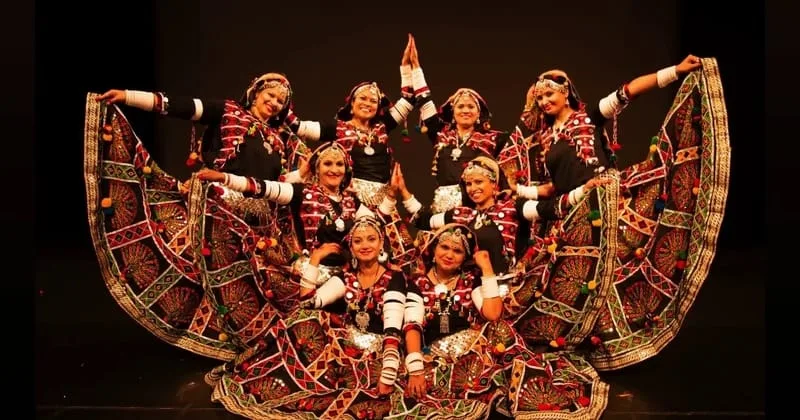
The Kalbelia tribe of India, known for its vibrant dance, music, and nomadic traditions, represents one of the most captivating facets of the country’s cultural mosaic. Predominantly found in the arid regions of Rajasthan, especially around the districts of Pali, Ajmer, Jodhpur, Chittorgarh, Udaipur, and Pushkar, the Kalbelias have a history deeply rooted in the desert landscape. Traditionally, they were snake charmers and healers, deriving their name from the word “Kal”, meaning snake and “Belia”, meaning friend or companion. Their intimate association with snakes not only shaped their identity but also defined their unique place within India’s social and cultural framework. Today, while their traditional livelihood has diminished due to changing laws and lifestyles, the Kalbelias have continued to thrive through their music and dance, turning cultural performance into both a means of livelihood and a symbol of resilience.
The cultural significance of the Kalbelia tribe lies in their remarkable ability to express joy, emotion, and history through their art forms. The Kalbelia dance, often called the “Snake Charmer Dance,” is a breathtaking display of grace and agility, performed mostly by women adorned in black swirling skirts embroidered with silver thread and mirror work. The men accompany them with traditional instruments such as the “been,” “dholak,” and “khanjari,” producing hypnotic rhythms reminiscent of snake-charming tunes. Their dance movements imitate serpentine motions, symbolising their deep spiritual connection with snakes, which they revere rather than fear. Beyond entertainment, their music and dance serve as oral storytelling mediums that preserve folklore, ancestral tales, and social wisdom passed down through generations. In 2010, UNESCO recognised Kalbelia folk songs and dances as part of the “Intangible Cultural Heritage of Humanity,” a testament to their global cultural value and the tribe’s role in enriching India’s heritage.
The livelihood of the Kalbelia people has undergone a significant transformation over the past few decades. Traditionally, they earned their living by catching snakes, selling snake venom, and performing as entertainers in local fairs and festivals. With the enforcement of the Wildlife Protection Act of 1972, which banned the capture and display of snakes, their traditional profession became illegal, forcing them to adapt to new means of sustenance. Gradually, they shifted toward performing arts as a primary source of income, showcasing their dance and music at cultural events, tourist festivals, and international stages. Some Kalbelias also engage in small-scale handicrafts, such as making traditional jewellery, embroidery, and decorative items inspired by their nomadic lifestyle. Despite this transition, economic insecurity remains prevalent, as opportunities for stable employment are limited and income depends largely on seasonal tourism. Many families still live in makeshift settlements or temporary camps without access to basic amenities, reflecting the fragile nature of their economic condition.
Socially, the Kalbelia tribe occupies a marginalised position within the broader social hierarchy of Rajasthan. Historically considered a nomadic or “denotified” tribe, they have long faced social exclusion and limited access to education, healthcare, and property rights. Their nomadic lifestyle has contributed to their invisibility in formal administrative systems, resulting in low literacy rates and minimal representation in local governance. Gender dynamics within the tribe, however, reveal a distinctive feature: women enjoy relatively higher freedom compared to many other traditional communities. Kalbelia women are the central figures in their artistic expression, commanding respect as dancers, singers, and bearers of cultural identity. The prominence of women in public performances has subtly challenged patriarchal norms, giving the tribe a progressive edge despite their economic struggles. Yet, social mobility remains constrained by persistent stereotypes that continue to associate the tribe with their erstwhile occupation as snake charmers and entertainers.
Economically, the Kalbelias live on the fringes of survival, often depending on irregular income from tourism and cultural festivals. The shift from a self-sustained nomadic lifestyle to dependence on the entertainment industry has made them vulnerable to market fluctuations and exploitation by intermediaries. The seasonal nature of their performances means that during off-peak periods, families struggle to meet basic needs. Education, though increasingly recognised as essential, remains a distant goal for many children due to poverty and constant migration in search of work. In recent years, however, several governmental and non-governmental organisations have initiated programs aimed at promoting sustainable livelihoods among the Kalbelias through skill development, microfinance, and cultural preservation initiatives. These efforts, though commendable, are yet to reach the scale required to uplift the community comprehensively.
The challenges faced by the Kalbelia tribe are deeply intertwined with issues of identity, economic marginalisation, and cultural survival. Modernisation and globalisation have brought both opportunities and threats. On one hand, exposure to global audiences has provided a platform for Kalbelia performers to showcase their art internationally, earning recognition and respect. On the other hand, the commodification of their traditions risks diluting the authenticity of their expressions. The younger generation, torn between modern aspirations and ancestral heritage, often faces a dilemma—whether to continue the demanding path of traditional performance or pursue alternate livelihoods in urban centres. Access to education, healthcare, and permanent housing remains a critical challenges that hinder their progress. Environmental degradation and desertification of their native regions further exacerbate their hardships, as many Kalbelia families depend on seasonal labour and local natural resources for survival.
Yet, amidst these adversities, the Kalbelia tribe’s greatest strength lies in their role as cultural ambassadors of India’s intangible heritage. Their art has transcended regional boundaries, representing the soul of Rajasthan in national and international festivals. Kalbelia performers have travelled across continents, teaching their dance and music to global audiences, thereby promoting India’s cultural diversity and artistic excellence. Their ability to transform their ancient snake-charming tradition into a globally admired performing art exemplifies adaptability, creativity, and resilience. Through their songs and dances, they have not only preserved their own identity but also contributed significantly to India’s image as a land of pluralism and artistic richness. The rhythmic energy, colourful attire, and emotional depth of their performances evoke universal admiration, proving that cultural traditions, when nurtured with pride, can become powerful instruments of empowerment.
In a rapidly changing world, the Kalbelia tribe continues to stand as a living bridge between India’s past and present. Their existence narrates a story of transformation, from wandering snake charmers to cultural icons who bring the desert to life through their mesmerising art. Their challenges are real and urgent, but so is their spirit of perseverance. By embracing their traditional strengths while seeking equitable access to education, infrastructure, and sustainable livelihoods, the Kalbelias can secure a future where their cultural legacy not only survives but thrives. As custodians of an art form that has captivated hearts across the world, the Kalbelia people remind us that culture, when cherished and shared, is both a livelihood and a form of resistance. Their story is not just about survival but about the enduring power of creativity and the timeless rhythm of India’s living traditions.














Comments