





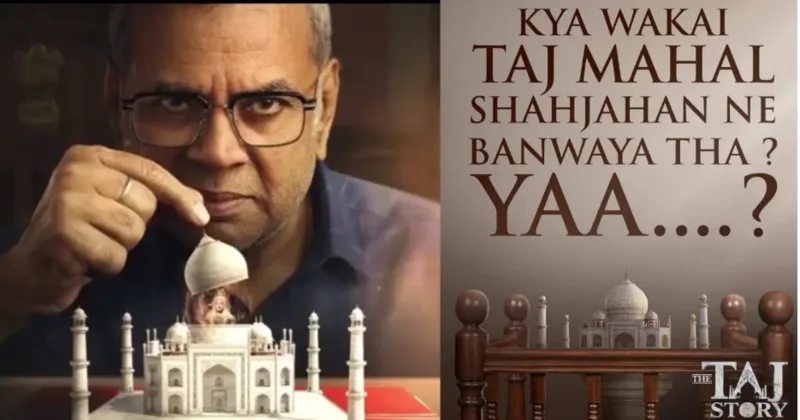
I watched The Taj Story today. As a person and as a law student, I already knew there wouldn’t be any grand conclusion. Cases like these rarely get one. But I still wanted to watch it, and I’m glad I did. The movie surprised me, especially with its dialogues. They carried a kind of truth this world needs to hear.
One question, however, has been lingering in my mind ever since: why did the Taj Mahal eventually become a symbol of religion rather than love when questioned? Why were those 22 rooms sealed, not for preservation but shut down entirely? And why, despite multiple PILs since 2015, has no permission been granted to open them?
Even if, hypothetically, idols or relics connected to the Hindu religion were found there, how would that change the essence of the Taj Mahal? It would still stand as one of the Seven Wonders of the World, a marvel of art, architecture, and emotion. So the debate was never about preservation. It was about conversion, converting meaning, not marble.
That’s what the movie subtly shows us: how the nation today doesn’t preserve, it polarizes. And how questioning justice has almost become a crime in itself. We talk about secularism, but we forget that secularism is not silence, it’s balance.
What struck me most was how the film drew a parallel between the judiciary and the society it serves. Not every case is filed to win; some are filed simply to protect. But somewhere along the way, Public Interest Litigation became Publicity Interest Litigation. And that shift, however quietly it happened, says a lot about where we’re headed.
The ending too was powerful in its stillness. The film doesn’t deliver a dramatic climax, and it shouldn’t. Because some stories aren’t meant to end with victory or revelation. They exist to provoke awareness, to make us think.
When the screen faded to black, a list of real-life cases appeared, all filed since 2015, all still pending, all without a final judgment. It left me wondering why it is so hard for the judiciary to even form a committee and investigate. What’s so threatening about seeking the truth?
The Taj Story isn’t just about the Taj. It’s about us, about the things we refuse to see because we’re too busy deciding who should see them. Some movies are made for entertainment; this one is made for remembrance.















Comments