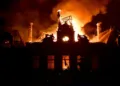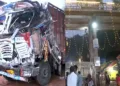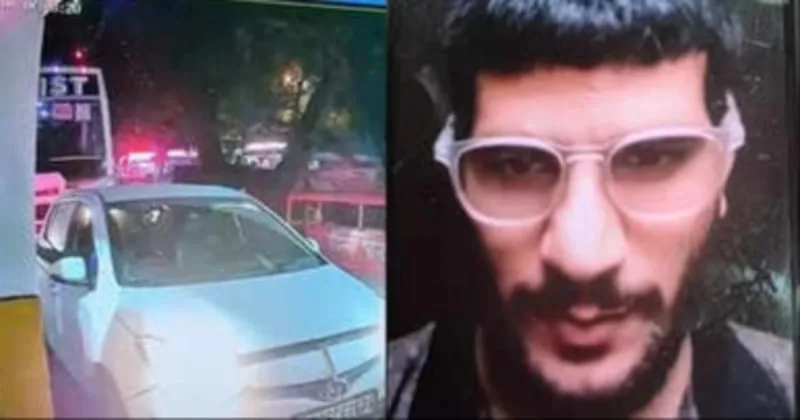
A white Hyundai i20 that changed hands four times without any formal ownership transfer has become the centrepiece of the Delhi Police investigation into the November 10 evening’s Red Fort blast, which killed eight people and injured more than 20. Investigators have now traced the vehicle to a Pulwama-based doctor, establishing a direct link between the central Delhi explosion and terror raids in Faridabad conducted earlier the same day.
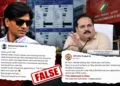
RC of the Hyundai i20 car involved in the blast at Red Fort Metro Station.
Car has a Haryana number and is in the name of Mohd Salman.
#RedFortBlast pic.twitter.com/yDqkY1W1aL— Sudhir Chaudhary (@sudhirchaudhary) November 10, 2025
According to senior officers, the i20’s current owner has been identified as Dr Umar Mohammed, a doctor from Pulwama, who is allegedly part of the same terror module as two doctors arrested in Faridabad before Monday’s blast.
“He belongs to the same network. He panicked after the arrests. He, along with his associates, placed a detonator and carried out this terror act,” a senior officer said. Police are now searching for Umar and verifying whether he may be among the deceased.
The explosion took place around 6:50 pm near the traffic signal close to Gate No. 1 of the Red Fort Metro Station, gutting nearby vehicles and leaving dozens injured. Forensic teams believe the bomb used ammonium nitrate fuel oil (ANFO), the same type of explosive recovered from the Faridabad terror hideout earlier that day. “This is connected to the cache of arms and explosive material recovered from Faridabad,” an investigator said.
In coordinated operations, the J&K Police and Haryana Police raided two houses in Fatehpur Taga village, Faridabad, rented by Dr Muzammil Shakeel. The raids yielded 2,500 kg of IED-making material, including 360 kg of ammonium nitrate, electronic circuits, remote controls, timers, metal sheets, and batteries. Shakeel was arrested alongside another doctor, Adeel Ahmed Rathar, both suspected members of the same Pulwama-based module.
A car with a murky past
Investigators are now piecing together the i20’s convoluted ownership trail to determine who last had custody of the vehicle. According to police sources, the car was originally purchased by a man named Salman, who later sold it to Devender, before it was informally passed on to Umar, the Pulwama doctor now believed to have used it in the blast.
Parallel investigations by multiple media outlets earlier revealed two overlapping sales chains, involving small dealers and informal handovers that never resulted in official registration transfers. In one version, the car passed through Salman, Devendra, Sonu, and Tariq, with a Faridabad-based dealership surfacing in one transaction. Another trail, reported separately, showed the vehicle moving from Mohammad Salman to Nadeem, then to Royal Car Zone (a used-car dealer in Faridabad), before reaching Tariq and finally Dr Umar Mohammed.
Police are reconciling both accounts to confirm the final chain of possession and assess how the lack of formal RC transfers helped conceal the vehicle’s true owner.
CCTV footage reviewed by Delhi Police shows the i20 driving through Kashmiri Gate, Daryaganj, and Chhata Rail Chowk before entering a parking lot near Sunehri Masjid at 3:19 pm. The driver, wearing a blue-and-black T-shirt, remained inside the car for over three hours, exiting at 6:48 p.m. The blast occurred four minutes later, at 6:52 p.m., near the Gauri Shankar and Jain temples, a few metres from the Metro gate.
“He was either waiting for someone or for instructions,” a senior officer told.
Investigators suspect the car’s informal resale pattern was deliberately engineered to mask its final ownership. Such unregistered transactions, often conducted through small-scale or unregulated dealers, bypass KYC and RC-transfer protocols, creating a loophole that terror networks may exploit.