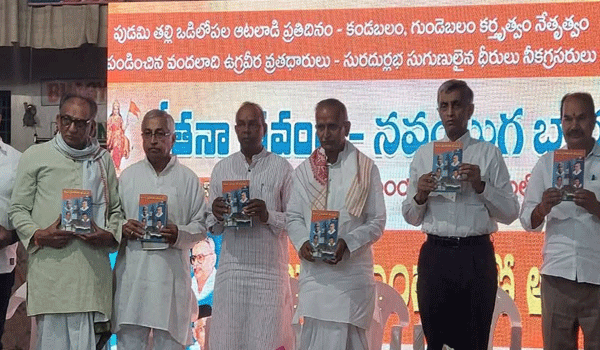
Under the joint auspices of Chetana Sravanthi – Navayuga Bharati, the book “RSS in Telugu Regions” was formally released at the Bhagyashri Function Hall, Chaitanyapuri in Hyderabad on November 9.
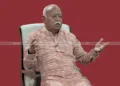
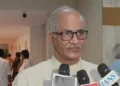
The event featured Dr Jayaprakash Narayan, retired IAS officer and chief guest, who delivered a detailed address on the RSS’s century-long legacy and civilisational mission. Joining him as the main speaker was Vadla Bhagayya, RSS Akhil Bharatiya Karyakarini sadasya, who traced the organisation’s early journey in the Telugu regions.
Dr Jayaprakash Narayan described the 100-year history of the Rashtriya Swayamsevak Sangh as “extraordinarily distinguished”, stating that no other organisation in modern world history matches its character and contribution.
He noted that some religious institutions rely on lifelong celibate preceptors, and some revolutionary outfits emerged briefly in emotional moments to fight for the country. But, he said, no organisation in 150 years has quietly inspired thousands to dedicate their lives for a long-term civilisational goal without seeking recognition, except the RSS.
He praised the Sangh for sacrifice without desire for fame, emphasising that its philosophy mirrors the idea that great work is possible only when people fight for the goal itself, not for glory.
Dr Narayan said the RSS internalises the values of non-violence, truth, non-stealing, non-possessiveness and celibacy, adding that the nation remains indebted to the Sangh for its constant efforts to reform society from within.
He stressed that despite India’s rich heritage, society remains fragmented, and the Sangh works tirelessly to build unity. He clarified that the RSS has never demanded adherence to any single Hindu tradition, reiterating the inclusive principle of “Ekam Sat Viprah Bahudha Vadanti.”
Dr Narayan said Sangh ideology places society above the State, and its long-term mission seeks to restore self-confidence, self-respect and a sense of dignity within communities.
Calling the unification of India’s diverse groups an “extraordinary yajna”, he expressed admiration for the Sangh’s sustained work over a century.
Historical recollections by senior Sangh leader Vadla Bhagayya
Akhil Bharatiya Karyakarini Member Vadla Bhagayya, the main speaker, traced the historical evolution of the RSS in Telugu states. He said figures like Bandaru Sadashiva Rao, Subrahmanya Shastri and Rambhau Haldekar began documenting the Sangh’s early growth, and their compiled material has now taken shape as a book.
Due to Nizam rule, Hindu mobilisation was difficult in Telangana, so Sangh activities began first in Vijayawada and Nuzvid towns of Andhra Pradesh.
Bhagayya narrated the episodes of Nuzvid Raja’s daughter visiting a Sangh utsav in Pune, becoming impressed, and facilitating the sending of Koonakulli Subrahmanyam and Raghavachari to Nagpur for training — leading to the first Shakhas in Nuzvid.
He recalled how Yadwalker ji, Bandishta ji, and local leaders like Raghavarao and even a young N.T. Rama Rao, came into contact with Sangh work during these early years.
After Telangana’s liberation, Sangh work expanded from 1950 onwards, starting with a Shakha under Venkateshwar.
Key pracharaks included Shankar Rao (Warangal), Komaravolu Narayana Rao, Sriram Sateji, and later K.V. Satyanarayana and Haldekar ji.
Historic milestones included 2,000 people attending Yadav Rao Joshi’s meeting in Warangal, and 114 swayamsevaks marching from Parakala to Warangal during Guruji’s visit, with families offering food in every home.
Bhagayya highlighted the contributions of Shathagopachari, who personally treated Deendayal ji, Moghe ji and Guruji, and became a pillar of Sangh work in Warangal.
He emphasised that Sangh work in Telangana grew because many householders and employees resigned their jobs to serve full-time. Pulusu Gopireddy, Krishnamurthy, Raju and Komarigiri Rammohan were among those who travelled across regions to strengthen the movement.
Shakhas gradually spread across 30 villages of Parakala, strengthened by Paakam Rajaveerayya and MP Jagga Reddy, with even Shyama Prasad Mukherjee Kabaddi tournaments being held to mobilise youth.
The attendees included people from all walks of life across the twin cities, particularly senior swayamsevaks and Sangh functionaries from the state and shared their association with RSS and recollected the memories.