





India’s bioeconomy, encompassing sectors such as agriculture, forestry, fisheries, aquaculture, and biotechnology, is projected to reach a valuation of $300 billion by 2030, according to a comprehensive NITI Aayog study titled “Reimagining Agriculture: A Roadmap for Frontier Technology-Led Transformation.”
The report highlights that agricultural innovation and bio-based technologies are crucial to ensuring food security, national sovereignty, and sustainable economic growth. It argues that India’s transformation into a “developed nation by 2047” hinges significantly on how effectively the country leverages its biological resources and integrates technology into its farming ecosystem.
Agriculture at the core of India’s bioeconomic ambition
The NITI Aayog report presents a vision of India’s bioeconomy not merely as a scientific enterprise, but as an economic engine that strengthens rural livelihoods and reduces dependency on imports. It highlights the urgent need for adopting frontier technologies, such as biotechnology, genomics, precision farming, and sustainable resource management, to enhance productivity and profitability in the agriculture sector.
“A strong and innovative agricultural system is not just an economic necessity but a matter of national sovereignty,” the report observes. By 2030, the bioeconomy is expected to play a pivotal role in food system resilience, climate adaptation, and employment generation across rural India.
Agricultural Transformation
To keep insights real and recommendations actionable, experts have segmented the farming community into three primary archetypes, ‘Aspiring farmers (70-80 percent)’, ‘Transitioning farmers (15-20 percent)’, and ‘Advanced farmers (1-2 percent)’. Throughout this roadmap, findings and policy suggestions are contextualised to these farmer archetypes.
While India’s holistic agriculture and allied ecosystem also includes dairy, poultry, fisheries, and livestock, this phase of the national roadmap focuses exclusively on crop production, with the objective of accelerating digital adoption and resilience in the sector.
Through a detailed analysis of on-ground data, six systemic barriers have been identified as the major impediments to large-scale technology transformation in Indian agriculture:
1. Siloed agricultural data systems prevent integrated policy and innovation.
2. Trust deficits among farmers, often arising from fragmented extension networks and limited digital literacy.
3. A persistent ‘phygital divide’ between digital innovation and physical infrastructure in rural areas.
4. Ecosystem fragmentation, which limits the scalability of pilot initiatives.
5. Talent gaps that constrain research-to-field translation.
6. Constrained capital flows, particularly affecting early-stage agri-tech startups and grassroots innovators.
Importantly, this roadmap is a living document, designed to evolve as new technologies, insights, and threats emerge, ensuring India’s strategic response remains relevant, resilient, and future-ready.
Through decisive action and collaborative engagement, India can realise an optimistic agricultural future, transforming the sector into a globally competitive, sustainable, and innovation-led domain that secures inclusive rural prosperity and aligns with the nation’s vision for 2047.
Technology integration key to productivity gains
At the report’s release event, Gujarat Chief Minister emphasised the role of digital and biotechnological integration across all stages of farming. He said technology adoption, from crop mapping to post-harvest management, is helping farmers combat pest infestations, improve yields, and reduce cultivation costs.
“We cannot build a sustainable economy on outdated practices. Technology must reach every farm, from Gujarat’s cotton belts to Assam’s tea gardens,” he noted, calling for a deeper collaboration between the public sector, academia, and industry.
The report also recommends the mainstreaming of precision agriculture, drone-based crop monitoring, and AI-driven farm analytics as part of India’s agricultural transformation plan.
Designing tailored solutions for India’s diverse farmers
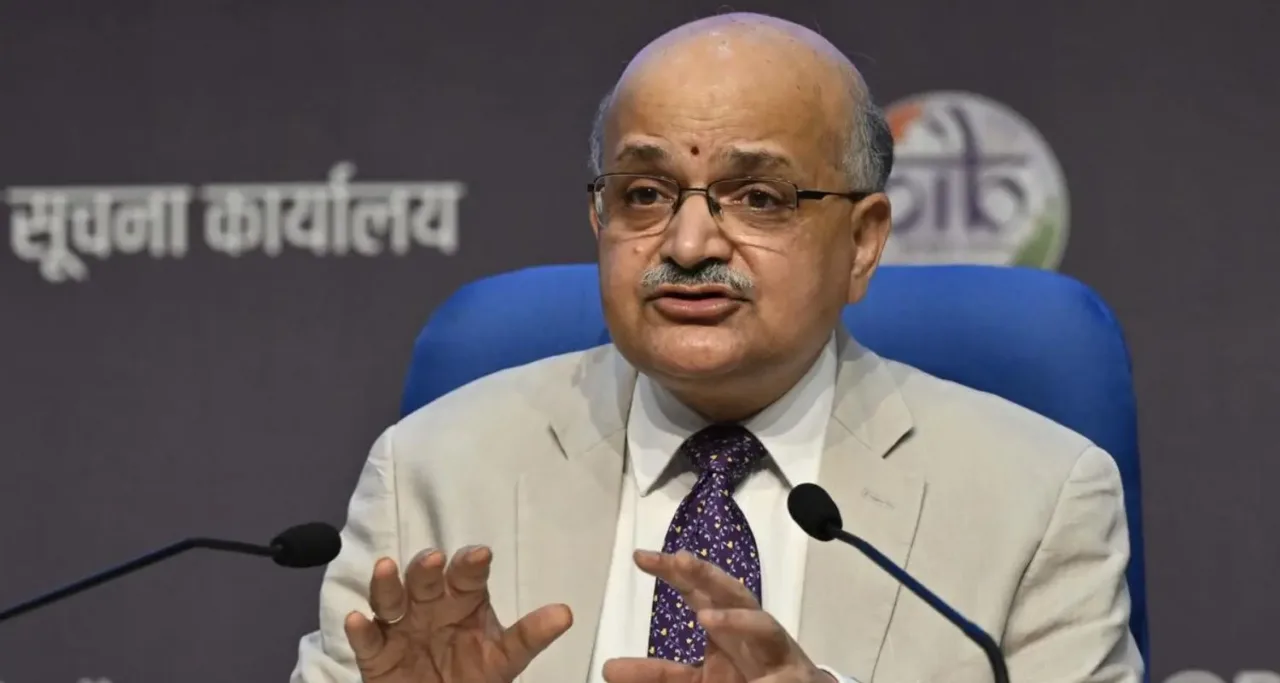
NITI Aayog CEO B.V.R. Subrahmanyam underscored the importance of context-specific innovations that address the diversity of India’s farming systems, from smallholder farmers in Uttar Pradesh to large-scale producers in Maharashtra.
Speaking at the launch, he said, “Technology must not widen the gap between big and small farmers. It must empower every cultivator through affordable, adaptable, and accessible solutions.”
The NITI Aayog report advocates for region-specific technology packages, public-private partnerships for local innovation clusters, and enhanced funding for agricultural startups working on low-cost biosolutions.
Parallel to NITI Aayog’s vision, the biopharma sector, a cornerstone of India’s broader bioeconomy, is witnessing rapid expansion. Srinath Venkatesh, Managing Director, India & South Asia, Thermo Fisher Scientific, in an interview with Lakshmipriya Nair, highlighted that India is shifting “from being a generics powerhouse to a global player in complex biologics and large molecules.”
He explained that while India supplies around 20% of the world’s generics, it currently holds only 2–3% of the global biologics market. “The next phase of India’s bioeconomy will be defined by innovation, scalability, and advanced biomanufacturing,” he said.
Government Push: PRIP, BioE3, and genome valley investments
Venkatesh credited government-led initiatives such as the Production-Linked Research Incentive Programme (PRIP) and BioE3 (Biotech Entrepreneurship Enhancement Ecosystem) for creating a conducive environment for biopharma growth.
Thermo Fisher, a global leader in life sciences solutions, is investing heavily in Hyderabad’s Genome Valley, establishing a BioProcessing Design Centre (BDC) in collaboration with the Government of Telangana, and a Customer Experience Centre (CEC) for advanced bio-manufacturing and clean energy applications.
The company, through its BioVerse Challenge initiative with Startup India (DPIIT), aims to identify and mentor 500 biotech startups across medtech, proteomics, and biopharma, offering infrastructure, mentorship, and access to equipment. The top 100 startups will receive hands-on incubation support at the new Genome Valley facilities.
“These partnerships represent the kind of collaborative innovation ecosystem India needs to move from a low-value bioeconomy to a high-value, innovation-led one,” said Venkatesh.
Skill building and regulatory evolution
Despite the momentum, challenges persist, notably, the shortage of specialised talent in emerging domains such as cell and gene therapy (CGT) and the evolving regulatory landscape. Venkatesh acknowledged these hurdles but described them as “natural in a growth market.”
Thermo Fisher and several industry partners are working with Atal Incubation Centres, CFSL Ahmedabad, and CCAMP Bengaluru to strengthen workforce skills, promote research, and ensure global regulatory compliance.
Moreover, post-pandemic supply chain recalibrations have led to increased local manufacturing and stocking, enhancing the reliability of domestic biomanufacturing systems.
Why the Bioeconomy matters
India’s bioeconomy is more than a measure of scientific progress, it represents economic resilience, rural inclusion, and ecological sustainability. According to government data, the bioeconomy already contributes over 2.5 percent to India’s GDP, employing millions in agriculture, biotechnology, and allied industries.
The transition toward a $300 billion valuation by 2030 signifies not only new economic opportunities but also a strategic shift towards self-reliance in healthcare, food, and environmental technology.
A mature bioeconomy can help India reduce carbon emissions, cut import dependence on agri-inputs and pharmaceuticals, and open new global export markets for bio-based products.
Looking ahead, India’s journey toward a $300 billion bioeconomy will require synchronised action among government bodies, private enterprises, and research institutions. Enhanced R&D investments, public-private partnerships, and startup accelerators will be key to scaling up innovation.
NITI Aayog’s roadmap envisions India as a bio-innovation hub, where rural entrepreneurship, high-tech agriculture, and biotech industries converge to create sustainable value chains.
As the report concludes, “The bioeconomy is not just an industrial goal; it is India’s pathway to inclusive, technology-driven prosperity.”
















Comments