





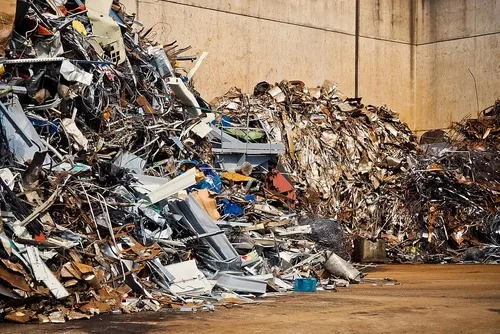
In a striking example of how administrative efficiency can generate tangible results, the Narendra Modi-led Central government has earned a remarkable Rs 800 crore in just one month from selling scrap and redundant materials during its nationwide cleanliness and efficiency campaign. The amount notably exceeds the Rs 615 crore cost of India’s Chandrayaan-3 lunar mission, symbolising how the government’s “waste to wealth” initiative is delivering measurable impact beyond aesthetics and organisation.
According to sources in the Department of Administrative Reforms and Public Grievances (DAR&PG) quoted in media, the drive, conducted from October 2 to 31, was the most extensive since the campaign’s inception in 2021. It not only yielded record financial returns but also achieved unprecedented operational clean-up, freeing up 232 lakh sq ft of office space and weeding out over 29 lakh obsolete physical files across government establishments.
This was the fifth consecutive special campaign undertaken by the Centre under the “Swachhata” and administrative efficiency themes. Since its launch, the campaign has cumulatively earned Rs 4,097.24 crore from scrap disposal, cleared 166.95 lakh files, and reclaimed nearly 929 lakh sq ft of government office space nationwide.
Largest-ever clean-up drive across 84 ministries
The month-long campaign was implemented under the aegis of the Department of Administrative Reforms and Public Grievances (DAR&PG) with extensive coordination across 84 ministries and departments, including India’s missions abroad. Nearly 11.58 lakh office sites were covered, the highest ever since the initiative began.
Three senior ministers, Union Health Minister Mansukh Mandaviya, Civil Aviation Minister K. Ram Mohan Naidu, and Minister of State for Personnel, Public Grievances and Pensions Dr Jitendra Singh, were tasked with overseeing the campaign. Their direct supervision ensured uniform implementation and cross-ministerial collaboration.
Cabinet ministers and ministers of state from multiple ministries also conducted regular reviews, interacted with departmental staff, and personally monitored the progress of public grievance redressal and file disposal.
Prime Minister’s push for administrative cleanliness
Prime Minister Narendra Modi has consistently urged all ministries to perform under the “Special Campaign for Swachhata,” an initiative that goes beyond mere cleanliness drives, targeting bureaucratic efficiency, file digitisation, and improved citizen service delivery.
Officials noted that the campaign not only contributes to improved aesthetics in government offices but also enhances productivity by decluttering physical workspaces, digitising old records, and ensuring timely disposal of grievances.
A senior official associated with the DAR&PG remarked, “This campaign has institutionalised cleanliness and accountability across government offices. What began as an administrative exercise has now become a benchmark of good governance.”
Five-year impact: From waste to wealth
Since its inception in 2021, the government’s special campaigns have become a hallmark of efficiency in public administration. The cumulative outcomes over the last five years speak for themselves:
Offices Covered: 23.62 lakh
Space Freed: 928.84 lakh sq ft
Files Closed/Weeded Out: 166.95 lakh
Revenue Earned from Scrap: Rs 4,097.24 crore
These figures reflect the growing emphasis on systematic evaluation, record management, and the monetisation of obsolete assets. Ministries have been instructed to maintain databases of scrap material, monitor disposal through online dashboards, and reinvest proceeds into modernising government infrastructure.
Officials highlighted that the revenue generated from the sale of scrap is not merely financial gain but represents a cultural shift in governance , from a paper-heavy bureaucracy to a more digital, efficient, and environment-conscious administrative model.
The comparative benchmark, that this year’s October earnings surpassed the Chandrayaan-3 mission cost, highlights the scale and efficiency of the campaign. Chandrayaan-3, launched by the Indian Space Research Organisation (ISRO), had cost Rs 615 crore and successfully landed on the Moon’s south pole in 2023, marking a milestone in India’s space history.
Now, a domestic governance initiative has managed to surpass that cost through prudent resource management and administrative diligence.
With the success of this year’s campaign, the government plans to extend similar drives at the state and local levels. DAR&PG officials have confirmed that upcoming phases will emphasise digital record-keeping, grievance redressal timelines, and green disposal of e-waste in collaboration with the Ministry of Electronics and Information Technology (MeitY).
Dr Jitendra Singh, speaking on the future roadmap, told News 18, “The government is working towards making cleanliness and efficiency a permanent part of the administrative culture. Each campaign is not a one-time activity but a sustained movement towards transparency and accountability.”
The Centre’s scrap sale achievement of Rs 800 crore in a single month stands as a testament to how small administrative reforms can generate big national outcomes. What began as a cleanliness mission inspired by Mahatma Gandhi’s ideals has now evolved into a modern, data-driven model of governance, one that not only frees space but also funds the nation’s progress.
















Comments