





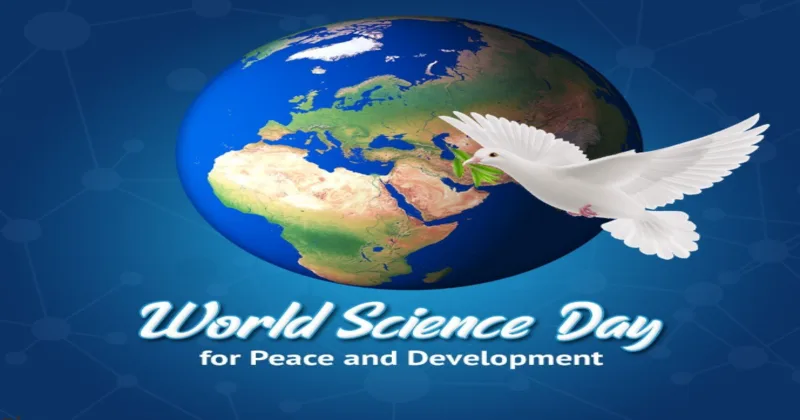
Every year, the world celebrates “World Science Day for Peace and Development” on November 10. This day was established by UNESCO not merely to honor scientific achievement, but to remind humanity of science’s higher purpose: the welfare of humankind, the balance of nature, and the pursuit of peace. This day is a moment of introspection for the global community, a time to ask whether the power of science is truly being used to serve life or to threaten it.
The true strength of science lies in its neutrality. Science itself is neither moral nor immoral, neither benevolent nor destructive. Its direction depends entirely on human intent and ethical vision. When compassion and conscience guide scientific pursuit, knowledge transforms into a force for peace.
Science has bestowed upon humanity countless comforts and possibilities, yet it has also created equally profound challenges. The same intellect that cured diseases and connected continents has also unleashed nuclear weapons, biological warfare, cybercrime, and environmental devastation. This paradox reminds us that the value of science does not lie in its discoveries but in the wisdom behind their application. When guided by compassion, science becomes creation; when driven by greed and ego, it becomes destruction.
In the technological era of the 21st century, scientific progress has reached astonishing heights, yet its misuse has grown just as rapidly. Artificial intelligence, genetic engineering, surveillance systems, and digital networks have simplified life but also endangered privacy, freedom, and even existence itself. Deepfakes, cyber warfare, and misinformation have transformed the digital revolution into a psychological battlefield. Rising carbon emissions, the reckless exploitation of natural resources, and toxic inventions in the name of health warn us that if compassion and responsibility vanish from science, its progress may destroy the very humanity it seeks to serve.
Science was born of curiosity, but its ultimate goal must be compassion and welfare. The moment science aligns itself with human service, it becomes a healer, a light, and a guardian of life. It has defeated diseases, illuminated darkness, and made life longer and safer. Yet when it bows to the politics of greed and domination, it breeds war, fear, and mistrust. The time has come for global councils, innovation platforms, and research institutions to merge technological progress with moral intelligence.
Development is not measured merely by industrial output or technical growth, but by the human benefit that flows from it. Science achieves meaning only when its fruits are accessible to all. Medical, agricultural, and digital innovations fulfill their purpose only when they bring relief and empowerment to the suffering. Green energy has value only when it safeguards Earth’s ecological balance. When science unites sensitivity with responsibility, development becomes sustainable, and peace takes root in society.
UNESCO’s World Science Day, initiated in 2001, stands as a symbol of faith in science’s unifying power. True scientists across nations are those who collaborate beyond borders to fight shared challenges like climate change, pandemics, energy crises and thus protect humanity’s collective future. Such cooperation and empathy are the real foundations of world peace. The noblest scientist is the one who can listen to both the call of the Earth and the cry of humankind in his research.
India’s scientific tradition has always reflected the spirit of “Vasudhaiva Kutumbakam” i.e. the world as one family. Our ancient texts and philosophies viewed knowledge as a means of human welfare, environmental protection, and universal service. Today, India continues this legacy through its leadership in green energy, space research, digital innovation, and medical science- demonstrating that science is great only when it embodies compassion, ethics, and global goodwill.
Science grants power, but not direction. Direction comes from compassion. When science learns to feel and when it listens to the heartbeat of life, it becomes the guardian of humanity and the truest path to world peace.













Comments