





Today, as India celebrates the Amrit Mahotsav of its Independence, the nation stands upon the threshold of two epochs — where the dazzling light of the digital revolution meets the eternal flame of the Rishi tradition. On one side rise artificial intelligence, space conquest, and global markets; on the other shine the Upanishadic truth of Ekatma Chetana and the message of Vasudhaiva Kutumbakam. This is not a conflict, but a conversation between eras.
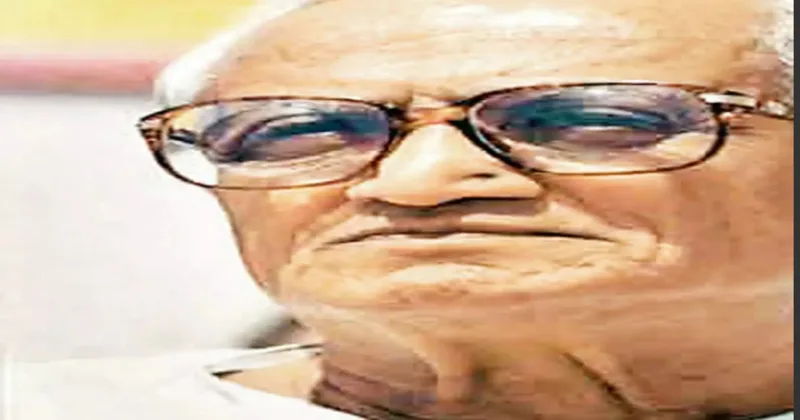
“India’s crisis is not that it has failed to modernize, but that it has ceased to remain Indian even after becoming modern.” (Rashtra : Dharma ki Drishti, 1986) — Dattopant Thengadi
At this historic juncture — moving from mere political freedom to self-realization — India’s soul seeks to rediscover its own resonance amid the whirlwind of modernity.
The Indian Soul: A Timeless Current
The Indian soul is not a static memory but a living river, renewing itself with every tide of time.
“The identity of Indian culture lies in its continuity. It is neither imprisoned in the past nor lost in the present; it continually redefines itself with the march of time.” (Bharatiya Chintan Dhara, p. 42)
From the Upanishadic “Sarvam Khalvidam Brahma” to the Gita’s “Yogah Karmasu Kaushalam,” India’s spirit has always believed that divinity rests not in possession but in perception — not in consumption but in consciousness.
Modernity and the Crisis of Values
Modernity gave us wings of steel but clipped the wings of the spirit. Smartphones connected continents but divided hearts. Skyscrapers rose to the sky, yet the inner landscape turned barren.
“Civilization is progressing in means, but has forgotten the ends. When the end is lost, even the means lose their meaning.” (Sanskriti aur Samajwad, p. 58)
This is the age of I, not We — the age of selfies, greed, and hollow success. Alienation, disordered lifestyles, fading family ties, and the cult of intoxication have eroded the moral fiber that once defined India.
Synthesis: The Key to the Indian Vision
India never rejected modernity; it absorbed it — but on its own terms. Gandhi saw swavalamban (self-reliance) in the spinning wheel; Tagore saw human unity in Indian spirituality. Thengadi defined this approach succinctly:
“Indian culture believes not in opposition but in synthesis.” (Manav aur Samaj, p. 21)
Echoing Sri Aurobindo, he reminded: “Modernism must become spiritual, or it will perish.”
As the Rashtriya Swayamsevak Sangh celebrates its centenary year and initiates the vision of Panch Parivartan, India once again attempts to harmonize technology with timeless truth.
Science with Spirituality: A New Avatar of the Indian Soul
When Indian scientists land Chandrayaan on the moon, they do not merely launch a spacecraft — they extend the eternal search for truth. When an engineer writes code, he practices Karmayoga.
“Science attains completion only when it finds meaning on the field of social welfare.” (The Third Way, p. 67)
For India, research is not for laboratories but for Lokmangal — the welfare of all. Our scientists pray before launch and bow in gratitude after success — “Tera Tujhko Arpan.”
Youth: Bearer of Modernity, Guardian of Culture
From Silicon Valley to ISRO, Indian youth shape the world — yet seek peace in Rishikesh and the Himalayas. This is not contradiction; it is Indianity.
“If the youth imitates the West, India will be lost; if he understands India, the world will be saved.”
(Rashtra aur Yuva Shakti, 1992)
The youth need technology, yes — but with Indian character. True transformation lies not in changing phones but in changing minds. Happiness comes not from indulgence but from disciplined purpose.
Family: The Invincible Fortress of the Indian Soul
Modernity may have fragmented the joint family, but it could not uproot the roots. Today’s revival of yoga, Ayurveda, gurukuls and samskar camps marks not fashion but the re-awakening of the Indian soul.
“The West made the individual the center; India made the family. The family is the bridge connecting man to society and culture.” (Swa-Tantrata se Samaj-Tantrata Tak, p. 84)
When parents chant Vedic mantras on WhatsApp and grandparents narrate Panchatantra tales, the eternal stream of culture flows anew. The awakened youth who articulate such ideas are mocked as “WhatsApp University” graduates — yet their voice carries the echo of truth.
Art and Literature: Echoes of the Soul
Indian art too reflects resurgence — from Kantara’s divine energy to Brahmāstra’s mystic symbolism. The poet who calls God “Cosmic Energy” is not irreligious; he gives the Rigveda a modern idiom.
“Art lives as long as the soul of society speaks through it.” (Sanskriti aur Samajwad, p. 63)
The fusion of electronic beats with Raag Bhairavi — without losing devotion — is India’s living synthesis.
The Eternal Message: Progress, Not Decline
The Indian message is simple:
Be modern — but never forget your roots.
Adopt technology — but never forsake compassion.
Conquer the world — but as a world-brother, not a ruler.
“India’s mission is to teach the world the language of the soul. When the West is weary, it will seek solace in India.” (Bharat : Ek Drishtikon, p. 19)
Modernity is the means; the Indian soul is the end. When means serve ends, mechanical civilization transforms into a cultural nation.
“India’s future lies neither in imitating the West nor in clinging to the past, but in that synthesis which unites the soul with the spirit of the age.” (The Third Way, p. 93)
India’s sunrise will not come from the West, but from within her heart. As long as we recognize the inner sun, no storm of modernity can shake us. For, modernity without the soul is mere machinery, and the soul without modernity is mere memory.Their confluence is India’s true journey — “Yatra Nityam Navatvam, Tatraiva Bharatam.” (Where there is perpetual renewal, there indeed is India.) — Dattopant Thengadi, Pune Address, 1988
On the English birth anniversary of Pujya Dattopant Thengadi, a grateful nation bows in boundless reverence and remembrance.














Comments