The 21st century paradox: Arming for war, Starving for peace
September 1, 2026
  • Read Ecopy
  • Circulation
  • Advertise
  • Careers
  • About Us
  • Contact Us
Android AppiPhone AppArattai
Organiser
  • ‌
  • Bharat
    • Assam
    • Bihar
    • Chhattisgarh
    • Jharkhand
    • Maharashtra
    • View All States
  • World
    • Asia
    • Europe
    • North America
    • South America
    • Africa
    • Australia
  • Editorial
  • International
  • Opinion
  • RSS @ 100
  • More
    • Op Sindoor
    • Analysis
    • Sports
    • Defence
    • Politics
    • Business
    • Economy
    • Culture
    • Special Report
    • Sci & Tech
    • Entertainment
    • G20
    • Azadi Ka Amrit Mahotsav
    • Vocal4Local
    • Web Stories
    • Education
    • Employment
    • Books
    • Interviews
    • Travel
    • Law
    • Health
    • Obituary
  • Subscribe
    • Subscribe Print Edition
    • Subscribe Ecopy
    • Read Ecopy
  • ‌
  • Bharat
    • Assam
    • Bihar
    • Chhattisgarh
    • Jharkhand
    • Maharashtra
    • View All States
  • World
    • Asia
    • Europe
    • North America
    • South America
    • Africa
    • Australia
  • Editorial
  • International
  • Opinion
  • RSS @ 100
  • More
    • Op Sindoor
    • Analysis
    • Sports
    • Defence
    • Politics
    • Business
    • Economy
    • Culture
    • Special Report
    • Sci & Tech
    • Entertainment
    • G20
    • Azadi Ka Amrit Mahotsav
    • Vocal4Local
    • Web Stories
    • Education
    • Employment
    • Books
    • Interviews
    • Travel
    • Law
    • Health
    • Obituary
  • Subscribe
    • Subscribe Print Edition
    • Subscribe Ecopy
    • Read Ecopy
Organiser
  • Home
  • Bharat
  • World
  • Operation Sindoor
  • Editorial
  • Analysis
  • Opinion
  • Culture
  • Defence
  • International Edition
  • RSS @ 100
  • Magazine
  • Read Ecopy
Home World

The 21st century paradox: Arming for war, Starving for peace

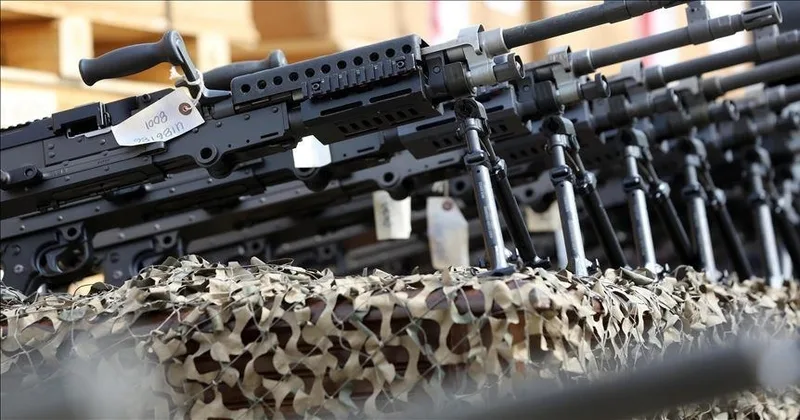
In this century, war and armed conflicts have transformed into a global business. The production and export of deadly weapons have become lucrative industries, influencing international politics and policy decisions

Dr Manmohan PrakashDr Manmohan Prakash
Nov 9, 2025, 03:10 pm IST
inWorld, Defence
Follow on Google News
production and export of deadly weapons have become lucrative industries

production and export of deadly weapons have become lucrative industries

Facebook
Twitter
WhatsAppTelegramEmail

The 21st century stands as a strange paradox-an era of extraordinary scientific advancement and digital progress, yet one where humanity seems to be retreating from its own essential values. Once, “food, clothing and shelter” defined the foundation of human necessity. Today, they have been overshadowed by “tanks, missiles and nuclear weapons.” The modern world, while claiming to be more civilized and enlightened, is increasingly preoccupied with tools of destruction rather than instruments of life.

It is an unsettling truth that global powers are diverting colossal resources to an arms race while turning a blind eye to the real challenges of hunger, poverty, disease and climate crisis. According to the Stockholm International Peace Research Institute (SIPRI) Report 2024, the world’s total military expenditure has crossed 2.4 trillion US dollars, the highest in recorded history. The United States, China, Russia, India and Saudi Arabia top this list, with the United States alone accounting for nearly 45 per cent of global defense spending.

In contrast, the United Nations World Food Programme reports that around 700 million people across the globe still lack adequate and safe food. Other UN findings reveal that nearly one-third of humanity continues to live below the poverty line, and about 1.6 billion people still do not have access to safe and permanent housing. These figures reveal a distressing contradiction between global affluence and the deprivation of millions.

In this century, war and armed conflicts have transformed into a global business. The production and export of deadly weapons have become lucrative industries, influencing international politics and policy decisions. The Russia–Ukraine war, the Israel–Hamas conflict and persistent tensions between Iran and Israel, the US and China, Pakistan and Afghanistan, and the two Koreas have become powerful catalysts for the global arms market. While ordinary citizens lose their homes, livelihoods and lives to these conflicts, the profits of arms corporations soar in stock markets. Security has turned into an industry of fear and profit.

What is even more disturbing is the fact that both developed and developing nations are expanding their defense budgets, while allocations for healthcare, education and environmental protection continue to decline year after year. In poorer countries, where millions still struggle to access basic amenities, the relentless rise in defense expenditure raises a grave question, are these nations truly investing in their people’s future, or in their destruction?

In my opinion the true progress lies not in domination but in cooperation, coexistence and shared growth. Yet, instead of building peace, the global economy is investing in the machinery of war. Nations with technological and military prowess are developing ever-deadlier weapons to assert dominance. Those lacking such capabilities are spending beyond their means to purchase arms, while the poorest nations surrender their sovereignty under the so-called “security umbrellas” of powerful countries, paying heavy economic and political prices in return.

Also Read: PM Modi launches ‘Vande Mataram@150’ celebrations: Stamp, coin, & portal released to honour national song of Bharat

In this bleak scenario, the words of UN Secretary-General António Guterres echo with painful relevance:
“Instead of fighting hunger and inequality, we are preparing for wars and weapons. This is humanity’s true defeat.” Human civilization must pause and reassess its priorities. Should our collective strength serve the preservation of life or the perfection of destruction? If even 10 per cent of global military spending were redirected toward health, education and food security, hunger and poverty could virtually vanish from the planet. Yet, powerful military alliances such as NATO continue to deliberate on increasing defense budgets, further deepening this paradox of misplaced priorities.

Science and technology were meant to serve human welfare, not warfare. Replacing “bread, clothing and shelter” with “rockets, ammunition and missiles” is not progress,it is regression disguised as security. The sooner this error is recognized and corrected, the better it will be for humanity.

Weapons can never bring peace; they only breed deeper insecurity and fear. The true defense of humanity lies not in arms, but in compassion, wisdom and shared responsibility. The world must remember that peace is not secured by power, but by the moral courage to prioritize humanity over hostility.
Topics: defence budgetDefence SpendingArms IndustryGeopoliicsMilitary Expenditure
Share
Tweet
SendShareSend
✮ Subscribe Organiser YouTube Channel. ✮
✮ Join Organiser's WhatsApp channel for Nationalist views beyond the news. ✮
Previous News

SIR in West Bengal: Between democratic duty and political drama

Next News

EV industry zooms ahead in Bharat: Record 2.34 lakh sales in October signal 2 million milestone by year end

Related News

India’s Defence Sector Rise: Self-reliance, indigenous military tech powering strategic edge & national security

Finance Minister Nirmala Sitharaman (Old image used for representative purposes)

Union Budget 2026: Debt targets, defence push and infrastructure spending take centre stage

A representative image

Atmanirbhar Bharat in Defence: Indigenous manufacturing drives emergence of nation as a global export Power

Security of India and Modi Government

Contribution of the defence budget in nation building

Huge Increase in China’s defence budget – What it means for India and the World

Load More

Latest News

Congress smears paint on Telangana BJP office, attacks Nalgonda leader’s home; N Ramchander Rao warns of reply

India’s economy grew 7.8 per cent in Q1 FY2026-27, driven by investment, manufacturing, services and domestic demand

India’s GDP expands 7.8 per cent in Q1 FY2026-27, beats 7.1 per cent market estimate despite global economic headwinds

ABVP Releases List of 13 Probable Candidates for the Upcoming Delhi University Students’ Union Elections

NIA has arrested three accused from Punjab’s SBS Nagar in connection with the January 1, 2026 IED blast at the Nalagarh Police Station

Nalagarh IED Blast: NIA arrests three accused from Punjab’s SBS Nagar, total arrests rise to six

Dr Mohan Bhagwat in New York: Hindutva, inclusiveness and the civilisational message of Bharat

Posters of Wanted Maoists Released by the Jharkhand Police

Maoist crackdown intensifies in Jharkhand: Six cadres linked to Rs 1-Crore rewardee Asim Mondal on police radar

RSS Sarsanghchalak Mohan Bhagwat

Universal Oneness in America: What RSS Sarsanghchalak Mohan Bhagwat’s New York speech really means

Behind the ‘Spontaneous’ Mask: How NYT exposed Abhijeet Dipke’s AAP past and PR tactics

Alexander, 49, a Ukrainian soldier who had fought against Russian forces, was stabbed to death by his 15-year-old son in Dortmund, Germany.

Germany: Islam convert 15-year-old son stabs Ukrainian soldier father to death; Quran verse 60:4 sparks fresh debate

(Left) PM Narendra Modi (Right) Russian President Vladimir Putin

“Time to move away from endless war to end of war”: PM Modi tells Russian Prez Putin on sidelines of SCO summit

Load More
  • Privacy
  • Terms
  • Cookie Policy
  • Refund and Cancellation
  • Delivery and Shipping

© Bharat Prakashan (Delhi) Limited.
Tech-enabled by Ananthapuri Technologies

  • Home
  • Search Organiser
  • Bharat
    • Assam
    • Bihar
    • Chhattisgarh
    • Jharkhand
    • Maharashtra
    • View All States
  • World
    • Asia
    • Africa
    • North America
    • South America
    • Europe
    • Australia
  • Editorial
  • Operation Sindoor
  • Opinion
  • Analysis
  • Defence
  • Culture
  • Sports
  • Business
  • RSS @ 100
  • Entertainment
  • More ..
    • Sci & Tech
    • Vocal4Local
    • Special Report
    • Education
    • Employment
    • Books
    • Interviews
    • Travel
    • Health
    • Politics
    • Law
    • Economy
    • Obituary
  • Subscribe Magazine
  • Read Ecopy
  • Advertise
  • Circulation
  • Careers
  • About Us
  • Contact Us
  • Policies & Terms
    • Privacy Policy
    • Cookie Policy
    • Refund and Cancellation
    • Terms of Use

© Bharat Prakashan (Delhi) Limited.
Tech-enabled by Ananthapuri Technologies