





As India continues to bask in the euphoria of its historic Women’s World Cup win on November 2, a quieter but equally stirring triumph has unfolded in Ichkela, a remote tribal village in Chhattisgarh’s Jashpur district.
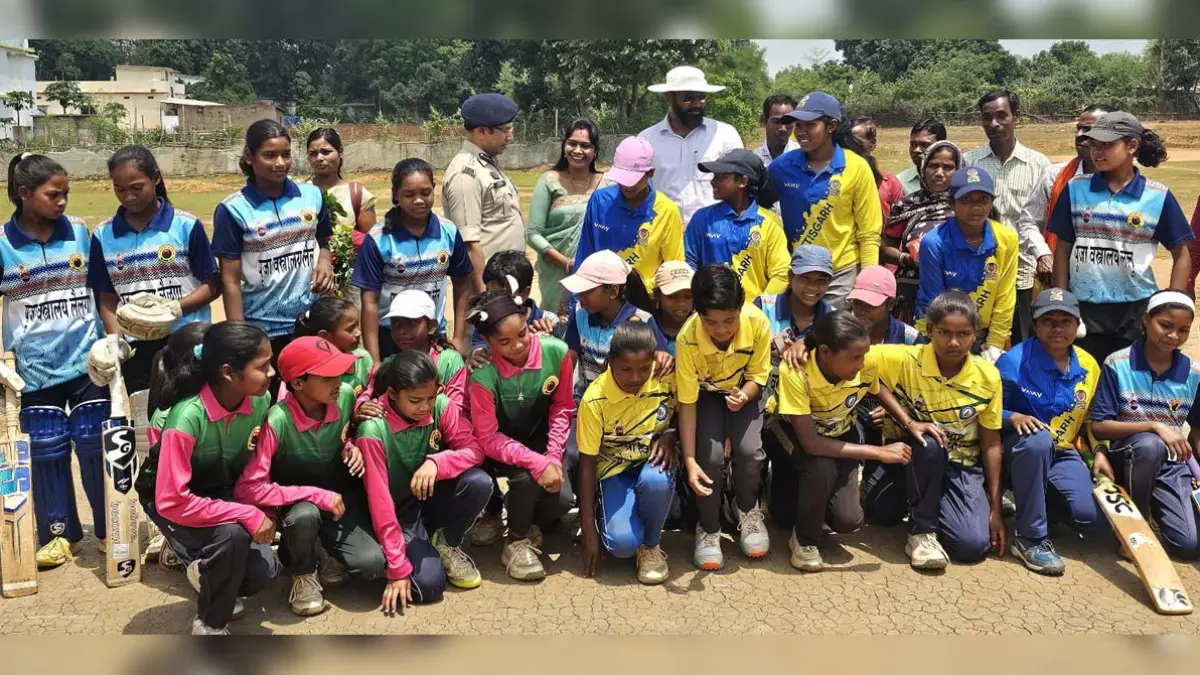
Here, in the dusty courtyard of a government pre-matric girls hostel, fifteen tribal girls have scripted a story of courage, discipline, and transformation, turning their modest beginnings into a movement of hope.
In May 2025, nine girls from the hostel made it to the Chhattisgarh Under-15 State Team, while six others were shortlisted for the Under-19 trials. For a single tribal hostel, this is unprecedented, a symbol of how the sport, once confined to India’s metros, is now taking root in its villages.
The Woman behind the dream
At the centre of this revolution stands Pandri Bai, the hostel superintendent and a member of a Particularly Vulnerable Tribal Group (PVTG). What began as a mother’s hope for her daughter has today blossomed into a sporting phenomenon.
Her daughter, Akanksha Rani, was among the first from Ichkela to don the Chhattisgarh jersey in the BCCI’s Under-15 and Under-19 teams, a feat born not from privilege, but from persistence. With no playground, no proper bat, and no cricket kit, Akanksha had begun by playing in the open fields with sticks and stones, her feet bare and her spirit unbroken.
Watching her daughter chase the ball across the dusty ground, Pandri Bai saw more than a game, she saw courage, hunger, and a glimmer of possibility. In that moment, she realised that every girl in her hostel carried the same fire, a spark waiting only for someone to believe in it and turn it into a flame.
With no external funding or institutional support, she spent from her own savings to hire coach Santosh Kumar, buy cricket kits, and even extend hostel stays for girls who had finished school, so they could continue training.
“When I saw Akanksha’s eyes light up every time she played, I realised this wasn’t just her dream, it was every girl’s,” Pandri Bai says, her voice steady yet full of emotion.
Discipline in dust, determination in dawn
Each day in Ichkela begins long before sunrise. The girls wake at 4:30 am, tie their hair, and step onto a makeshift pitch still covered with morning dew. They practice until 8:30 am, rush for school, and return for evening training under fading light.
What began as barefoot sessions with borrowed bats and stitched balls has evolved into an organised training programme. The pitch inside the hostel campus has become a symbol of faith, where dreams are shaped not by privilege but by persistence.
Most of the girls come from families of farmers, daily-wage workers, and forest gatherers, yet they carry ambitions that stretch far beyond their means. “Our fathers don’t understand cricket,” says Angel Lakra, one of the players, “but they know we’re doing something that makes the whole village proud.”
From local grounds to state and national glory
The seeds of this transformation were sown a year earlier. In 2024, three girls from the same hostel, Angel Lakra, Varsha Bai, and Jhoomur Tirki, broke barriers by being selected for India’s Under-17 National Women’s Cricket Team. For the first time, a single government tribal hostel from Chhattisgarh had produced national-level players.
“When my name was announced for the national team, my mother distributed sweets across the village,” recalls Varsha, who later made it to the BCCI’s Under-19 squad.
This year’s selection of fifteen more players has only strengthened Ichkela’s identity as a “Mini Cricket Hub” of Chhattisgarh. Out of the 13 players in the Surguja division’s girls’ team, 11 hail from this single hostel, a testament to what sustained belief and guidance can achieve.
Recognition and government support
Their success has not gone unnoticed. Chhattisgarh Chief Minister Vishnu Deo Sai, himself from Jashpur, congratulated the girls and their mentor, calling it a “moment of collective pride for Chhattisgarh.”
“This is not only Jashpur’s pride but Chhattisgarh’s glory,” the Chief Minister said, assuring government support to promote sports among tribal youth and promising enhanced training facilities in the region.
For Pandri Bai, this is not merely about winning matches; it’s about breaking the boundaries of what’s possible for tribal girls. “When I saw my daughter succeed, I realised that every girl here has the same fire,” she says, her eyes moist but resolute.
What began as a mother’s mission has become a grassroots revolution, one that has replaced hesitation with confidence and invisibility with identity.
The heartbeat of India’s cricketing revolution
At a time when India’s women cricketers have lifted the World Cup and inspired millions, the story of Ichkela reminds the nation where the real heartbeat of cricket lies, not in packed stadiums or elite academies, but in mud pitches, hand-me-down kits, and unshakable belief.
In Ichkela, cricket is not just a sport, it’s a language of empowerment. It’s where little girls who once fetched water from streams now hold bats with purpose, and where the sound of leather on willow echoes louder than the silence of neglect.
Generation that dares to dream
Ichkela’s girls are not just players; they are symbols of possibility. They are the new face of Indian cricket’s silent revolution, a revolution born in the red soil of Jashpur and nurtured by the unwavering love of one woman who dared to dream for them.
As India celebrates its World Cup triumph, Ichkela whispers a story just as powerful, of dreams shaped in dust, polished by discipline, and lifted by faith.
Because in Ichkela, one hostel is not merely raising cricketers, it is raising a generation that knows how to dream, and how to turn that dream into destiny.
















Comments