






When we refer to Bharat as Mata, we are not referring to a piece of land, but to a conscious, living deity who embodies the traits of divinity. Mother represents divinity, unconditional love, caring and always wishes for the well-being and peace of all the children. Who could anyone despise such a mother?
Many cultures have been destroyed and finished by invaders throughout history, but only the Sanatan culture has persisted despite more than 200 savage attacks. A thorough examination will reveal that Sanatan culture is not simply a notion or idea, but a real phenomena that works practically and develops the spirit in each individual that “Bharat Mata” comes first. It fosters an attitude of gratitude toward Bharat as a nation and Bharat Mata, recognizing that whatever I have achieved in life is due to “Bharat Mata”, and that it is my responsibility to protect and strive for the benefit of society and nation.
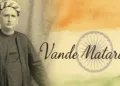
The most famous and inspiring catchphrase ever is “Vande mataram”. Many years before to the first struggle of independence in 1857, traces of its existence were discovered during the Sannyasi-Fakir Rebellion of 1767–1800. Throughout the Bharatiya freedom movement, it served as the main catchphrase employed by the patriots to bring the Bharatiya masses together and instill a feeling of pride in their country. Bamkim Chandra Chattopadhyay wrote the lyrics in Bengali and Sanskrit in 1876. They were later included in his novel Anandamath in 1882.
The National Song of Bharat is significant in the freedom movement, Swadeshi movement and environment
The words of the song honor the homeland by depicting Bharat as a celestial mother figure and praising her majesty, beauty and strength. As a rallying cry for Bharat’s struggle for independence, the lines of “Vande Mataram” inspire a deep sense of patriotism and respect for the nation.
Bankim Chandra Chatterjee composed a song that resonated with the emotions of the Bharatiya people, setting the stirring words of “Vande Mataram” to music. The song subsequently became a symbol of opposition to British rule after evolving into a variety of genres and interpretations. The song became a unifying anthem for people from different linguistic and cultural backgrounds in Bharat because it was written in Sanskrit, a language prized for its classical and spiritual significance.
“Vande Mataram” was crucial to Bharat’s liberation struggle. It entered the national psyche when Rabindranath Tagore sung it for the first time at the Bharatiya National Congress in 1886. The song quickly gained popularity and became a staple of marches, rallies and other nationalist events.
Launched in 1905 in reaction to the British decision to divide Bengal, the Swadeshi Movement in Bharat played a major role in the Bharatiya independence movement. Bharatiyas were urged by the campaign to support products made in Bharat rather than British imports. This was done to promote a sense of patriotism and harm the British economy. People from all over the nation took part by organizing protests, encouraging self-reliance and using only products created in Bharat. In addition to laying the groundwork for later liberation movements, the Swadeshi Movement was crucial in bringing Bharatiyas together against British rule.
“Vande Mataram” came to represent opposition to British economic policy during the Swadeshi Movement in the early 20th century. Liberation fighters, activists and ordinary citizens all performed the song, which offered courage and support in the face of injustice. Leaders like Aurobindo Ghosh, Lala Lajpat Rai and Bal Gangadhar Tilak encouraged the use of “Vande Mataram” as a rallying cry and it soon came to represent the spirit of Bharat’s independence campaign. Recognizing the song’s ability to inspire the masses, the British tried to suppress it, but their attempts simply made it more well-known.
“Vande Mataram” has become more well-known in recent years as a representation of environmental consciousness and accountability. Some renditions of the song have connected patriotism to the larger objective of sustainable development by highlighting and honoring the importance of preserving the Bharat Mata’s natural beauty. This evolving version of “Vande Mataram” highlights the song’s enduring significance and its ability to inspire new Bharatiya generations to make significant contributions to the advancement of the nation. It is a song that has inspired Bharatiyas to love their nation and is widely performed as a reminder and a sign of respect at all national gatherings.
Despite being written in Bengali at first, Vande Mataram became an anthem that brought people from all across Bharat together despite linguistic and geographical obstacles. Its capacity to connect with people from various cultural, religious and geographical origins emphasizes its function in fostering national unity. Over time, it came to represent the cultural diversity and togetherness of Bharat. Vande Mataram tune has had a long-lasting influence on Bharatiya music. It has been performed in a variety of ways, including folk, classical and contemporary versions and it has played a big role in patriotic events and Bharatiya musical performances. Poetry, literature and artistic expression have all been impacted by the song, which has come to represent Indian nationalism.
In his “Mahayogi”, Aurobindo Ghosh explains the significance of Vande Mataram by stating it as an expression of nationalism”. Millions of people were talking about it as it swiftly spread throughout Bharat. The song is regarded by Cambridge academics as “the greatest and most enduring gift of the Swadeshi movement”. According to a 2002 BBC World Services poll, Vande Mataram was the second most popular song worldwide.
How the religious and political motivations rendered this song contentious
It served as the revolution’s anthem against the British Empire. This song was praised by all the great revolutionaries, including Bhagat Singh, Asfaullah, Raj Guru, Sukhdev, Khudi Ram Bose, Ram Prasad Bismil, and others. They said “Vande Mataram” as their final words before being hanged. “Vande Mataram” is the sole song that ought to be the nation’s song. Asfaullah and other Muslim rebels also praised this song, so it is not religious.
For the express purpose of soothing Muslims, it was decided to shorten this National Song during the Congress Working Committee meeting in Kolkata in 1937. And so this song’s period of misfortune began! Even then, the Muslims were not content. They intended to get rid of this tune entirely. Barrister Jinnah, the chairman of the Muslim League, objected to performing the opening line of “Vande Mataram” on March 17, 1938.
In several parts of Bharat, the Congress Ministry assumed control in 1937. Some people may have believed that “Vande Mataram” will have better days soon, but this was also untrue. Singing “Vande Mataram” on All India Radio was strictly forbidden as part of the appeasement of Muslims. Master Krushnrao, the well-known singer, fought hard for this. Under the justification that “if there is no ‘Vande Mataram’ on radio, then there is no song of mine”, he did not perform on All India Radio for many years. The prohibition on “Vande Mataram” was lifted in March 1947 thanks to the efforts of respected Krushnrao.
Respected Krushnrao Fulmbrikar disproved Pandit Jawaharlal Nehru’s claim that “Vande Mataram” couldn’t rhyme with the band in a scientific way. Krushnrao Fulmbrikar’s efforts were so great that he was called “Vande Mataram Krushnrao.” The book “Historical story of Vande Mataram” was written by Shri. Amarendra Gadgil. He states in this book that “there was no reason for the actual discussion of what should be the National song in Free Bharat, but due to the weakness in 1937 that the Congress despised “Vande Mataram”, Pt. Nehru removed this patriotic song from the place of National song”. The relationship between Congress and the government was established in this nation in 1937 when Congress Ministry joined regional administration.
After overseeing every aspect of democracy, Pt. Nehru continued to govern like an independent emperor until the very end. Consequently, even after Nehru’s reign, the idea that “whatever Congress says is the law and what Pt. Nehru says is Congress” persisted. Due to these two, the national sin of depriving the national song “Vande Mataram” of its rightful place has been committed. This means that the song has fallen prey to politics and Nehru ideology under the ridiculous pretense of music. There is sufficient evidence to conclude that Nehru had already made up his mind not to make this song the national anthem. The Constitution Committee finally approved “Jana Gana Mana” as the national anthem on January 24, 1950, two days before Bharat’s Republic was proclaimed that we all respect equally.
In 2017, Chennai High Court declared it must be sung once a week in government schools. But, Supreme Court declined equal status for the song par with Jana Gana Mana saying it hurts feelings of certain people.
Shirish Kumur, a minor who upheld Vande Mataram till last breath
Shirish Bal was a native of Maharashtra’s Nandurbar. A little army made up of young children was marching in obedience to Gandhiji’s orders while yelling catchphrases like Vande Mataram and Mahatma Gandhi ki Jay, which were breaking the hearts of the British. Shirish was leading the march when the army arrived at Nandurbar Chowk. The British soldiers were ready to stop him and their chief chastised him, threatening to shoot him if he continued. Shirish Kumar ignored this reprimand and carried on marching while loudly yelling slogans. He was shot by that cruel officer, but he continued to yell Vande Mataram to the very end.
Bharatiya culture and heritage are symbolized by the National Song of Bharat
One important representation of Bharatiya culture and legacy is “Vande Mataram,” the National Song of Bharat. This hymn, which was written by Bankim Chandra Chatterjee, has been important to the nation’s history, particularly during the independence movement.
Bharat has several languages, a rich cultural history and deeply rooted customs. Bharatiyas have a special place in their hearts for the symbols that represent this immense diversity, like as the national anthem, national flag, and national song. Bharat’s national song, “Vande Mataram,” is one such symbol of pride and unity. Millions of Bharatiyas are still motivated by “Vande Mataram,” which played a significant role in the country’s struggle for independence. The Constituent Assembly of Bharat declared “Vande Mataram” to be the country’s national song on January 24, 1950. Dr. Rajendra Prasad, the nation’s first president, proclaimed that “Vande Mataram” ought to be treated with the same respect as the national anthem, “Jana Gana Mana”. “Vande Mataram” is still a beloved song of togetherness and patriotism, even though “Jana Gana Mana” was selected as the national anthem and every Bharatiya equally respects our national anthem.














Comments