AI to enter school classrooms
August 3, 2026
  • Read Ecopy
  • Circulation
  • Advertise
  • Careers
  • About Us
  • Contact Us
Android AppiPhone AppArattai
Organiser
  • ‌
  • Bharat
    • Assam
    • Bihar
    • Chhattisgarh
    • Jharkhand
    • Maharashtra
    • View All States
  • World
    • Asia
    • Europe
    • North America
    • South America
    • Africa
    • Australia
  • Editorial
  • International
  • Opinion
  • RSS @ 100
  • More
    • Op Sindoor
    • Analysis
    • Sports
    • Defence
    • Politics
    • Business
    • Economy
    • Culture
    • Special Report
    • Sci & Tech
    • Entertainment
    • G20
    • Azadi Ka Amrit Mahotsav
    • Vocal4Local
    • Web Stories
    • Education
    • Employment
    • Books
    • Interviews
    • Travel
    • Law
    • Health
    • Obituary
  • Subscribe
    • Subscribe Print Edition
    • Subscribe Ecopy
    • Read Ecopy
  • ‌
  • Bharat
    • Assam
    • Bihar
    • Chhattisgarh
    • Jharkhand
    • Maharashtra
    • View All States
  • World
    • Asia
    • Europe
    • North America
    • South America
    • Africa
    • Australia
  • Editorial
  • International
  • Opinion
  • RSS @ 100
  • More
    • Op Sindoor
    • Analysis
    • Sports
    • Defence
    • Politics
    • Business
    • Economy
    • Culture
    • Special Report
    • Sci & Tech
    • Entertainment
    • G20
    • Azadi Ka Amrit Mahotsav
    • Vocal4Local
    • Web Stories
    • Education
    • Employment
    • Books
    • Interviews
    • Travel
    • Law
    • Health
    • Obituary
  • Subscribe
    • Subscribe Print Edition
    • Subscribe Ecopy
    • Read Ecopy
Organiser
  • Home
  • Bharat
  • World
  • Operation Sindoor
  • Editorial
  • Analysis
  • Opinion
  • Culture
  • Defence
  • International Edition
  • RSS @ 100
  • Magazine
  • Read Ecopy
Home Bharat

AI to Enter School Classrooms: Government to introduce artificial intelligence curriculum from Class 3 onwards

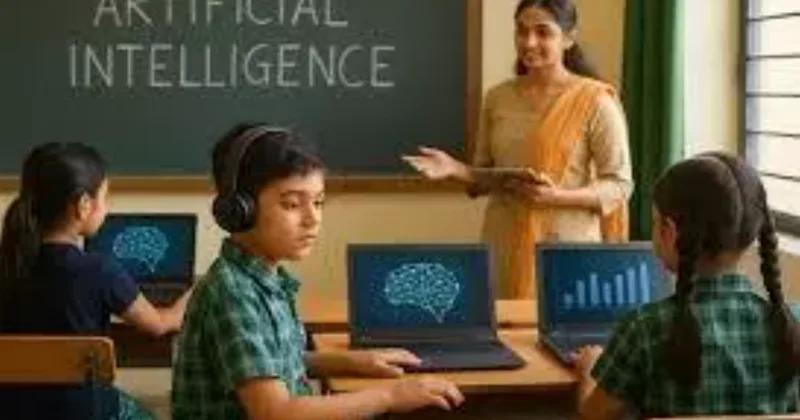
The Ministry of Education will introduce Artificial Intelligence and Computational Thinking in all schools from Class 3 onwards to build future-ready, ethical, and innovative learners.This initiative, aligned with NCF-SE 2023, aims to promote “AI for Public Good” through inclusive learning, teacher training, and responsible technology education

WEBDESKWEBDESK
Nov 5, 2025, 11:00 am IST
in Bharat, Education
Follow on Google News
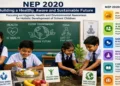
Representative Image

Representative Image

FacebookTwitterWhatsAppTelegramEmail

In a transformative move to prepare India’s young minds for the technological future, the Ministry of Education has announced the introduction of Artificial Intelligence (AI) and Computational Thinking (CT) as part of the school curriculum from Class 3 onwards. The initiative aims to foster a culture of analytical thinking, creativity, and problem-solving among students from an early age, aligning with India’s vision of becoming a global leader in digital innovation and ethical AI usage.

The decision marks a significant milestone under the Department of School Education & Literacy (DoSEL), which reaffirmed its commitment to advancing AI and CT as integral components of future-ready education. The move is part of a broader effort to make students not only digitally literate but also capable of using technology responsibly and intelligently to contribute to the concept of “AI for Public Good.”

The Ministry of Education emphasized that AI and CT will not be limited to advanced or technical students but will be organically embedded in the curriculum from the foundational level. Beginning in Grade 3, students will gradually be introduced to concepts such as logic, pattern recognition, problem-solving, and responsible AI usage in simple and engaging ways.

According to the Ministry, the curriculum will expand across all grades, reinforcing the concept of learning, thinking, and teaching through an AI-driven approach. The vision behind this step is to ensure that children understand technology as a tool for creativity, social good, and innovation, rather than mere automation.

The initiative is part of the National Curriculum Framework for School Education (NCF-SE) 2023, which envisions education that is inclusive, future-oriented, and aligned with the needs of the rapidly changing global landscape. The Department of School Education & Literacy (DoSEL) is working in collaboration with CBSE, NCERT, Kendriya Vidyalaya Sangathan (KVS), Navodaya Vidyalaya Samiti (NVS), and IIT Madras, as well as State and Union Territory representatives, to design an AI and CT curriculum that caters to India’s diverse educational environment.

Also Read: JNUSU 2025: ABVP emerges as voice of change in JNU, leading through solutions and constructive politics, not rhetoric

A key step towards this goal was the stakeholder consultation held on October 29, 2025, where experts from various educational and technological institutions discussed the structure and implementation of the upcoming curriculum.

The Central Board of Secondary Education (CBSE) has formed an expert committee chaired by Prof. Karthik Raman from IIT Madras to develop the AI and CT modules. The committee will oversee curriculum design, resource creation, and integration of AI learning materials into existing syllabi.

During the consultation, Sanjay Kumar, Secretary of the Department of School Education & Literacy (DoSEL), laid the importance of introducing AI as a basic universal skill linked to “The World Around Us.” He said that AI is no longer a specialized subject but a foundational skill necessary for navigating the modern world.

“Education in Artificial Intelligence must be treated as a basic universal skill linked to the world around us. The curriculum must be broad, inclusive, and aligned with the NCF-SE 2023, ensuring that every child’s distinct potential is our priority,” said Shri Kumar.

He also emphasised on regularly updating the curriculum to match new technological changes. He said policymakers should set a basic standard for AI learning and keep reviewing it as global trends evolve.

What sets this initiative apart is its emphasis on ethical AI education. Rather than teaching AI merely as a technical subject, the curriculum will focus on its responsible and human-centered use. Students will learn how AI can be applied for the public good, addressing challenges such as healthcare, education, climate change, and sustainable development.

By introducing the subject early, the Indian government wants students to learn about AI ethics, data privacy, and social responsibility. The program will help them develop critical thinking, empathy, and a sense of responsibility in using technology in daily life.

To ensure the effective rollout of this ambitious program, the government is prioritizing teacher training and resource development. The Ministry has planned to leverage NISHTHA’s teacher training modules and video-based learning resources to equip educators with the necessary skills to teach AI and CT concepts.

Topics: Ministry of EducationArtificial Intelliegnceentral Board of Secondary EducationDepartment of School Education & LiteracyNCERTCBSEIIT (Madras)
ShareTweetSendShareSend
✮ Subscribe Organiser YouTube Channel. ✮
✮ Join Organiser's WhatsApp channel for Nationalist views beyond the news. ✮
Previous News

Guru Nanak Jayanti: The Vaishnav essence of Sikhism and the eternal unity of dharma

Next News

Bilaspur train tragedy: Passenger train collides with goods train, eight dead; Probe points to signal violation

Related News

Priyanka Gandhi’s ‘gaumutra expert’ jibe at Prof V Kamakoti: 215 VC’s, ex-VCs & academics sign open letter slamming her

Representative Image

NCERT CIET Recruitment 2026: Register now for contractual posts under PAB projects; Last date is July 30

A representative image

Higher Education enrolment hits record 4.5 crore in 2023-24; GER reaches 30, shows AISHE Report

For the first time, NCERT adds Emergency to class 9 curriculum, highlights suspension of rights and democratic struggles

NCERT refutes claims of dropping preamble from class 9 textbook, says reports are misleading

ANCHOR was released during the 3rd BRICS Neuroscience Symposium 2026

IIT Madras unveil ‘ANCHOR,’ the world’s most detailed 3D atlas of human brainstem

For the first time, NCERT adds Emergency to class 9 curriculum, highlights suspension of rights and democratic struggles

NCERT includes Emergency chapter in class 9 textbook, describes 1975-77 period as a major challenge to Indian democracy

Load More

Latest News

A representative image

Missionary activities under scanner in Bengal: Allegations of tribal conversions, foreign funding spark local backlash

Accused and his girlfriend in the police custody

Bengal JeM Module: Wanted to infiltrate Jantar Mantar protest as fake policemen, track VIPs – Here’s what police found

Students Intensify Protest, Demand Cancellation and Fair Probe.

JPSC Recruitment Row deepens: Ranchi protests intensify, aspirants demand exam cancellation over paper leak, CBI probe

Shahzad Bhatti network has increasingly been tasked with recruiting and directing operatives inside India

JeM-linked module busted in Bengal: Probe points to Pak-based network tracking VIPs, public gatherings across India

Lieutenant Governor Manoj Sinha releases the book Lieutenant Governor Manoj Sinha

“Sharda Peeth nurtured wisdom of society, Parliament has worked to fulfill Bharat’s aspirations,” says LG Manoj Sinha

Governor Dr Haribabu Kambhampati, Chief Minister Shri Mohan Charan Majhi and other dignitaries at Nasha Mukt Yuva for Viksit Bharat Sankalp Abhiyan

‘Nasha Mukt Yuva – Viksit Bharat Sankalp Abhiyan’: Odisha CM warns drug mafia to reform or face bulldozer action

The third Sarsanghchalak of the RSS Balasaheb Deoras (Image source: https://archives.vsktelangana.org/)

Balasaheb Deoras’ letters to Indira Gandhi during Emergency: RSS stood between the dictatorship and democracy

Site of Suicide bombing attack in which 14 people were killed in in Swat district of Khyber Pakhtunkhwa province in Pakistan

Pakistan: 8 policemen among 14 killed in suicide bombing at Kabal police station in Swat district, 22 injured

(Left) Bilawal Bhutto (Right) Pakistan PM Shehbaz Sharif

PoJK Polls: Bilawal accuses PML-N of robbing votes through bullets & batons; warns of withdrawing support to PM Sharif

Minister Vanni Arasu, CM Vijay Joseph (Left to right) (File Photo)

Tamil Nadu: VCK Minister Vanni Arasu mistakes NCC’s ‘jai hind, sriman’ for ‘jai shri Ram’, BJP hits back

Load More
  • Privacy
  • Terms
  • Cookie Policy
  • Refund and Cancellation
  • Delivery and Shipping

© Bharat Prakashan (Delhi) Limited.
Tech-enabled by Ananthapuri Technologies

  • Home
  • Search Organiser
  • Bharat
    • Assam
    • Bihar
    • Chhattisgarh
    • Jharkhand
    • Maharashtra
    • View All States
  • World
    • Asia
    • Africa
    • North America
    • South America
    • Europe
    • Australia
  • Editorial
  • Operation Sindoor
  • Opinion
  • Analysis
  • Defence
  • Culture
  • Sports
  • Business
  • RSS @ 100
  • Entertainment
  • More ..
    • Sci & Tech
    • Vocal4Local
    • Special Report
    • Education
    • Employment
    • Books
    • Interviews
    • Travel
    • Health
    • Politics
    • Law
    • Economy
    • Obituary
  • Subscribe Magazine
  • Read Ecopy
  • Advertise
  • Circulation
  • Careers
  • About Us
  • Contact Us
  • Policies & Terms
    • Privacy Policy
    • Cookie Policy
    • Refund and Cancellation
    • Terms of Use

© Bharat Prakashan (Delhi) Limited.
Tech-enabled by Ananthapuri Technologies