





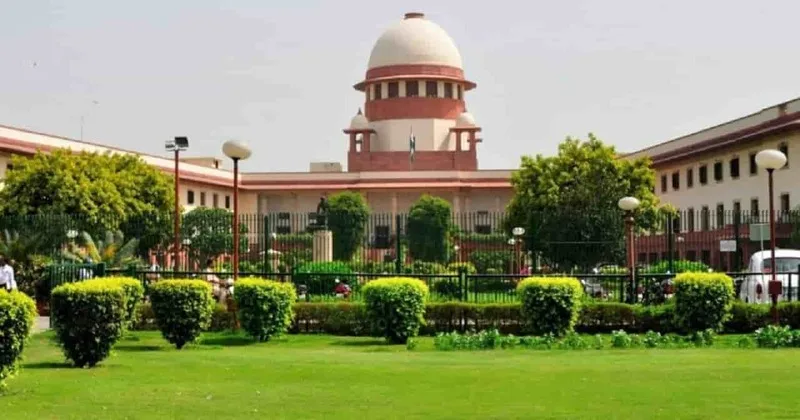
In a case testing the limits of diplomacy and child rights, the Supreme Court of India on Friday (October 31) expressed concern over the disappearance of Russian citizen Victoria Basu and her five-year-old son, who allegedly fled India amid an ongoing custody dispute with her estranged husband, Saikat Basu.
A bench comprising Justice Surya Kant and Justice Joymalya Bagchi said it was cautious about issuing any directive that could adversely affect India’s relations with Russia, even as it sought a concrete response from the Russian Embassy on the child’s whereabouts.
“We do not want to pass any order that impacts relations between the two countries, but it is also an important matter as it is about a kid,” the bench observed, while granting the Ministry of External Affairs (MEA) two more weeks to reach out to Russian officials for cooperation.
The top court noted that the Russian Embassy in Delhi had not provided substantial assistance despite repeated communications. The MEA, in its report, said the Indian Embassy in Moscow had already approached the Office of the Prosecutor General of Russia for cooperation under the Mutual Legal Assistance Treaty (MLAT), with a fresh request sent on October 17.
The bench added, “We can only hope that the child is well and healthy as he is with the mother. But we hope it is not a case of child trafficking and that he is not involved in any exploitative activities in Russia.”
According to the petitioner Saikat Basu, his wife Victoria, who came to India in 2019 on an X-1 visa, had been granted temporary custody of their child for three days a week under a Supreme Court order dated May 22, 2025. The remaining days were to be spent with the father. However, on July 7, Victoria allegedly absconded with the child, violating court orders.
Basu later alleged that she was seen entering the Russian Embassy in Delhi with luggage and was reportedly assisted by embassy personnel. Investigations revealed that she may have fled India through Nepal and Sharjah, prompting the Delhi Police to send notices to Russian authorities.
Additional Solicitor General (ASG) Aishwarya Bhati, representing the Centre, informed the court that the MEA is coordinating with Delhi Police to trace other individuals involved, including Nepali citizens, through the MLAT mechanism.
“We are road-blocked on information from the Russian side, despite taking various efforts,” Bhati told the court.
The bench has now directed the ASG to file a status report within two weeks, noting that necessary instructions will be issued to both the MEA and Delhi Police to pursue all possible diplomatic and legal channels.














Comments