





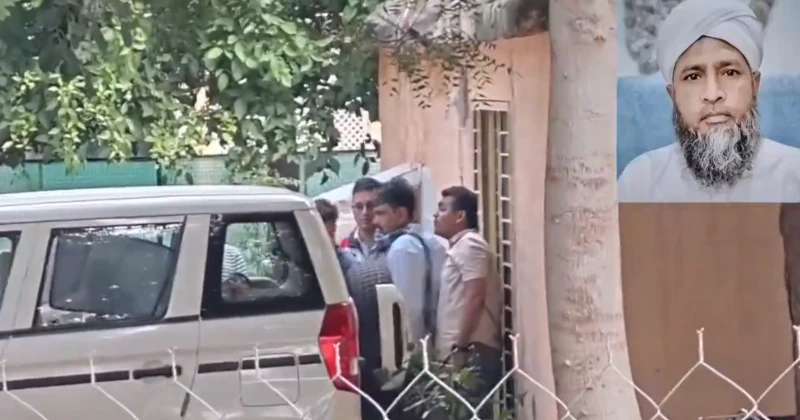
The National Investigation Agency (NIA) and the Anti-Terrorist Squad (ATS) of Rajasthan detained five suspected Islamic radicals, including three Madrasa Maulvis, in coordinated raids across multiple districts of the state. The suspects are believed to have connections with an international terror network allegedly operating through religious and educational channels.
The crackdown described by senior security officials as one of the most significant joint counter-terror operations in western Rajasthan in recent years — followed specific intelligence inputs from the Intelligence Bureau (IB) about cross-border communications and suspicious financial activity linked to religious institutions in the region.
BREAKING: Major ATS raids in Rajasthan after an NIA intel!
Five Islamic terrorists, including three Madrasa Maulvis, nabbed.
Maulvis: Ayub, Masood, and Usman
Civilian terrorists: Junaid from Karaul
Seized documents hint at international funding.
Remember: India has over… pic.twitter.com/cAFFePukAN
— Angry Saffron (@AngrySaffron) October 31, 2025
Around 5 a.m., multiple NIA and ATS teams, working in tandem with the IB, conducted simultaneous raids at several locations across Jodhpur, Jalore, Karauli, and Jaipur districts.
In Jodhpur’s Chaukha and Pipar areas, the teams detained two Islamic Maulvis Ayub and Masood, while a third cleric, Usman, was picked up from Sanchore in Jalore district. Notably, Masood and Usman are brothers, both associated with different madrasas that had come under scrutiny for suspected links to radical preachers and unverified overseas funding.
In Karauli, a youth identified as Junaid, hailing from Dholikhar village, was also detained for questioning. Another suspect was taken into custody in Jaipur, where investigators reportedly recovered digital communication logs suggesting coordination with foreign handlers.
All five detainees were transported under high security to Jodhpur, where they are being jointly interrogated by NIA, ATS, and IB officials.
During the raids, officials seized laptops, mobile phones, pen drives, hard disks, and printed documents from the residences and institutions linked to the suspects. Among the materials recovered were digital records in Arabic and Urdu, financial ledgers, and communication exchanges believed to have occurred over encrypted social media platforms and VoIP apps.
Forensic experts are analysing the recovered data to trace funding channels, communication trails, and potential recruitment patterns. Preliminary findings point toward foreign funding funneled through informal channels under the guise of religious and charitable donations to madrasas in western Rajasthan.
According to sources familiar with the investigation, the seized documents include names of intermediaries, bank transaction patterns, and coded correspondence possibly linked to entities based in the Middle East and Pakistan.
The operation has cast a renewed spotlight on the madrasa ecosystem in India, particularly in border states like Rajasthan where religious institutions operate with limited oversight. While India officially has over 40,000 registered madrasas, security agencies estimate that the number of unregistered institutions could be significantly higher, with several functioning without proper verification or accountability.
Intelligence officials have long warned that a small but dangerous segment of these institutions could be exploited for spreading radical ideologies or serving as conduits for illicit funding.
A senior ATS official involved in the operation said, “We have reasons to believe that the detained Maulvis were in touch with members of a banned Islamic organisation outside India. Preliminary digital evidence suggests they were disseminating radical material through religious classes and online study groups.”
Officials confirmed that the crackdown was ordered following intercepted electronic communication between suspected operatives in India and contacts abroad, possibly in Pakistan, the UAE, and Bangladesh. These communications allegedly discussed financial transfers, propaganda material, and recruitment of vulnerable youth from religious schools in Rajasthan.
The Ministry of Home Affairs (MHA) was briefed on the operation in advance and is expected to receive a detailed report once initial interrogation concludes. Central agencies are also investigating whether hawala routes or NGO-based fronts were used to transfer funds to the madrasas under scrutiny.
Following the detentions, security was intensified across Jodhpur, Jalore, and Karauli districts to prevent any untoward incidents. Police presence was strengthened in communally sensitive areas, and local intelligence units were instructed to monitor social media activity to curb the spread of rumours.
District administrations have also reached out to community leaders to maintain peace, emphasising that the investigation targets specific individuals and not institutions at large. The NIA and ATS believe that the arrests could unravel a wider network of individuals and organisations engaged in radical indoctrination and recruitment through religious and educational fronts.
According to one NIA source, “This is not an isolated pocket. The individuals detained today are likely part of a broader ideological and logistical network operating across Rajasthan’s western corridor. The evidence suggests a systematic effort to radicalise local youth under the garb of religious teaching.”
The investigators are now cross-verifying whether the suspects have connections with earlier modules busted in Uttar Pradesh, Gujarat, and Madhya Pradesh, where foreign-linked religious organisations were found to be influencing madrasa operations.













Comments