





A Pakistani Army captain was among six soldiers killed in a clash with militants near the Afghan border in Khyber Pakhtunkhwa’s Kurram district, the Pakistani military said on October 29. According to a statement from Pakistan’s Inter-Services Public Relations (ISPR), the military’s media wing, at least seven militants were also killed during an intelligence-based operation (IBO) conducted in the Dogar area of Kurram.
The ISPR said the operation targeted members of Fitna al-Khawarij, a term it uses to describe militants belonging to the banned Tehreek-i-Taliban Pakistan (TTP). Pakistan Defence Minister Khwaja Asif has accused India of having control over TTP and instigating it to target his country.
The Kurram district, which borders Afghanistan, has become a frequent flashpoint for cross-border militant infiltration and attacks targeting Pakistan’s security forces. It may be mentioned here that the Afghans do not recognise the Durand Line which separates Afghanistan and Pakistan. The Durand Line is a colonial British legacy and it divided the Pashtun areas between the two neighbouring countries. This is a fundamental reason for the Afghans not recognising this line saying it divides the people of an ethnic stock artificially.
According to Dawn, among those who were killed was Captain Noman Saleem, a 24-year-old medical officer from Mianwali who, according to the army, “fought gallantly and embraced shahadat (martyrdom) along with his five men.” The other soldiers killed were Havaldar Amjad Ali (39, Swabi), Naik Waqas Ahmad (36, Rawalpindi), Sepoy Aijaz Ali (23, Shikarpur), Sepoy Muhammad Waleed (23, Jhelum), and Sepoy Muhammad Shahbaz (32, Khairpur).
ISPR said a sanitisation operation was underway to eliminate any remaining militants in the area. “The relentless counterterrorism campaign under ‘Azm-e-Istehkam’ will continue at full pace to wipe out the menace of foreign-sponsored and supported terrorism from the country,” the statement added.
The clash underscores Pakistan’s escalating security challenges in Khyber Pakhtunkhwa and Balochistan, where militant attacks have surged since the TTP ended its ceasefire with the government in late 2022. Pakistan often accuses Afghanistan of providing shelter to both Baloch and Pushtoon fighters, particularly those affiliated with TTP. It is another matter that Pakistan itself played double games with the Western forces based in Afghanistan. It backed the Afghan Taliban against the very forces it got millions of dollars from, and this hunting with the hounds and running with the hares is a policy it has followed for too long.
As many as 298 people have been killed in terrorist incidents across Khyber Pakhtunkhwa so far this year, according to a report by the province’s Counter-Terrorism Department (CTD). The report said security forces conducted 2,366 intelligence-based operations, leading to the arrest of 1,124 militants and the killing of 368 terrorists in encounters. It added that 6,181 suspects were charged in various terrorism-related cases during the year.
The Counter-Terrorism Department noted that action against extortion rackets also intensified, with 1,287 cases registered, 209 suspects charged, and 52 others caught in ongoing operations.
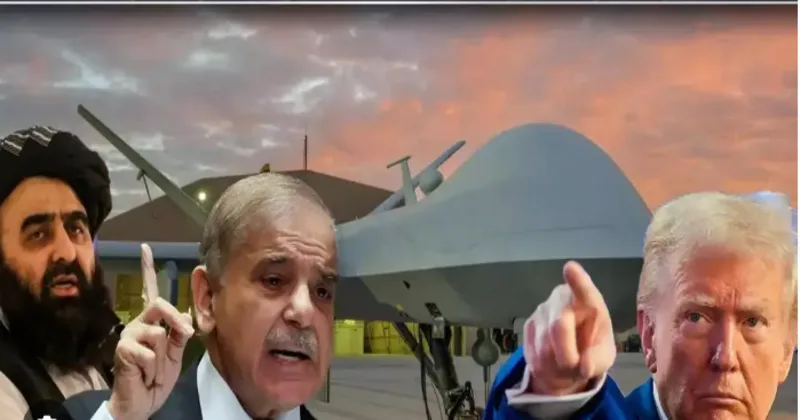
Meanwhile, the real reason for the failure of the Pakistan-Afghanistan talks has been revealed now as the presence of US drones in Pakistan. Pakistan is getting a lot of money for providing its territory as parking station for US drones which have conducted several strikes within Afghanistan. It is likely to continue this policy of carrying out strikes in Afghanistan with Pakistani connivance.
The Pakistan negotiators told their Afghan counterparts that they could not prevent a “third country from carrying out strikes within Afghanistan’’. It has become clear now that the unnamed country in the talks is US and Pakistan cannot stop it from doing what it wants.
Pakistan has used its air and drone power against the Taliban-led Afghanistan, which doesn’t have an air force. The absence of air assets with Afghan Taliban is a reason why Pakistan has an upper hand in the clashes and inflicts disproportionate losses on Afghanistan. However, the Afghan forces open heavy shelling on Pakistani positions whenever an air attack is launched by Islamabad.
“During the negotiations, for the first time, Pakistan admitted during these negotiations that it has an agreement with the United States allowing drone strikes, and claimed it cannot break that agreement,” TOLO News of Afghanistan posted on X on October 28.
On Thursday, reports suggested that the Afghan and Pakistani negotiators have been asked by Turkiye, some other Arab nations to engage in further discussions. The two countries will now need to find a way to skirt the issue of US drones which Pakistan has expressed its helplessness about in further negotiations.















Comments