





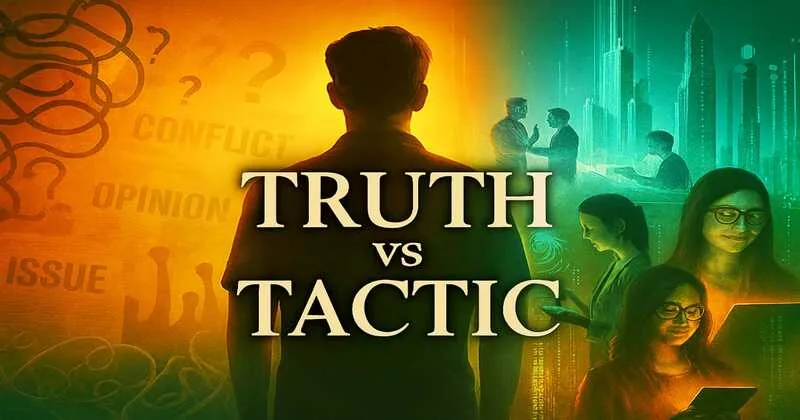
The BBC has done it again. Draped in the sanctimony of “independent journalism,” it has once more unleashed a hit job on India, this time targeting the nation’s 370 million young citizens. In its latest feature, the broadcaster claims that India’s Gen Z is disenchanted, suppressed, and fragmented, teetering on the brink of unrest.
But behind the dramatic prose lies something darker–a pattern of colonial cynicism dressed up as concern. The BBC is not reporting India, it is resisting India’s rise.
The Old Empire’s New Weapon: Narrative Manipulation
The British once ruled India through divide and rule. Today, they attempt to do it again, through division and narration.
For decades, the BBC has sought to frame India’s every success as suspicion and every struggle as collapse. Its language is always the same, patronizing pity for India’s poor, and veiled contempt for India’s power.
Now that India is leading on AI, space, digital governance, and diplomacy, the empire’s old mouthpiece finds comfort in questioning our cohesion. Because a strong, confident, and self-reliant India threatens the old Western template, where the Global South must remain a story of chaos, not competence.
Target: India’s Youth
By portraying Gen Z as a generation “afraid to speak,” the BBC attempts to fracture the very pillar of India’s future. This is no accident, it’s psychological warfare.
If India’s youth can be made to doubt their democracy, their nation, and their identity, then the West reclaims its moral upper hand. The BBC’s article does precisely that, it cherry-picks anecdotes of protests in Ladakh or Rahul Gandhi’s unverified claims of voter fraud to fabricate an illusion of unrest.
But India’s youth are not burning down systems; they’re building them. They’re not running from nationalism; they’re redefining it with confidence, not fear.
The Real Numbers the BBC Won’t Mention
The facts dismantle the fiction.
India’s youth voter turnout in 2024 crossed 66 per cent, higher than the UK or US.
India’s startup ecosystem– powered by young founders is now the third-largest in the world, worth over $350 billion (Hurun India, 2025).
India’s GDP is growing at 6.8 per cent (IMF 2025) faster than every major Western economy.
Government programs like Skill India, Startup India, and Digital India have empowered millions, creating one of the world’s largest youth employment networks.
Does this sound like a nation on the brink of rebellion? Or one marching confidently toward global leadership?
BBC’s Bias: Colonialism in Disguise
The BBC’s coverage of India has always carried a moral superiority complex–a hangover of empire dressed in journalistic neutrality. From its distorted documentaries on Kashmir to its one-sided coverage of CAA protests, the BBC’s lens has been consistently anti-India, anti-Hindu, and anti-truth.
It seeks not to inform, but to implant doubt to whisper that India’s democracy is a façade, that India’s growth is a myth, and that India’s youth are chained by fear.
But what it cannot accept is that India is now narrating its own story, without British permission, without Western approval.
Why the West Fears India’s Confidence
In truth, the BBC’s anxiety is not about India’s democracy , it’s about India’s dominance.
A billion people thinking for themselves, coding their own technologies, writing their own future , that’s the real threat to the Western media order.
India is no longer the “subject” of the global story; it is becoming the storyteller. And that terrifies those who once claimed to be the moral compass of the world.
When the BBC compares India to Bangladesh or Madagascar, it exposes not analysis but arrogance, the inability to accept that the former colony has outgrown the former colonizer.
The Great Hypocrisy
The same BBC that lectures India on “freedom of expression” has silenced journalists exposing grooming gangs in Britain. The same outlet that moralizes about “caste divides” turns a blind eye to racism, Islamophobia, and class inequality in its own country.
It glorifies protests in London as “democratic expression” but calls peaceful student rallies in India “signs of instability.”
This is not journalism. This is imperial nostalgia masquerading as news.
The Truth: India’s Gen Z is Not Fragile, It’s Fearless
India’s youth are not angry at their nation, they are inspired by it. They are coding for the world, defending their borders, creating art, music, and science that transcend geography. They do not need validation from London or New York. They seek partnership, not patronage. And they know as their ancestors did, that those who could not conquer India by force will always try to conquer it by narrative.
The Final Word
Let the BBC and its ideological cousins write their elegies for Indian democracy, India will write its own destiny.
The empire that once claimed to civilize the East now hides behind hashtags, trying to demonize the very civilization that taught the world pluralism, peace, and perseverance.
India’s Gen Z is not the child of colonial guilt. It is the heir of civilizational pride – “awake, aware, and unstoppable”.
So when the BBC laments India’s “silent youth,” it reveals not the silence of a generation, but the irrelevance of its own voice.
The British once ruled India with force. Today, they attempt it with falsehood. But this time, India’s youth aren’t listening– they’re leading.















Comments