





The United States may have to make several major concessions if it wants India to take a positive stance on curbing imports of Russian crude oil, according to recent reports. Russia currently supplies over 30 per cent of India’s crude oil, making it the country’s single-largest source of energy imports. Completely halting these purchases is considered impractical, given the economic and strategic realities of India’s energy needs.
However, reports indicate that Washington is exploring the possibility of lowering the steep 50 per cent tariff announced by President Donald Trump on Indian goods to around 15–16 per cent, as part of ongoing negotiations aimed at persuading India to reduce its reliance on Russian oil. These trade discussions, now progressing steadily, have placed New Delhi in a position of significant leverage. Several Indian energy giants, including Reliance Industries, are closely studying the scope and implications of Western sanctions on Russian oil. Indian Oil Corporation (IOC) has already stated that it will respect US-imposed sanctions, but Indian refiners continue to purchase Russian crude through intermediaries and suppliers who remain outside the sanctions framework. This has enabled India to strike a delicate balance between maintaining energy security and navigating the complexities of international pressure. The ongoing trade discussions could, therefore, set a new template for India-US economic relations, blending pragmatism with assertive diplomacy.
Stock markets react positively to trade prospects
Indian stock markets reacted positively to the news of potential progress in the trade negotiations. On Tuesday, benchmark indices rose, tracking global trends, buoyed by hopes of an India-US trade deal materialising soon. The GIFT Nifty, which initially fell in the morning session, later gained 40 points as investor sentiment improved. Analysts, however, expect the Sensex and Nifty to remain volatile in the short term, reflecting global uncertainties.
Meanwhile, several corporate announcements and earnings reports shaped market movements. Adani Ports and Special Economic Zone Ltd signed a major agreement to invest Rs 42,500 crore in the Dighi Port project on Maharashtra’s Konkan coast, a move that underscores India’s strategic push to strengthen its maritime infrastructure and logistics capacity. Hindustan Petroleum Corporation Ltd (HPCL) reported temporary operational disruptions at its Mumbai refinery, while Mazagon Dock Shipbuilders posted a robust 28 per cent increase in net profit and a 6.3 per cent rise in revenue. The company also declared an interim dividend of Rs 6 per share, reinforcing investor confidence. On a brighter note, Indian Oil Corporation recorded a dramatic turnaround, swinging from a loss of Rs 169.6 crore to a profit of Rs 7,817.6 crore, a remarkable reflection of India’s resilient energy sector.
Today, several key companies, including Shree Cement, Tata Capital, TVS Motor, Mahindra Financial, Adani Green Energy, Adani Total Gas, Jindal Steel, and Star Health, are set to release their quarterly results, which could influence short-term market sentiment.
Global market outlook and US monetary policy
Across the Atlantic, the dollar and US Treasury yields weakened ahead of the Federal Reserve’s monetary policy announcement scheduled for tomorrow. The US dollar index, which measures the greenback’s performance against six major global currencies, including the euro, yen, and pound, slipped 0.09 per cent to 98.70. The 10-year Treasury yield also fell slightly to 3.981 per cent.
The Federal Reserve is widely expected to cut its benchmark interest rate to support economic growth, a move that could further depress the dollar and bond yields while giving gold prices a short-term boost. Lower interest rates generally weaken the dollar, making commodities like gold more attractive to investors seeking stable returns amid market uncertainty. The upcoming quarterly earnings from tech giants, Amazon, Alphabet (Google), Apple, Meta Platforms, and Microsoft, are also expected to move the US markets significantly. In futures trading, the Dow Jones Industrial Average gained 0.15 per cent, the Nasdaq rose 0.1 per cent, and the S&P 500 remained largely unchanged.
Asia-Pacific markets mixed as US-Japan moves decisively to challenge China
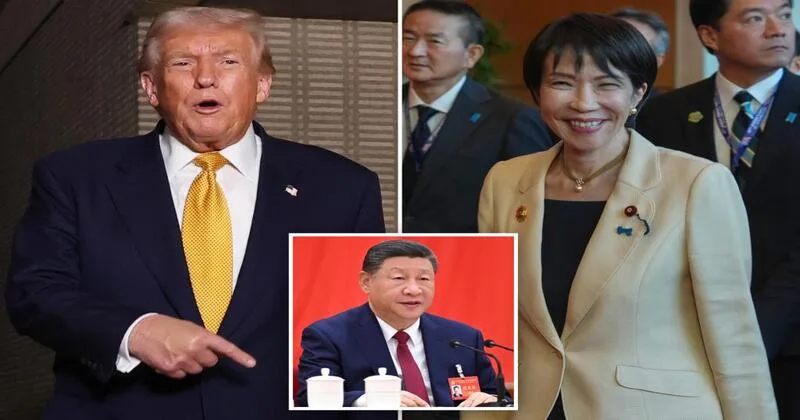
In the Asia-Pacific region, stock markets were mixed following the Trump-Xi meeting, which led to a temporary thaw in US-China trade tensions. In Japan, the Nikkei 225 fell 0.47 per cent from record highs as President Trump arrived in Tokyo for talks with Prime Minister Shinzo Abe. Reports suggest that Trump may announce a deal with Japan on rare earth supplies, a strategic move aimed at countering China’s dominance in the sector. In exchange, Japan is expected to increase its purchases of American weapons and automobiles while announcing new investment plans in the US.
Elsewhere, China’s Shanghai Composite Index fell 0.21 per cent, Hong Kong’s Hang Seng slipped 0.24 per cent, South Korea’s KOSPI dropped 1.4 per cent, and Australia’s ASX200 declined by 0.32 per cent, reflecting the region’s cautious outlook amid global economic shifts.
Gold prices fall sharply as US-China tensions ease
Gold prices have plunged sharply as the US and China reached a tentative “ceasefire” in their long-running trade war. International gold prices dropped below $4,000 per ounce, tumbling by more than $140 to $3,979.32, the first time in months that the price has slipped below this psychological threshold. Last week, gold had touched a record high of $4,390 amid global uncertainty. The latest decline follows China’s decision to freeze its export controls on rare earth elements for one year and the Trump administration’s announcement that it would back down from imposing 100–155 per cent tariffs on Chinese goods. As tensions cooled, the traditional “safe haven” demand for gold eased, and profit-booking in gold ETFs normalised.
Although the dollar and US bond yields later weakened slightly, causing gold to rebound briefly to $4,010, the price soon fell again to $3,983, suggesting continued volatility ahead. In India, gold prices mirrored global trends. On Monday, the price of gold fell by Rs 1,720 in a single day, settling at Rs 90,400 for 8 grams. Analysts expect prices to drop further below Rs 90,000 today.
















Comments