





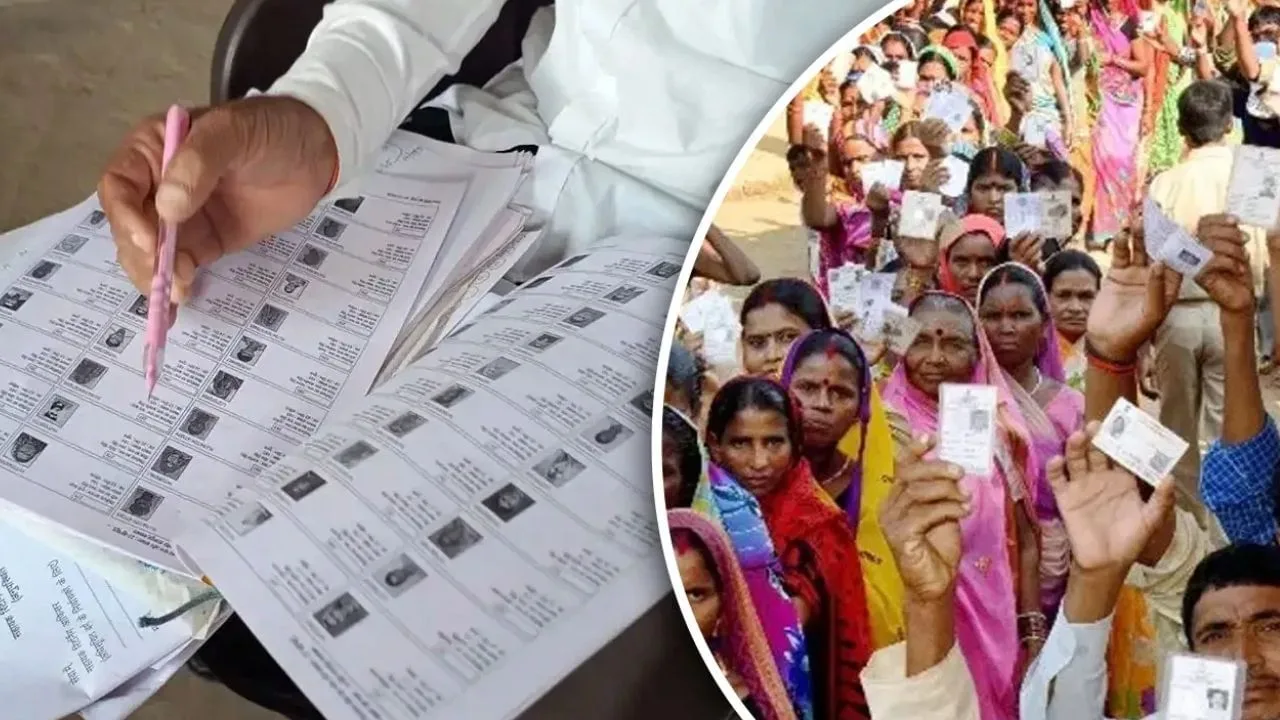
In one of the largest voter verification drives in recent years, the Election Commission of India (ECI) has begun the second phase of the Special Intensive Revision (SIR) of electoral rolls across 12 States and Union Territories.
Chief Election Commissioner Gyanesh Kumar announced the details on October 27, outlining a detailed, time-bound process that will involve three rounds of home visits, digital verification, and strict inclusion checks to ensure transparency and accuracy in voter rolls. The final electoral lists will be published on February 7, 2026.
“No eligible elector will be left out and no ineligible name will remain on the rolls,” the CEC said, underlining the ECI’s goal of a cleaner, more inclusive voter database before upcoming state and national elections.
States covered in SIR phase II
The 12 States and Union Territories covered under this phase are: Andaman & Nicobar Islands, Chhattisgarh, Goa, Gujarat, Kerala, Lakshadweep, Madhya Pradesh, Puducherry, Rajasthan, Tamil Nadu, Uttar Pradesh, and West Bengal.
The process will begin with pre-enumeration, freezing of voter lists as of midnight, October 27, 2025, followed by printing of unique Enumeration Forms for every elector registered in these regions.
The Step-by-Step Process
The SIR is designed as a five-phase operation, beginning with enumeration and ending with publication of final rolls. Here’s how it unfolds:
1. Pre-Enumeration and Printing (Oct 28-Nov 3, 2025): Electoral Registration Officers (EROs) will print Unique Enumeration Forms (EFs) for every registered voter. Each form will be pre-filled with voter details such as name, address, polling booth, and constituency information.
2. House-to-House Verification (Nov 4-Dec 4, 2025): This is the heart of the SIR exercise. Booth Level Officers (BLOs) will visit every home at least three times, distributing EFs and verifying voter details.
First Visit: To distribute forms and confirm details of existing electors.
Second Visit: To collect new applications (Form 6) from first-time voters or those seeking re-registration.
Third Visit: To ensure corrections or linking with previous SIR rolls from 2002-2004.
BLOs will also help elderly, disabled, and economically weaker citizens complete their forms. “Volunteers will assist so that no genuine voter is harassed,” said the Chief Election Commissioner.
3. Draft Electoral Rolls (Dec 9, 2025): After all forms are submitted, EROs and Assistant EROs (AEROs) will verify them and publish the draft rolls on December 9, 2025. This marks the start of the claims and objections period, which will continue till January 8, 2026.
During this time, voters can check whether their names have been included, corrected, or wrongly omitted.
4. Hearings and Verification (Dec 9, 2025 -Jan 31, 2026): EROs will issue notices to voters whose names were unmatched or contested. Each case will be reviewed, and citizens will have a chance to present proof of eligibility.
Appeals will be heard at two levels:
First Appeal: To the District Magistrate (DM).
Second Appeal: To the Chief Electoral Officer (CEO) of the State.
5. Final Electoral Roll (Feb 7, 2026): After all objections and appeals are settled, the final electoral rolls will be published on February 7, 2026. This version will serve as the official voter list for upcoming elections.
Aadhaar merely ID proof not citizenship
In a major clarification, the ECI has said that Aadhaar will remain optional during the voter verification process.
As per the Commission’s circular dated September 9, 2025 (Letter No. 23/2025-ERS/Vol.II), voters are not required to furnish Aadhaar details for enumeration.
Instead, citizens can submit any of the following documents to establish identity or proof of residence:
- Government-issued ID card or pension order.
- Certificates issued by public institutions (banks, LIC, PSU) before July 1, 1987.
- Birth certificate from a competent authority.
- Passport or educational certificate (matriculation or higher).
- Permanent residence certificate from state authority.
- Forest rights or caste certificate (SC/ST/OBC).
- NRC record, where applicable.
- Family register from local body.
- Government land or house allotment papers.
These alternatives ensure that even citizens in remote or marginalised communities can be verified without facing exclusion due to lack of Aadhaar.
Linking With the 2003 Electoral Rolls
An important feature of SIR 2025 is the linking of voter data with historical electoral rolls from 2002-2004.
Chief Election Commissioner Gyanesh Kumar explained that if a voter’s or their parent’s name appears in the 2003 roll, no additional documents are needed for verification.
“We want to ensure that people already part of India’s electoral history are not burdened with redundant paperwork,” he said.
Citizens can search for their or their parents’ names in the 2003 voter list on voters.eci.gov.in. If their names are listed, they won’t need to re-submit documents.
The Officers Behind the Exercise
The SIR involves a three-tier administrative structure:
Electoral Registration Officer (ERO): Usually a Sub-Divisional Magistrate, responsible for preparing and revising electoral rolls, hearing objections, and approving the final list.
Assistant Electoral Registration Officer (AERO): Typically a Tehsildar, assisting the ERO in field supervision.
Booth Level Officer (BLO): The most visible face of the exercise, responsible for nearly 1,000 voters each. BLOs will distribute forms, verify information, and help voters submit new applications.
The printing and training of all these officers will take place between October 28 and November 3, before enumeration officially begins.
Digital and Inclusive Voter List
The ECI’s new portal voters.eci.gov.in is central to the process. Urban voters, students, and migrants can complete enumeration online, upload documents, or track applications digitally.
Special provisions have been made for senior citizens, persons with disabilities (PwD), and economically vulnerable citizens. Local volunteers will assist them at home, ensuring the process remains inclusive and hassle-free.
What Makes SIR 2025 Different
Unlike routine annual revisions, the Special Intensive Revision is a comprehensive cleanup and verification drive that has not been held nationwide in nearly two decades.
The last such SIR took place between 2002 and 2004, before the 2004 General Elections.
The ECI’s renewed push comes amid rapid urbanisation, migration, and demographic shifts that have made traditional voter lists outdated.
The aim, as CEC Gyanesh Kumar said, is “to rebuild voter trust through accuracy, accessibility, and accountability.”
Learning From Bihar’s Pilot Success
Earlier in 2025, the Election Commission conducted a similar pilot SIR exercise in Bihar, which was widely praised for its transparency. Nearly all eligible voters were verified, and the number of appeals after draft publication was close to zero, an outcome the ECI hopes to replicate across all 12 States in this phase.
Why SIR 2025 Matters
The Special Intensive Revision is more than a bureaucratic process, it’s the foundation of electoral democracy.
Accurate voter rolls prevent impersonation, duplication, and disenfranchisement, issues that have frequently marred elections in the past.
The SIR’s emphasis on door-to-door verification, multiple checks, and a fair hearing mechanism ensures that both inclusion and integrity are maintained.
Moreover, by keeping Aadhaar optional, the ECI has struck a balance between data privacy and verification, addressing concerns raised by citizens and experts alike.
How you can check or update your voter details
Any citizen can verify their or their parents’ names in the 2003 rolls by visiting voters.eci.gov.in.
If the name appears, no new documents are needed. If not, voters can fill Form 6 through their BLO or online portal to register as new electors.
The process is simple, accessible, and designed to empower citizens to take charge of their electoral identity.
Final Publication by February 2026
By the time the final rolls are published on February 7, 2026, India’s electoral system will have undergone its most rigorous data revision in two decades.
The ECI hopes that SIR 2025 will deliver a voter list that is not just accurate, but inclusive and transparent, one that reflects India’s democratic strength and technological readiness.
“This is not just a revision exercise. It’s a reaffirmation of every citizen’s right to vote, the heart of our democracy,” Chief Election Commissioner Gyanesh Kumar concluded.













Comments