





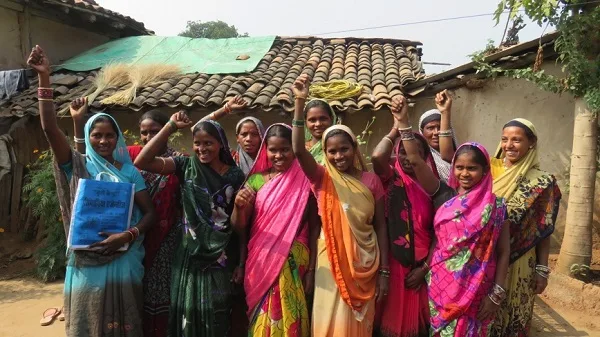
Implemented by the Ministry of Rural Development (MoRD), the Deendayal Antyodaya Yojana-National Rural Livelihood Mission (DAY-NRLM) represents India’s largest and most ambitious community-based poverty alleviation programme. It seeks to reduce rural poverty by building strong institutions of the poor, providing them access to finance, training, markets, and social entitlements.
Originally launched in 2010 as the National Rural Livelihood Mission (NRLM) by restructuring the earlier Swarnajayanti Gram Swarozgar Yojana (SGSY), it was renamed in 2016 after Pandit Deendayal Upadhyaya, whose Antyodaya philosophy emphasised upliftment of the poorest of the poor.
The mission is centrally sponsored, with cost-sharing between the Centre and States, and aims to transform rural India from dependency-based welfare to self-reliance and entrepreneurship.
Four Core Pillars of the Mission
The DAY-NRLM rests on four foundational pillars that define its strategy and scope:
Social Mobilisation and Institution Building: Mobilising rural women into Self Help Groups (SHGs) and federations to create sustainable community institutions.
Financial Inclusion: Linking SHGs to formal banking systems and providing affordable, collateral-free credit to foster self-reliant growth.
Sustainable Livelihoods: Diversifying income sources through farm and non-farm activities, encouraging entrepreneurship and skill development.
Social Inclusion and Entitlement Access: Ensuring that the rural poor benefit from convergence with government welfare schemes such as MGNREGA, PMAY-G, and PM Jan Dhan Yojana.
This integrated approach combines economic empowerment with social transformation, making rural women both beneficiaries and agents of change.
Women at the Heart of Transformation
Women’s empowerment is the soul of DAY-NRLM. By organising women into Self Help Groups (SHGs) and federations, the mission has created platforms for financial independence, collective strength, and leadership.
As of June 2025, over 10 crore rural women have been mobilised into 90 lakh SHGs across 28 states and six union territories. These women, many of whom were once excluded from formal economic activity, now manage savings, credit, and micro-enterprises in their communities.
Financial inclusion has been one of the biggest success stories. Since 2013, SHGs have availed over Rs 11 lakh crore in loans from formal financial institutions, collateral-free and supported by interest subvention. The impressive 98 percent repayment rate demonstrates the commitment and reliability of rural women entrepreneurs.
Women trained as Bank Sakhis and Banking Correspondents serve as the bridge between SHGs and the formal banking system, ensuring easy access to credit and digital banking services.
“The Self Help Group movement is not only a financial revolution but a social awakening,” said a MoRD official. “Women who once hesitated to step outside their homes are now managing lakhs of rupees, running enterprises, and training others.”
From Fields to Enterprises
While the mission initially focused on promoting sustainable agriculture, it has since evolved to cover a wide spectrum of farm and non-farm livelihoods.
Under the Mahila Kisan Sashaktikaran Pariyojana (MKSP), around 4.62 crore Mahila Kisans (women farmers) have received training in sustainable and climate-resilient agriculture. With the help of Krishi Sakhis (agriculture experts) and Pashu Sakhis (livestock workers), women farmers are improving productivity, soil health, and market access.
These community resource persons act as rural service providers, giving year-round guidance on crop planning, livestock management, and post-harvest operations.
Beyond agriculture, DAY-NRLM promotes micro-enterprises through the Start-up Village Entrepreneurship Programme (SVEP). The programme has supported over 3.7 lakh rural enterprises, ranging from food processing and tailoring to handicrafts and local services, creating sustainable income streams and employment opportunities in villages.
“SVEP has helped us set up bakery units, tailoring shops, and mobile repair centres in small towns,” said a project manager from Odisha. “Women who earned Rs 3,000 a month earlier are now earning Rs 12,000 to Rs 15,000.”
Local Women as Catalysts of Change
A defining feature of DAY-NRLM is its community-driven structure. Instead of relying solely on external trainers or bureaucrats, the mission empowers women within the community to become resource persons who train and support others.
There are now:
1. 3.5 lakh Krishi and Pashu Sakhis, who provide technical assistance on agriculture and livestock.
2. 48,000 Bank Sakhis, who handle digital transactions, help with credit linkages, and promote financial literacy.
3. This local ownership ensures sustainability, as knowledge and support remain embedded within the village ecosystem.
“The concept of Sakhi ensures that every village has a trained woman to guide others. It’s empowerment multiplied,” said a field coordinator from Madhya Pradesh.
State-Wise Achievements
The mission’s performance varies across states, but some have emerged as national leaders in implementation and innovation.
1. Bihar, Uttar Pradesh, and Andhra Pradesh lead in SHG formation and household mobilisation.
2. In FY 2024-25, Uttar Pradesh disbursed Rs 1,23,326 lakh and Bihar Rs 1,05,132 lakh as capitalisation support, surpassing targets.
3. Andhra Pradesh topped in total bank loan facilitation for SHGs, amounting to Rs 34,83,725 lakh.
4. Maharashtra leads in the number of Mahila Kisans, followed by Uttar Pradesh and Andhra Pradesh.
5. In non-farm enterprises under SVEP, Assam is the top performer, with Kerala and West Bengal following closely.
6. States like Tamil Nadu and Jharkhand have introduced community-managed producer groups that link farmers directly to markets, reducing exploitation by middlemen.
Youth Empowerment Through Skilling and Entrepreneurship
While women are the cornerstone of DAY-NRLM, the mission also recognises the potential of rural youth. Two major sub-components have been launched to harness this potential:
1. Deen Dayal Upadhyaya Grameen Kaushalya Yojana (DDU-GKY): A flagship placement-linked training programme for youth aged 15-35 years. So far, 17.5 lakh youth have been trained, and 11.48 lakh have secured wage employment in sectors like retail, healthcare, and IT-enabled services.
2. Rural Self-Employment Training Institutes (RSETIs): These institutes provide short-term entrepreneurship training for youth aged 18–50 years. Across India, 56.69 lakh people have been trained, with 40.99 lakh successfully establishing their own enterprises.
Leading states under these skilling programmes include Uttar Pradesh, Odisha, Andhra Pradesh, Rajasthan, Madhya Pradesh, and Karnataka.
Together, these initiatives are bridging the rural-urban employment divide, enabling young people to pursue dignified livelihoods without migrating to cities.
Connecting Rural Producers to Markets
Market access remains a key challenge for rural producers. To bridge this gap, DAY-NRLM has institutionalised multiple marketing platforms and brand-building initiatives.
One of the most successful interventions has been the SARAS Aajeevika Melas, exhibitions held at national, state, and district levels where SHG women showcase their products, from handloom sarees and organic spices to bamboo crafts and home décor.
These melas not only provide direct sales opportunities but also connect SHG women to e-commerce platforms and institutional buyers. Many SHGs have now begun marketing under common brands such as Aajeevika, SARAS Collection, and state-specific rural brands.
To enhance quality and business sustainability, the National Institute of Rural Development and Panchayati Raj (NIRD&PR) conducts regular training sessions in branding, packaging, and business development.
“We are now seeing SHG products being sold on GeM and e-commerce portals,” said an NIRD&PR official. “The next step is to expand digital marketplaces and export opportunities.”
Social Inclusion and Convergence with Government Schemes
A major strength of DAY-NRLM lies in its convergence model, linking SHGs with other social welfare and development schemes.
Through convergence, SHG households have gained access to housing (PMAY-G), toilets (Swachh Bharat Mission), employment (MGNREGA), and insurance (PMJJBY/ PMSBY). Many women have also taken up roles in nutrition missions, sanitation campaigns, and local governance, ensuring holistic development.
Social inclusion is also ensured through special drives to reach Scheduled Castes, Scheduled Tribes, minorities, and persons with disabilities, ensuring that no one is left behind in the journey toward self-reliance.
A Model for Poverty Alleviation
With its scale, inclusivity, and results, DAY-NRLM has become a global reference model for community-led rural transformation.
The World Bank and UNDP have recognised the mission’s design as one of the most comprehensive poverty alleviation frameworks globally. Delegations from Bangladesh, Nepal, Ethiopia, and Kenya have visited India to learn from its SHG model.
By focusing on collective action, women’s leadership, and financial inclusion, the mission has transformed not only livelihoods but also the social fabric of rural India.
Sustaining and Scaling the Momentum
While the achievements are remarkable, challenges remain, especially in ensuring market competitiveness, digital literacy, and scaling non-farm enterprises. The government plans to further strengthen the mission by:
1. Integrating SHG products with e-commerce and export channels.
2. Expanding digital and financial literacy through Bank Sakhis.
3. Enhancing skilling under DDU-GKY for emerging sectors such as renewable energy and agri-tech.
4. Deepening the role of community institutions in governance and local planning.
The Ministry of Rural Development envisions that, by 2030, DAY-NRLM will cover every rural household through at least one woman member in an SHG, making it the largest women’s empowerment network in the world.
“Antyodaya is not just a slogan but a living mission,” said a senior official from the Ministry. “Through the collective strength of women, we are turning rural poverty into rural prosperity.”











Comments