





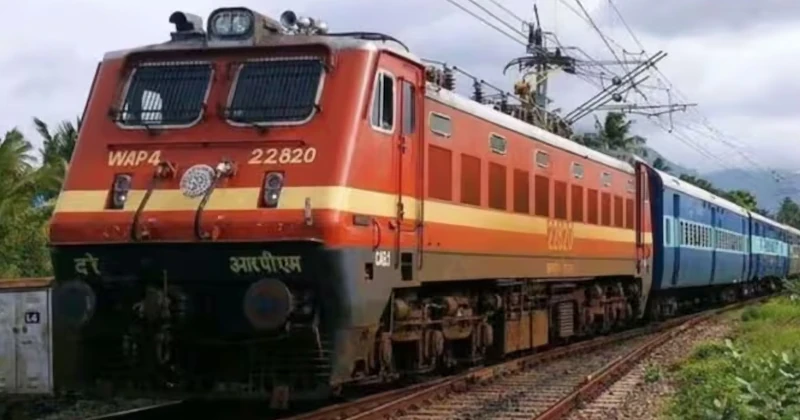
The Indian Railways, under the leadership of Union Railways Minister Ashwini Vaishnaw, has ensured safe, smooth, and efficient travel for over one crore passengers during the ongoing festive season including 65 lakh passengers heading to Bihar for Chhath Puja with no stampede, no chaos, and no major incident reported across the network.
Minister Vaishnaw, who personally visited the New Delhi Railway Station to review on-ground arrangements, interacted with passengers and staff, reaffirming the government’s commitment to ensuring safe and dignified travel for every passenger, even amid record-breaking traffic volumes.
“We studied historical traffic patterns, analysed passenger surge data, and created robust mechanisms for coordination. Our division, zone, and board-level control rooms are operational 24×7 even on Deepawali Day to ensure every journey is safe and comfortable,” said Ashwini Vaishnaw in a post on X.
Met with passengers.
We studied historical traffic patterns, analysed passenger surge data and created mechanisms for coordination.
We created holding areas at more than 70 stations.
We increased ticketing facilities at more than 100 stations.
We are monitoring movement… pic.twitter.com/20EyQb2h21
— Ashwini Vaishnaw (@AshwiniVaishnaw) October 21, 2025
This year, the Railways operated 4,521 trains to manage the extraordinary surge of festive travelers, particularly during Chhath Puja, when lakhs return to their hometowns in Bihar, Jharkhand, and eastern Uttar Pradesh. Despite unprecedented crowd volumes, the system has remained remarkably orderly — a testament to strategic foresight and real-time monitoring.
Across India, control rooms at the division, zonal, and Railway Board levels have been running round-the-clock, closely tracking train movements, passenger density, and station logistics. Major stations have been equipped with mini control rooms and thousands of CCTV cameras, enabling instant communication between operational teams and ground personnel.
In a detailed account of the efforts, Minister Vaishnaw highlighted several measures that made this success possible:
- Holding areas created at over 70 stations to manage passenger flow and prevent overcrowding.
- Expanded ticketing facilities at more than 100 stations, ensuring quicker service and reduced queues.
- Continuous monitoring of special trains at all control levels division, zone, and board supported by real-time surveillance.
- Enhanced cleaning drives at platforms during rush hours, maintaining hygiene despite high footfall.
- Deployment of thousands of CCTV cameras and crowd-control personnel at key stations.
- 24×7 monitoring teams, even during festive holidays during Deepawali, to ensure uninterrupted supervision.
At Surat Railway Station, the Gujarat Police arranged a langar (community meal) for passengers travelling to Bihar a gesture that combined administrative efficiency with humanitarian care, reflecting the broader ethos of coordinated governance and community support.
छठ पूजन के लिए बिहार जाने वाले यात्रियों की संख्या 65 लाख।
ट्रेनों की संख्या 4521फिर भी कोई भगदड़ नहीं, कोई हल्ला नहीं।
सूरत रेलवे स्टेशन पर बिहार जाने वाले यात्रियों की सुविधा के लिए गुजरात पुलिस ने लंगर की व्यवस्था की। pic.twitter.com/Mggow5mMgH
— P.N.Rai (@PNRai1) October 21, 2025
The seamless movement of passengers across India’s vast railway network during the busiest season of the year underscores how data-driven planning, inter-departmental coordination, and local partnerships can redefine public transport management.
“Our control rooms are fully operational round the clock. Every official is working to ensure that passengers reach home safely this festive season. We have made special arrangements for cleanliness, security, and comfort. Over one crore passengers have already reached home safely, and we will continue to make our sincere efforts,” Vaishnaw stated.
In the Delhi area alone, an average of 4.25 lakh passengers are travelling daily yet operations have remained disciplined, clean, and efficient, thanks to the integrated coordination between Railway divisions, local police, and civic authorities.














Comments