





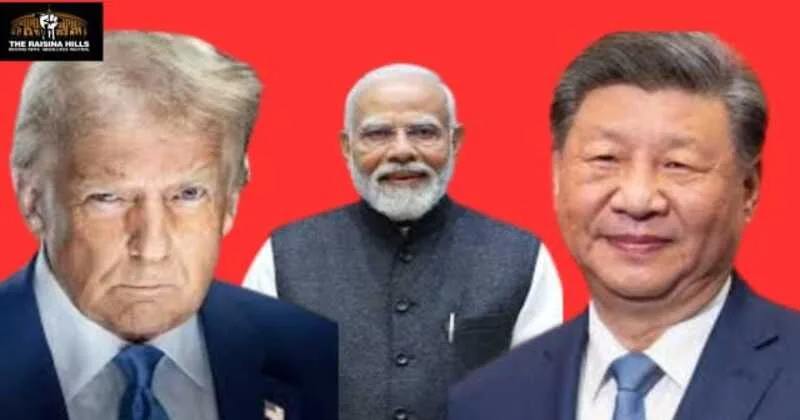
The import duty imposed by the United States on Indian goods may soon be reduced from 50 per cent to 15 per cent, with trade talks between the two countries reaching their final stage. The Indian government has indicated that the discussions have been positive, and once the deal is finalised, the duty burden could fall to around 15–16 per cent. Prime Minister Narendra Modi and President Donald Trump are expected to meet at the upcoming ASEAN Summit, where there is a strong possibility that the India–US trade agreement could be officially announced.
The proposed deal may also help ease Trump’s discontent over India’s continued imports of Russian oil. According to reports from a national media outlet, Prime Minister Modi may be willing to make certain concessions to accommodate some of Trump’s demands. As part of the proposed agreement, India is expected to gradually scale down its imports of Russian oil and expand its purchases of American agricultural products such as corn and soybeans. However, India has maintained that it will not buy genetically modified (GM) crops and will instead opt for non-GM corn and soybean imports from the US.
China’s exit opens the door for India
In the aftermath of the prolonged US–China trade war, China sharply reduced its imports of American corn and soybeans, creating a major setback for US farmers and exporters. China was previously the United States’ largest buyer of these commodities. In 2022, the US earned $18.57 billion from corn exports, but this figure dropped to $13.7 billion the following year. The decline has continued in 2025, further worsening the situation.
In 2022, China purchased $5.2 billion worth of corn from the US, but this plummeted to just $0.33 billion in 2024, dealing a major blow to American exporters. In this context, President Trump is now looking towards India as a promising new market and a viable alternative to China. India, meanwhile, is diversifying its oil import sources, with plans to increase purchases from the Gulf countries as well as from the United States. In addition to crude oil, India is also expected to boost imports of liquefied petroleum gas (LPG) from the US.
Tariff relief could strengthen India’s exports further
President Trump had earlier imposed a 25 per cent tariff on Indian goods and later added another 25 per cent on Russian oil, bringing the total tariff burden on India to 50 per cent. Despite this, recent trade data shows that India’s global exports have not been significantly affected by the elevated US tariffs. Currently, India is among the two countries facing the highest tariff rates under the Trump administration, the other being Brazil, which also has a 50 per cent duty due to its strained relations with Washington. If the proposed reduction in tariffs to 15–16 per cent materialises, it will provide a significant boost to India’s export sector. Moreover, if the US enforces high tariffs on Chinese goods, India could emerge as one of the biggest beneficiaries by attracting more American trade and investment.
Commenting on the development, India’s Chief Economic Advisor V. Anantha Nageswaran stated that President Trump is expected to roll back the additional 25 per cent tariff and bring the overall rate down to 10–15 percent. He made these remarks during an event organised by the Bharat Chamber of Commerce in Kolkata. At present, India imports most of its oil from Russia, which accounts for about 34 per cent of its total crude imports, while the US share stands at around 10 percent. Russia had earlier offered India discounts of up to $23 per barrel in 2023, but this has now reduced to about $5 per barrel. The shrinking discount margin could also push India to gradually cut back on Russian oil purchases. However, it remains unclear whether the US will offer India similar discount rates in the future.














Comments