





India is a land where relationships are celebrated with deep affection, rituals, and traditions that carry emotional as well as spiritual significance. Among the many festivals that honor family bonds, Bhai Dooj holds a special place. Celebrated just two days after Deepawali, this festival is dedicated to the pure and eternal bond between brothers and sisters. Bhai Dooj date is October 23. It brings families together once again to celebrate love, trust, and lifelong companionship between siblings.
Bhai Dooj, also known as Bhaiya Dooj, Bhau Beej, or Bhatru Dwitiya in different regions of India, falls on the second day of the bright fortnight (Shukla Paksha) of the Hindu month of Kartik. The word “Bhai” means brother, while “Dooj” signifies the second day after the new moon, making Bhai Dooj literally the “second day devoted to brothers.”
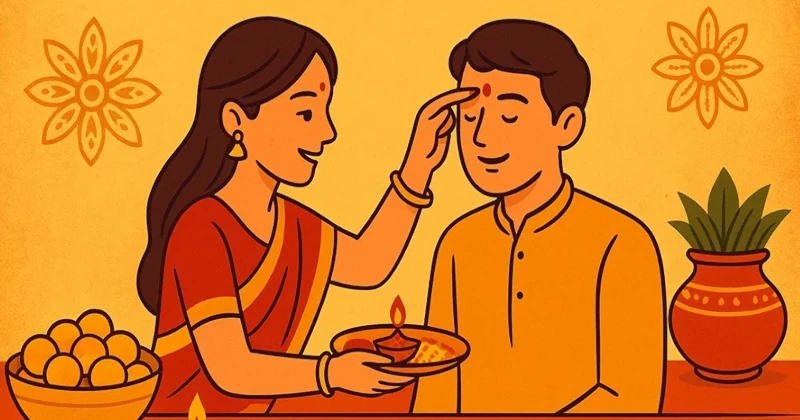
The festival is similar in spirit to Raksha Bandhan, as both celebrate the brother-sister bond. However, while Raksha Bandhan involves tying a rakhi as a symbol of protection, Bhai Dooj centers around the sister’s prayer for her brother’s long life and prosperity through traditional rituals and the application of a ceremonial tilak (vermillion mark) on his forehead. In return, the brother also promises to protect his sister and often gives her thoughtful gifts as a token of love.
The roots of Bhai Dooj
Like most Indian festivals, Bhai Dooj has deep roots in Hindu faith. One of the most popular legends associated with the festival is that of Yamraj (the God of Death) and his sister Yamuna. According to the story, Yamuna invited her brother to visit her home and welcomed him with great love and respect. She applied a sacred tilak on his forehead, performed an aarti (a ritual of light), and prayed for his long and happy life. Moved by her affection, Yamraj declared that any brother who visits his sister on this day and receives the tilak would be blessed with long life and prosperity. Since then, Bhai Dooj has been celebrated to honor this divine sibling bond.
Another legend connects the festival with Lord Krishna and his sister Subhadra. After Bhagwan Krishna defeated the demon Narakasura, Bhagwan Krishna visited Subhadra, who greeted him with sweets and flowers and marked his forehead with a tilak of love and protection. This tradition, symbolizing the sister’s affection and blessings for her brother’s well-being, continues even today.
How Bhai Dooj is celebrated across India
Though the spirit of Bhai Dooj remains the same everywhere, the customs and names vary across regions:
- In North India, sisters invite their brothers to their homes, perform aarti, and apply a red or sandalwood tilak on their foreheads. Brothers present gifts or money in return, and the day often ends with a family feast featuring traditional sweets like gulab jamun, kaju katli, and barfi.
- In Maharashtra and Goa, the festival is celebrated as Bhau Beej. Sisters prepare a special seat for their brothers, symbolizing Mount Govardhan, and perform aarti before applying tilak. A delicacy called basundi puri is commonly served.
- In West Bengal, the festival is celebrated as Bhai Phonta. Sisters fast until the ritual is over and apply a special sandalwood and kajal tilak while chanting mantras for their brothers’ welfare. The ceremony is followed by a grand meal.
- In Nepal, it is celebrated as Bhai Tika during the Tihar festival. Sisters apply a colorful seven-colored tilak called Saptarangi Tika on their brothers’ foreheads and perform rituals with sacred threads, rice, and sweets.
Rituals and Traditions of Bhai Dooj 2025
On the morning of October 23, 2025, families will begin preparations for Bhai Dooj with enthusiasm. Homes will be decorated with flowers and rangolis, and many families will prepare traditional dishes to mark the occasion.
The sister begins by performing a puja of Bhagwan Ganesha and Yamraj, seeking divine blessings for her brother’s safety. The brother then sits on a small wooden stool while the sister applies a tilak made of vermilion, sandalwood paste, and rice grains on his forehead. She lights a diya (lamp) and performs the aarti, praying for his long life and prosperity. The brother in turn blesses his sister and offers her gifts, money, or sweets as a token of love and gratitude.
Symbolism Behind the Festival
Bhai Dooj is not just a ritual. It is a reminder of the strong emotional bond that binds siblings together. The tilak represents the sister’s heartfelt prayers for her brother’s protection, while the aarti symbolizes the light of blessings that dispels negativity. The gifts exchanged between siblings symbolize mutual respect, care, and affection.
The festival also promotes family unity, as it encourages siblings to come together, forgive past misunderstandings, and renew their love for each other. It teaches the values of gratitude, compassion, and responsibility, timeless lessons that strengthen Indian family life.
Modern relevance of Bhai Dooj
In modern times, as families become more dispersed due to work, education, and migration, festivals like Bhai Dooj serve as emotional anchors. They remind people of their cultural roots and the importance of relationships beyond materialism. Even as the celebration takes new forms such as sending digital gifts, e-cards, or connecting through video calls the festival continues to hold the same heartfelt meaning.
The day also shows broader Indian values of seva (service), sneh (affection), and samskara (culture). The celebration of Bhai Dooj encourages brothers and sisters to stand by each other through every phase of life, not just as a ritual, but in real, meaningful ways by offering support, care, and sharing each other’s happiness and hardships.














Comments