
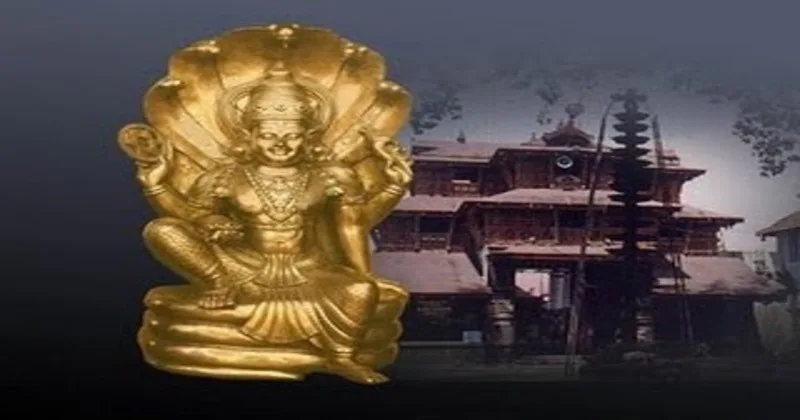
People of Kerala in general and Hindus in particular, are being shocked day by day, thanks to the disclosure of the conversion of gold into copper in the Sabarimala shrine and the disappearance of gold into thin air. Now, cases of exploitation and misuse of temple assets and properties are being reported from various parts of the state. A blatant one among them has been reported from the Sree Poornathrayeesha Temple near Kochi. The half-kilogram crown of the temple’s “kolam” (gold plaque of the divine idol) has been stolen and replaced by a similar crown made of imitation gold. The fraud was discovered seventeen years ago. Yet, the Cochin Devaswom Board did not lift a finger to trace the culprits.
Poornathrayeeshan is the principal deity of the Cochin Royal Family. There are indications of the loss of several precious gems and diamonds after the royal family handed over the temple to the Devaswom Board several decades ago. The missing crown belonged to the “kolam” made of four kilograms of gold, which is used for ‘Uthram Ezhunnellippu’, an auspicious ritual in the temple. According to reports, the then Devaswom Assistant Commissioner had recorded that although the crown was registered in the “pandppathra register” (temple inventory list) as weighing about 496 grams, it was found to be imitation gold.
A letter in this regard was despatched to the Special Devaswom Commissioner in Thrissur from the office of the Trippoonithura Assistant Commissioner on February 23, 2008. It contained serious observations and suggestions to curb certain malpractices. However, no enquiry was ever conducted. The “kolam” in question is one of the four “kolams” of the temple, with the total gold content of all four estimated to be about 15 kilograms.
A member of the Cochin Royal Family had filed a case concerning anomalies related to another “kolam”. As a result, the Kerala High Court, acting on the instructions of the Supreme Court, appointed its Registrar, K. T. Sudheer, in 2021 to examine the “kolams”. Even though Sudheer submitted a report, he made no mention of the crowns. According to Poornathrayeesha temple rituals and traditions, only golden materials shall be used for “Ezhunnellippu”, a ritual that forms an integral part of the temple festival. “Sheevelikkolam”, “Kalabhakkolam”, “Uthramkkolam”, and “Kallukolam” are the four “kolams” in the temple.
The reports from Trippoonithura are the latest in a series of temple loots. Consequently, people and devotees have lost trust in the Devaswom Boards. They now demand a replacement for these corrupt Boards, calling for a new system with devotees at the helm instead of the current political appointees — many of whom are atheists — managing the temple.
The latest episode from the Poornathrayeesha Temple at Trippoonithura adds to the growing list of temple-related scandals under the Communist regime in Kerala. From the conversion of gold into copper at Sabarimala to the discovery of imitation crowns in Cochin temples, these incidents expose a pattern of deep-rooted mismanagement within the Devaswom Boards. Controlled by CPM-led administrations, these boards are often staffed with political appointees who openly identify as atheists but exercise authority over sacred Hindu institutions.
This paradox — where those denying faith manage the temples of faith — has widened the trust deficit between devotees and the state-controlled Devaswom Boards. Instead of serving as custodians of heritage and sanctity, these boards have become symbols of corruption, negligence and financial exploitation. The Communist leadership’s repeated interference in temple administration, including the Sabarimala controversy where age-old traditions were trampled upon under the guise of “progressive reform”, reflects an ideological disdain for the Hindu belief systems.
The Poornathrayeesha imitation gold case, discovered but left uninvestigated for seventeen years, only strengthens public perception that temples under Communist control are vulnerable to misuse of funds, theft of sacred ornaments and deliberate erosion of trust. Devotees increasingly believe that political atheists managing temples is an affront to religious freedom and cultural integrity, demanding a shift towards a devotee-led management system that ensures transparency and reverence for Dharma.