Guruji Golwalkar convinced Hari Singh to accede J&K to Bharat
June 12, 2026
  • Read Ecopy
  • Circulation
  • Advertise
  • Careers
  • About Us
  • Contact Us
Android AppiPhone AppArattai
Organiser
  • ‌
  • Bharat
    • Assam
    • Bihar
    • Chhattisgarh
    • Jharkhand
    • Maharashtra
    • View All States
  • World
    • Asia
    • Europe
    • North America
    • South America
    • Africa
    • Australia
  • Editorial
  • International
  • Opinion
  • RSS @ 100
  • More
    • Op Sindoor
    • Analysis
    • Sports
    • Defence
    • Politics
    • Business
    • Economy
    • Culture
    • Special Report
    • Sci & Tech
    • Entertainment
    • G20
    • Azadi Ka Amrit Mahotsav
    • Vocal4Local
    • Web Stories
    • Education
    • Employment
    • Books
    • Interviews
    • Travel
    • Law
    • Health
    • Obituary
  • Subscribe
    • Subscribe Print Edition
    • Subscribe Ecopy
    • Read Ecopy
  • ‌
  • Bharat
    • Assam
    • Bihar
    • Chhattisgarh
    • Jharkhand
    • Maharashtra
    • View All States
  • World
    • Asia
    • Europe
    • North America
    • South America
    • Africa
    • Australia
  • Editorial
  • International
  • Opinion
  • RSS @ 100
  • More
    • Op Sindoor
    • Analysis
    • Sports
    • Defence
    • Politics
    • Business
    • Economy
    • Culture
    • Special Report
    • Sci & Tech
    • Entertainment
    • G20
    • Azadi Ka Amrit Mahotsav
    • Vocal4Local
    • Web Stories
    • Education
    • Employment
    • Books
    • Interviews
    • Travel
    • Law
    • Health
    • Obituary
  • Subscribe
    • Subscribe Print Edition
    • Subscribe Ecopy
    • Read Ecopy
Organiser
  • Home
  • Bharat
  • World
  • Operation Sindoor
  • Editorial
  • Analysis
  • Opinion
  • Culture
  • Defence
  • International Edition
  • RSS @ 100
  • Magazine
  • Read Ecopy
Home Bharat

J&K Accession: Guruji Golwalkar was in Srinagar from Oct 17-19 in 1947 to persuade Hari Singh to accede J&K to Bharat

Maharaja Hari Singh acceded his vast state of J&K to India on October 26, 1947, a few days after Guruji Golwalkar met him in Srinagar to discuss the issue. RSS supported the Maharaja in an unreserved manner, but Pandit Nehru acted as an impediment to smooth accession

Sant Kumar SharmaSant Kumar Sharma
Oct 17, 2025, 05:00 pm IST
in Bharat, RSS News, RSS in News, Jammu and Kashmir
Follow on Google News
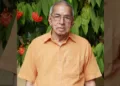
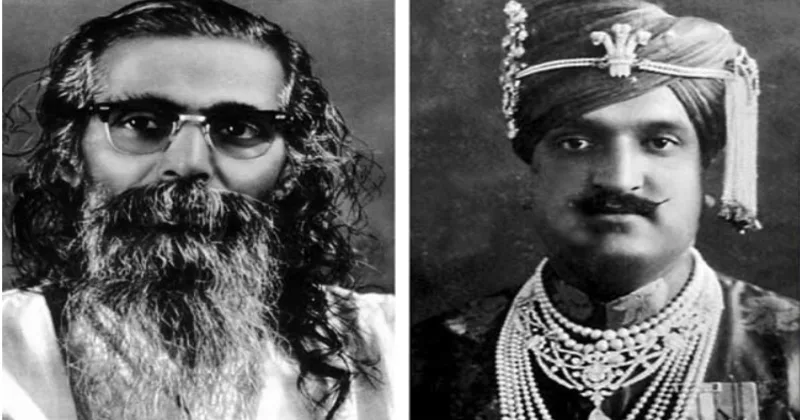
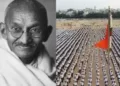
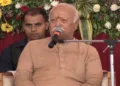
(Left) Guruji Golwalkar (Right) Maharaja Hari Singh

(Left) Guruji Golwalkar (Right) Maharaja Hari Singh

FacebookTwitterWhatsAppTelegramEmail

The story of J&K’s accession into India on October 26, 1947, needs to be told and retold to successive generations. To set the narrative about the circumstances surrounding it right and present it in the correct perspective. It is an amazing story of treachery, of some, unparalleled bravery, of many, sacrifices by countless Hindus and Sikhs.

Independence of India, partition and the creation of Pakistan all happened so suddenly that it was not the easiest of times for anyone involved. For the British, who were kicked out as they had no business and moral right to rule over the Indians, staying thousands of kilometres away from their land. For all patriotic Indians for whom the vivisection of the beloved country was a shock beyond any they had gone through till date.

The partition which created Pakistan has been a festering wound for Bharat still, but it was a very raw wound in October 1947.  Particularly for Jammy & Kashmir which lost more than half of its territory to Pakistan which attacked the then Princely state in a treacherous manner. It lulled Maharaja Hari Singh into believing that its intentions were honourable and upright. That is what it said when the Maharaja signed Standstill Agreement in August 1947.

Worried about the drift and communal clashes that had happened in Punjab as also Bengal, Pandit Prem Nath Dogra urged the Maharaja to accede his state into Bharat. For this, he mobilised public opinion and got a letter addressed to the Maharaja signed from many political and social organisations. Badri Dass, Sanghchalak of the neighbouring Punjab, met him in person but things were hazy. The King was indecisive.

Also Read: RSS at 100: ABVP inaugurates grand exhibition commemorating Sangh’s glorious ideological journey

The unmitigated hostility of Indian Prime Minister Jawaharlal Nehru towards Maharaja Hari Singh was a major cause of his reluctance to accede to India immediately. This hostility had its roots in the Kohala incident of more than a year earlier, of 1946 summer, when Nehru tried to reach Srinagar to defend his friend Sheikh Mohammad Abdullah who was in jail. On crossing a bridge on the Jhelum river in Kohala (now a part of Pakistan Occupied Jammu Kashmir), Nehru was escorted to a guest house nearby.

Nehru was told that he could not proceed any further into Maharaja Hari Singh’s territory. Definitely not towards Srinagar to defend Sheikh who was facing charges of sedition. This episode shaped Nehru’s attitude towards the Maharaja whom he classified as an enemy for all practical purposes.

Today is October 17, a day of historical importance in the history of J&K as it was on this day in 1947 that Sri Guruji Golwalkar met Maharaja Hari Singh in Srinagar. For this, Shri Guruji flew from Delhi, landed in Srinagar and then persuaded the Maharaja to accede to Bharat right away. For three days, Guruji remained in Srinagar and came back from there to Delhi only on October 19. During this period, he met countless workers of the Rashtriya Swayamsevak Sangh (RSS) also.

The Princely states, of which there are more than 560 in 1947, some big like J&K spanning an area of over two lakh kilometres and some barely over 20 square kilometres, had the right to decide their own fate. They technically had the right to accede to India, or to Pakistan and there was no deadline for taking this decision. Erroneously, some, rather many narratives claim that this decision had to be taken by August 15, 1947, the dawn of independence.

The third option, the Princely states of the time having the right to remain independent, is also talked about.

One thing noteworthy is that the Home Department was handled by Sardar Patel and it was his responsibility to negotiate with the Princely states to bring them into India’s fold. He used all powers inherent in his office to see to it that a vast majority of them lined up to join Bharat. Some he cajoled, some he threatened  and to the Nizam of Hyderabad, sending Indian forces into the territory to merge it into India was what he thought was the best option.

Unfortunately, Jammu & Kashmir was one Princely state Pandit Nehru decided to keep to himself, meaning thereby that Sardar Patel was not to take part in deciding its fate. This was directly dealt with newly minted Prime Minister Nehru who wanted to get his friend Sheikh Abdullah a good deal. This personal desire of Nehru messed up the whole question of J&K. Nehru also wanted to fix Maharaja Hari Singh and the steps he took for fulfilment of this desire created many of the problems pertaining to J&K which we still face.

Nehru’s hostility is what had pushed Maharaja Hari Singh into indecision in large measure at the dawn of independence. Otherwise, much earlier, in 1930-31 itself, the Maharaja had clearly stood up in favour of India at the Round Table Conference of Princes at London. His state was a Muslim-majority state but the Hindus were also present in substantial numbers. Not in one or two pockets, but spread all over his territory. He knew clearly that acceding to Pakistan was hardly an option because in that case, the Hindus would suffer heavily.

When all these momentous things were happening, there was an incident in August which made it clear that some of his Muslim subjects were leaning towards Pakistan. On August 14, 1947, some employees of the Postal Department hoisted flag of Pakistan, the green and white with star and crescent moon on it, on the Post Office building in Srinagar. This was a rather daring act given that the Maharaja was in residence in the summer capital.

It is said that hundreds of RSS volunteers were silently keeping an eye on such activities and had prepared themselves well to meet such an eventuality. At night, they removed the Pakistani flag and hundreds of Indian flags (the Tricolour) was found hoisted on many buildings all over the city. This also rebuts the false notion that Sangh volunteers had not participated in the freedom struggle.

Within 10 days of meeting Guruji, Maharaja Hari Singh signed the Instrument of Accession pledging his entire territory to Bharat. It is another matter that large tracts of this territory like Gilgit-Baltistan, Pakistan Occupied Jamu Kashmir and some other areas were not defended adequately by the government of the day. Unfortunately, these areas were allowed to be forcibly taken away by Pakistan.

How and why Pakistan was allowed to forcibly gain control of these areas is another story. For which the blame is again laid by many historians on Nehru.
Topics: Maharaja Hari Singhpt nehruGuruji GolwalkarJ&K AccessionRSSRashtriya Swayamsevak Sangh
ShareTweetSendShareSend
✮ Subscribe Organiser YouTube Channel. ✮
✮ Join Organiser's WhatsApp channel for Nationalist views beyond the news. ✮
Previous News

Third suicide in a week exposes Karnataka government’s financial crisis: Opposition slams Congress over unpaid salaries

Next News

Bihar: Union Home Minister Amit Shah meets CM Nitish Kumar, begins poll campaign from Saran

Related News

RSS functionaries on the stage on the occasion of samapan samaroh of Rashtriya Swayamsevak Sangh’s Karyakarta Vikas Varg–Pratham of Purvi Uttar Pradesh Kshetra on June 10

RSS has awakened self-realisation in Hindu society: Ramdatt Chakradhar

RSS centenary year is a time for renewed resolve and greater commitment to nation-building: Dr Mohan Bhagwat

Atul Limaye Ji Sah Sarkaryavah, Rashtriya Swayamsevak Sangh while addressing a Pramukh Jan Gosthi Rashtriya at Raipur, Chhattisgarh

Chhattisgarh: Society must lead its own transformation through collective initiative: Atul Limaye

Rajasthn | RSS centenary journey embodies dedication to nation-building: Dr Ramesh Agrawal

(Right) Prakhar Shrivastava, Senior Consulting Editor and Anchor at Delhi Doordarshan Kendra at a Narada Jayanti programme in Guwahati (Left) Prakahar Srivastava addressing the gathering

Narada Jayanti by VSK Assam: “Half-truths more dangerous than lies,” says senior journalist Prakhar Shrivastava

RSS functionaries on the stage at samapan samaroh of Sangh Shiksha Varg and Karyakarta Vikas Varg–Pratham at Sambalpur.

Awakening of Lokshakti is essential for building a glorious Bharat: Dr Gopal Prasad Mahapatra

Load More

Latest News

Russian President Vladimir Putin and Prime Minister Narendra Modi(File Photo)

Russia Day | From civilisational bond to strategic partners; New Delhi & Moscow stand as time-tested friends

A representative image generated via AI

UP woman alleges months of rape by father-in-law; husband pronounces triple talaq; 5 booked under anti-triple talaq law

Illegal Bangladeshis arrested in assam and Meghalaya

Assam, Meghalaya crack down on illegal migration: 14 Bangladeshi infiltrators arrested in 24 Hours

Odisha's Sudarsan Pattnaik becomes first Indian to win Russia Grand Sand Master Cup 2026

Russia Grand Sand Master Cup 2026: Odisha’s Sudarsan Pattnaik becomes first Indian to win International honour

Centre signs historic tripartite MoU with Assam and Nagaland for oil and gas exploration and production

Assam-Nagaland sign historic MoU to unlock oil & gas exploration along border, ending decades long dispute

Dharmasthala skull case has taken a fresh turn after Chinnayya filed a writ petition in the Karnataka High Court alleging a Rs 200-crore conspiracy to defame the shrine

Dharmasthala ‘Mass Burial’ Case: Actor Prakash Raj named in Rs 200-crore conspiracy; Karnataka HC seeks SIT report

Surendran Bojji, All India Organising Secretary of the Bharatiya Mazdoor Sangh(BMS) speaking at Geneva

India’s new labour codes impart security & social protection: BMS Secretary Surendran Bojji at Int Labour Conference

Railway Minister Ashwini Vaishnaw

How India achieved a global first by running double-stack container trains under an electrified railway network

Union Home Minister Amit Shah (Left)

West Bengal: Amul to lay foundation stone for Rs 700 crore dairy plant on June 14, boosting eastern India expansion

Defence Minister Rajnath Singh with his Vietnamese counterpart, General Phan Van Giang, in Hanoi on 19 May 2026

Arming Partnerships, Expanding Influence: How India is expanding its defence footprint across the world

Load More
  • Privacy
  • Terms
  • Cookie Policy
  • Refund and Cancellation
  • Delivery and Shipping

© Bharat Prakashan (Delhi) Limited.
Tech-enabled by Ananthapuri Technologies

  • Home
  • Search Organiser
  • Bharat
    • Assam
    • Bihar
    • Chhattisgarh
    • Jharkhand
    • Maharashtra
    • View All States
  • World
    • Asia
    • Africa
    • North America
    • South America
    • Europe
    • Australia
  • Editorial
  • Operation Sindoor
  • Opinion
  • Analysis
  • Defence
  • Culture
  • Sports
  • Business
  • RSS @ 100
  • Entertainment
  • More ..
    • Sci & Tech
    • Vocal4Local
    • Special Report
    • Education
    • Employment
    • Books
    • Interviews
    • Travel
    • Health
    • Politics
    • Law
    • Economy
    • Obituary
  • Subscribe Magazine
  • Read Ecopy
  • Advertise
  • Circulation
  • Careers
  • About Us
  • Contact Us
  • Policies & Terms
    • Privacy Policy
    • Cookie Policy
    • Refund and Cancellation
    • Terms of Use

© Bharat Prakashan (Delhi) Limited.
Tech-enabled by Ananthapuri Technologies