





On May 19, 2018, Prime Minister Narendra Modi visited Leh to participate in the closing ceremony of the centenary celebrations of the late Kushok Bakula Rinpoche. The visit generated interest in places far and wide, with people from all over India thronging Ladakh. A good number of enthusiastic youth hired powerful motorbikes to explore Ladakh, and the number of bikes for hire has only grown since then.
In 2025, there are more than 3,000 motorbikes available for hire, which are often used by visiting tourists to go places. Then there are 5,000 taxis that take tourists to places as far as Drass, located down south from Leh, where the Kargil War Memorial is situated. By the way, Drass is the second coldest inhabited place in the world after Siberia and is immensely popular due to the memorial. However, there were fewer footfalls this year due to a number of factors.
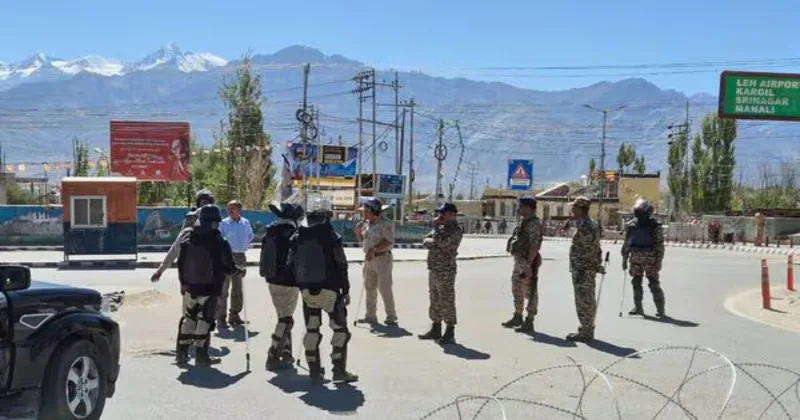
First, it was the heavy rains which disrupted road links in Punjab, as well as in the Union Territory (UT) of J&K, during August. Then there was simmering discontent in whole of Ladakh due to agitation pertaining to 6th Schedule demands, the fast by demonstrators led by Sonam Wangchuk leading them that added fuel to the fire. On September 24, there was a sudden disruption of violence leading to four deaths and injuries to over 80 people.
Fearing uncertainties, a good number of prospective tourists cancelled their plans to visit Leh, which is the only destination to which flights are available from Delhi, Mumbai and some other cities. A Delhi-Leh flight today costs around Rs 3,000, and this is the range for almost the whole of November too. Those who have flown on this sector know that these are abnormally low prices, as flight rates were usually three times as much last year.
Short tourist season
Due to severe cold during winters, long and gloomy, the tourist season in Leh is usually of six months or less, starting with mid-May and is over by mid-October. Incidentally, the minimum temperature at Leh is already -3 to -4 degrees Celsius these days, and the maximum for the day is in the range of 6 to 8 degrees Celsius. This is far worse than what people from north Indian cities like Amritsar, Delhi or Jaipur face even at the peak of winters. With every passing day, the temperatures are going down further.
Practically, thus the tourist season in Ladakh is over and out, with most people associated with the tourism industry remaining idle for most part of it this year. According to official estimates, the existing infrastructure consists of 1,200 guest houses, 600 hotels, 40 resorts, 200 camps, a little over 2,000 home stays, 700+ tour operators, 5,000 taxis and over 3,000 motorbikes. Almost all of them failed to make good money during the summer time, and the bitterness of earning less will stay during the winter months.
Some days ago, tourist taxi operators of Leh met Lieutenant Governor Kavinder Gupta seeking relaxation in some regulatory conditions the Central Ministry of Road Transport & Highways (MORTH) has made mandatory for commercial vehicles. A good number of taxi operators faced issues with making payments of EMIs to banks on the loans they had taken for their vehicles. They said they did not have the money to install and operate some gadgets that MORTH is insisting on installing. A normal season could have meant the tourist taxi operators would not have faced these difficulties.
Numbers fall steeply
In 2019, Ladakh saw an influx of 2,41,285 domestic and 38,652 foreign tourists, with the numbers touching 5,10,137 and 21,259, respectively, for these two categories in 2022. In 2025, up to July 31, only 2,07,255 domestic tourists and 16,934 foreigners visited Ladakh, far lesser than 3,36,682 domestic tourists and 39,704 foreigners touching this Union Territory (UT). Of course, these numbers seem gloomy when compared to arrivals of 4,89,059 domestic tourists and 36,315 foreigners spending some time in Ladakh during 2023.
Some diehard Ladakh lovers may still visit it in the coming months, even at the peak of winter, but they are unlikely to make any substantial dent in the final numbers recorded for the year. The pall of gloom for the locals associated with the tourism industry does not look bright at this juncture for the next year too. As it is likely that uncertainties regarding the parleys between the Central teams and Ladakhi leadership remain. There is no indication of either side stepping back and softening their stands on substantive issues, either.
For the ordinary Ladakhis and Indians from other parts of the country, round-the-year connectivity is going to be an issue for the foreseeable future. For the next couple of years, connectivity to Ladakh is going to remain an issue because the completion of Jozila Tunnel is now expected in February 2028, instead of September 2026 as originally envisaged. This is likely to impact negatively, as the movement of men, as well as goods, will continue to be difficult, as it is today.
Solar, Wind Energy
One major reason for the Centre’s unwillingness to concede 6th Schedule constitutional guarantees to Ladakh is the chances of a section of vocal local leadership blocking major projects. For now, one of the biggest projects that the Central government has planned for the Leh district is the setting up of a mega clean hybrid energy park. In this 13 GigaWatt (GW) park, 09 GW is to come from solar components, with the remaining 04 GW produced by harnessing wind power. Incidentally, Leh is one district of India where there are usually 300+ (average 310) clear sunny days, and this has immense potential for clean solar energy.
A bit of comparative figures may help illustrate and comprehend the point better. The potential of the Chenab River is estimated to be around 14,000 MW or 15,000 MW (14 or 15 GW as one GW 1,000 MW). We know that the gestation period of a major hydropower plant can easily be a decade or so. However, setting up a 13 GW power park in Leh will be much faster and can contribute immensely to the energy security of the nation.
It doesn’t look like the union government, after removing Article 370 from J&K, will concede any special constitutional mechanisms for Ladakh. It may be recalled that before October 31, 2019, the Union Territory (UT) of Ladakh was also a part of the same state.
The way forward
Development of the backward areas located anywhere in the country is the responsibility of the governments, be they the state governments, the UT governments or the union governments. Fear of being gobbled by more powerful, richer outsiders is a common feeling to be found in weaker local communities. Ladakh is no different when we take this yardstick into consideration.
Balancing the development needs of the nation and addressing the issues raised by local Ladakhis fairly is something the Centre will have to find a way to do. Subterranean hostility towards one another can be a recipe for disaster in a strategically important region, which Ladakh undoubtedly is. At present, the Modi government seems to have all the time in the world, till next Lok Sabha elections in early 2029, to resolve the Ladakh tangle. It can wait.












Comments