





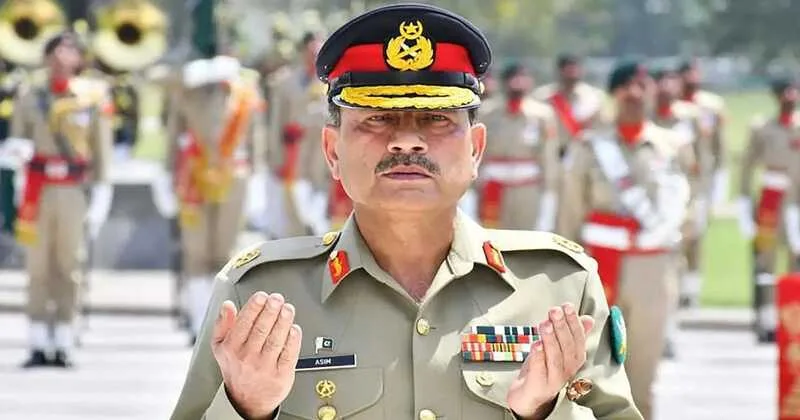
Pakistan is facing a major security crisis as Taliban-led forces continue to launch coordinated attacks on military posts along the Afghan border. Reports suggest that Army Chief General Asim Munir, who narrowly escaped a recent attack by Taliban militants, erupted in anger during a high-level emergency meeting convened at the General Headquarters (GHQ) in Rawalpindi. The meeting was called to address what Munir described as a “serious and unacceptable intelligence failure” on the country’s western frontier.
According to sources, General Munir demanded a detailed explanation from senior military commanders over their inability to anticipate or prevent the series of attacks carried out by the Tehrik-e-Taliban Pakistan (TTP) and allied groups operating from Afghan soil. Expressing deep frustration, he questioned why such large-scale assaults went undetected and why the necessary reinforcements were not available in time to repel the militants. Munir reportedly raised his voice several times during the meeting, asking repeatedly, “Where was the intelligence system? How could we not foresee this?” He directed the intelligence and operations wings to submit a comprehensive report within seven days, detailing the lapses, their causes, and the corrective steps to be taken immediately. The army chief also ordered enhanced vigilance across all border regions and instructed local commanders to take every possible measure to prevent further casualties among troops and civilians.
In a stern message to his top brass, General Munir reminded them that Pakistan is “at war, both internally and externally,” emphasizing that the country cannot afford continued negligence in its counterterrorism efforts. He stated that it was time to adopt stronger and more decisive action against militant networks, adding that “the lives of countless young soldiers and civilians cannot continue to be sacrificed due to repeated intelligence and operational failures.” Observers note that the renewed wave of violence along the Durand Line has exposed the growing vulnerability of Pakistan’s security apparatus. The main factor behind these recurring attacks, according to analysts, is the breakdown in intelligence coordination and the inability of military leadership to respond swiftly to cross-border threats.
The attacks, carried out by the TTP and other militant groups from Afghan territory, have targeted multiple locations, including Angur Adda, Bajaur, Kurram, Dir, Chitral, North and South Waziristan, Bahram Chah, and Chaman in Balochistan. The operations were well-coordinated and executed without provocation, deepening concerns over Pakistan’s border security. Critics argue that the Taliban regime in Kabul has failed to rein in anti-Pakistan militants operating freely within Afghanistan. Islamabad’s frustration has been compounded by the growing closeness between Kabul and New Delhi, particularly after the Afghan Foreign Minister’s recent visit to India, an issue that has further strained Pakistan’s diplomatic and security posture. General Munir concluded the meeting with a stern warning to senior officers, asserting that such intelligence and operational lapses must “never be repeated.”
















Comments