





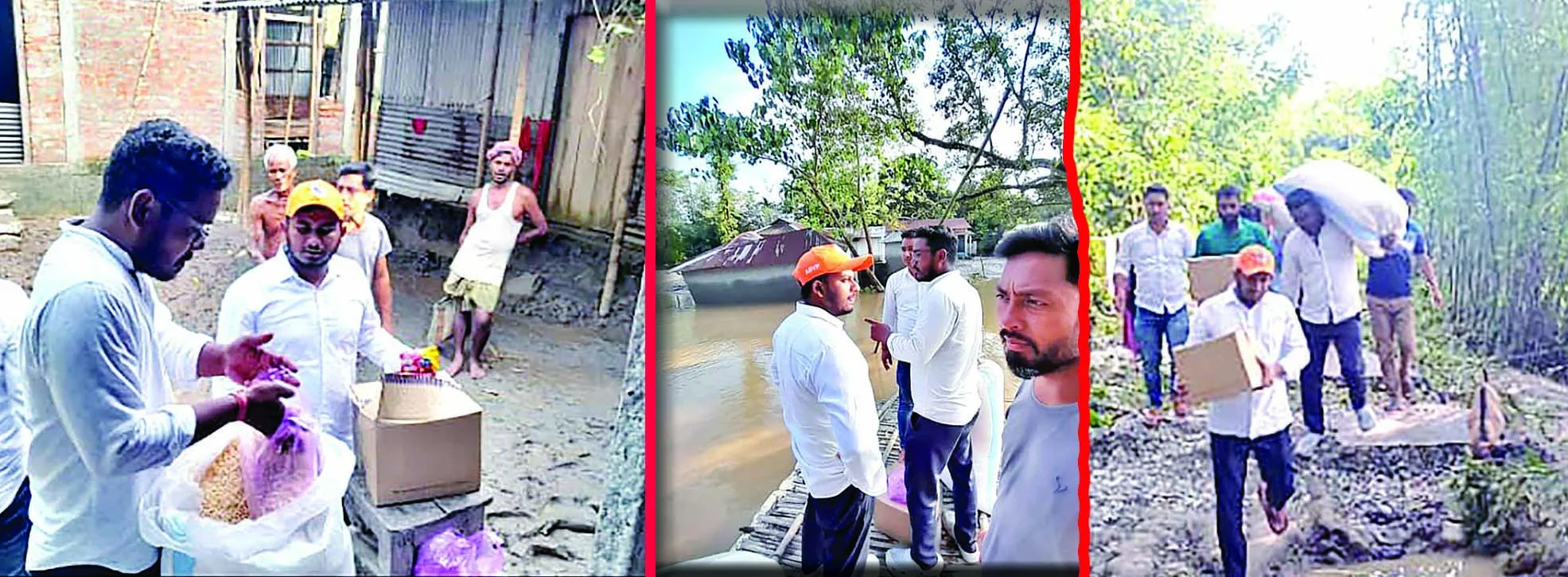
West Bengal is facing one of its worst floods in recent history. Amid this calamity, Rashtriya Swayamsevak Sangh (RSS) rose to the occasion. Swayamsevaks once again demonstrated their spirit of selfless service and dedication to humanity. In the Khairbari Block of Darjeeling district, near the Indo–Nepal border, Swayamsevaks led the disaster relief work and helped affected families in the villages of Dengujot and nearby areas. In Jalpaiguri district, Swayamsevaks have also launched relief work in Malbazar and Banarhat and are making continuous efforts to reach remote hill regions that remain difficult to access.
Providing Succour to People
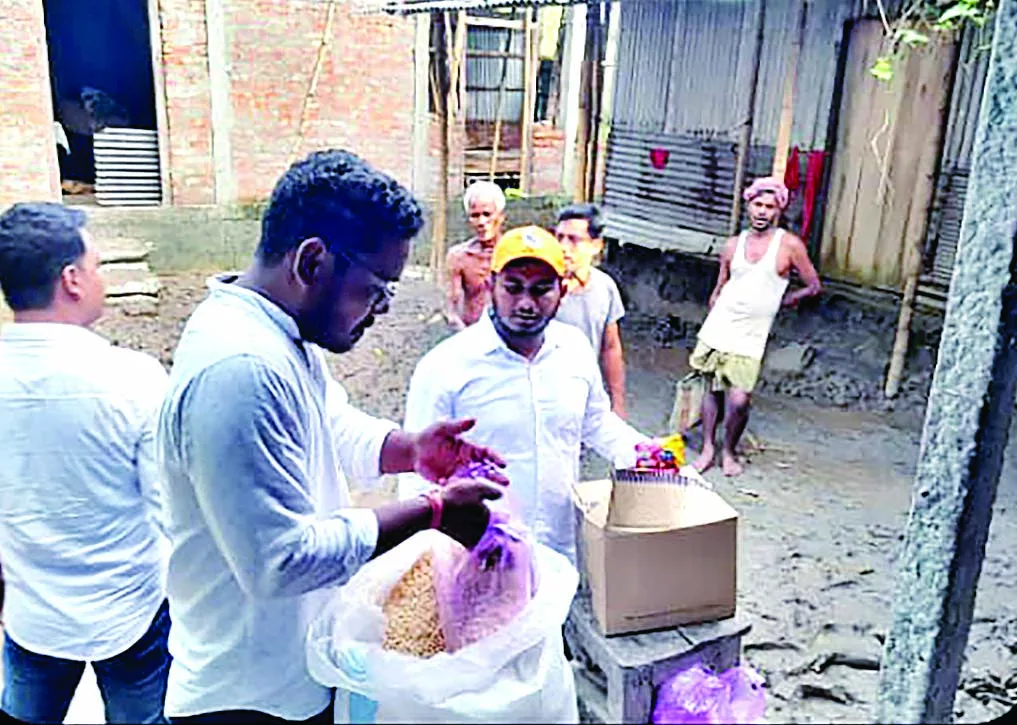
Without any delay, Swayamsevaks reached the affected regions carrying relief materials. They distributed food, drinking water, blankets, medicines, and other essential items to those in need. Hundreds of Swayamsevaks from various districts of North Bengal have joined the relief operation. “This is the time to serve humanity,” said one of the Swayamsevak. “When any part of our country is in crisis, it is the duty of every Swayamsevak to reach out and serve people selflessly,” he said.
Local residents have deeply appreciated this humanitarian effort of the Rashtriya Swayamsevak Sangh. In the Porajhar area of Sushrut Nagar, Siliguri, Swayamsevaks collected relief items from local markets and distributed raw food, water, and other essentials among the affected families.
The devastating floods in West Bengal have claimed at least 28 lives, with dozens still missing, after heavy overnight rainfall triggered massive landslides across Darjeeling, Kalimpong and surrounding hill districts on October 4–5. Darjeeling alone recorded 261 mm of rainfall within 24 hours — classified as “extremely heavy rainfall” by the India Meteorological Department. Darjeeling has suffered the most severe damage, with 13 bodies recovered from Mirik alone. Heavy rainfall triggered nearly 100 landslides, including 35 major ones, completely disrupting transportation and isolating several communities. Floods across North Bengal have effectively cut off Sikkim, with the National Highway 10 fully blocked and most district roads closed due to landslides. The Gorkhaland Territorial Administration (GTA) has closed all tourist destinations until further notice for public safety.
- All in Dooars area. Bamandanga and Tunda are worst affected. Banks of several rivers have been severely damaged namely Teesta, Mahananda, Balasan, Daina, Jaldhaka, Torsa, Tanatani, Kaljani and many tributaries of these rivers coming from Himalayan belt.
- Two major road bridges have been damaged and washed away in two locations .1) Dudhiya at Mirik 2) Bijanbari
- Total population affected: Approx 6 lakh
- Total domestic cattle affected: 2 lakh
- Total wild animal affected: 5 thousand approx.
- Total death: 29 till now.
- Dead bodies of many domestic cattle and wild animals are being recovered in several areas, especially in areas surrounding Jaldapara and Garumara Sanctuary.
- Swayamsevaks started Seva in all the affected areas from October 5, 2025
- Total villages served till 07/10/1025, 12 pm: 180 approx.
- Total population served till evening: 25,000 approx.
Relief Materials Collected
- Rice: 10 quintal
- Atta: 8 quintal
- Dal: 5 quintal
- Tarpaulin: 1,000 pc
- Maggie: 10,000 packet
- Blankets: 500 pc
- Bleaching powder: 100 kg
- Cooking utensil set: 50 set
- Distribution of dry food items
According to weather reports, parts of North Bengal received nearly 300 mm of rainfall within just 12 hours on October 4 night, causing unprecedented flooding across both plains and hills. Other severely affected regions include Cooch Behar with 192 mm, Jalpaiguri with 172 mm, and Gajoldoba recording nearly 300 mm of rainfall during the same period. Even amid these grim circumstances, Swayamsevaks continue their tireless relief work carrying forward the message of humanity, compassion, and selfless service to the remotest corners of flood-hit Bengal.














Comments