





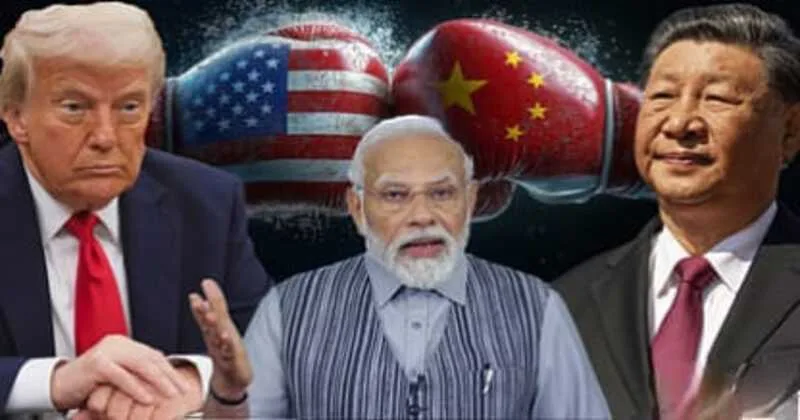
Despite US President Donald Trump and China adopting softer rhetoric in recent weeks, the trade war between the world’s two largest economies continues unabated. From today, China has implemented increased port fees for US ships docking at Chinese ports, marking a direct response to the US raising fees for Chinese vessels. Currently, the US charges Chinese ships $50 per ton, while China charges $56. Both nations have indicated that these fees will be gradually increased in the coming years.
The rise in port charges has raised concerns over potential disruptions to the already fragile supply chains linking China and the United States. Compounding the tension, the US has imposed sanctions on a Chinese port over Iranian oil imports, further deepening the economic rift. Yesterday, President Trump announced a 100% additional tariff on Chinese goods, ostensibly as retaliation for China’s restrictions on the export of rare earth minerals. This escalation marks a new phase in the ongoing trade confrontation. Trump justified the tariff hike by citing concerns over China’s monopoly on rare earth elements, which account for 70% of global reserves. In response, China accused the US of maintaining double standards, pointing out that America imposes the most export controls globally. Meanwhile, a planned meeting between President Trump and Chinese President Xi Jinping in South Korea this month has been postponed, with Chinese officials yet to comment. Trump himself has expressed scepticism about the value of continuing talks with Xi, reflecting the growing erosion of trust between the two nations.
The latest developments follow a 90-day truce in which both sides had temporarily suspended additional tariffs. During this period, China tightened its control over rare earth exports, prompting the US to respond with higher tariffs. The ongoing deadlock is now visibly impacting trade figures. While China’s total exports rose 8.3% last month, shipments to the US fell sharply by 27%. Conversely, imports from the US to China declined 16%. US stocks rebounded strongly, driven in part by President Trump’s recent post on Truth Social reassuring investors that there was “no need to worry” about China and asserting that “everything will be fine.” The Nasdaq surged 2.21%, the Dow Jones Industrial Average rose 1.29%, and the S&P 500 gained 1.56%. Futures markets also reflected modest gains.
Indian markets eye gains amid low inflation and trade hopes
In India, the Nifty 50 opened with slight gains, suggesting potential positive momentum for both the Sensex and Nifty indices. However, investor concerns regarding corporate earnings remain significant. On a positive note, retail inflation fell to an eight-year low in September, bolstering market sentiment. Crude oil prices rose modestly amid speculation that the US–China trade dispute might eventually be resolved. Corporate results remain in focus, with HCL Technologies reporting a stable second-quarter profit on a year-on-year basis, while revenue rose 10.7%. The company announced a dividend of Rs 12 per share. Other companies set to release earnings today include Tech Mahindra, ICICI Lombard, ICICI Prudential, IREDA, Bank of Maharashtra, and Leela Hotels. Additionally, LG Electronics shares are scheduled for listing at 10 am today. The record-breaking Rs 11,607 crore IPO saw the largest subscription of 2025, and the stock is expected to list with a gain of 30–35%. The IPO price was Rs 1,140, while the gray market premium yesterday was around Rs 360.
Meanwhile, precious metals have surged as investors seek safe-haven assets amid global uncertainties. International gold prices have jumped over $125 per ounce to an all-time high of $4,148.64. In India, gold prices may exceed Rs 93,000 per ounce today. Silver has also risen sharply, reaching $53 per ounce with a 5.46% gain, which could push local prices above Rs 190 per gram. Meanwhile, the Indian rupee strengthened slightly, gaining 4 paise against the US dollar to reach 88.68. As the US–China trade war intensifies, global markets are navigating a volatile environment. The combination of tariffs, port fee hikes, and geopolitical tensions continues to impact trade flows, investor confidence, and commodity prices worldwide. Analysts warn that unless a diplomatic breakthrough occurs, supply chain disruptions, stock market volatility, and commodity price spikes may persist, with ripple effects felt across Asia and Europe.
















Comments