





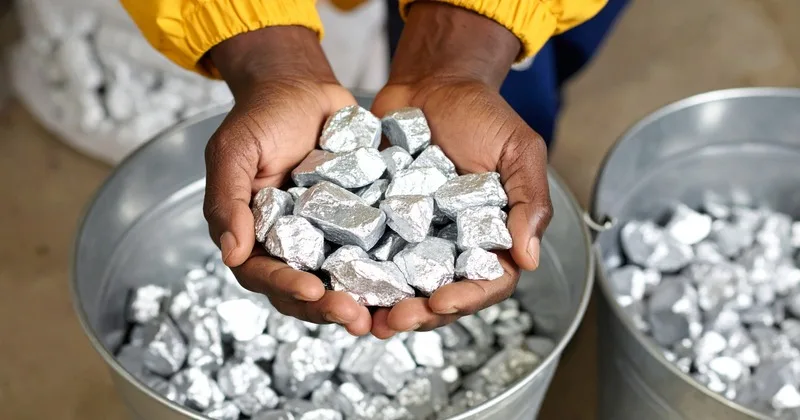
In recent years, India has been increasingly reminded of the dangers of relying too heavily on China for critical minerals, particularly the rare earth elements (REEs). China’s frequent tightening of export controls, often citing national security, has disrupted the global supply chains. To combat this vulnerability, India has started to adopt a multi-faceted approach. Recent developments, while still in the early stages, reveal both ambition and risk. A realistic evaluation shows that while India has made significant progress, it still needs to do much more to strengthen its extraction, processing, technology and diplomatic relationships.
China’s 2025 export tightening highlighted this issue. In October, Beijing expanded licensing requirements for rare earth materials and magnets, specifically targeting defense, semiconductor and dual-use industries. According to the new rules, components, assemblies and even recycling equipments may require permission for export. Defence users are being completely barred from export licenses. China currently dominates refined rare earth supplies, accounting for over 90% of processed rare earths and rare earth magnets, while its share of mine production is about 60%. When China uses export controls as leverage, industries downstream, from electric vehicles to defense electronics, all are impacted.
In response, Indian leaders have raised alarms and begun to shift strategies. Commerce Minister Piyush Goyal has repeatedly described China’s actions as a wake-up call for nations that depend too much on one region. India is working on diversifying sources, supporting domestic processing and promoting alternatives in technology through both public and private diplomacy.
On the domestic front, the Indian government has approved a scheme worth ₹7,300 crore to support the local production of rare earth magnets. This plan covers both capital and operational costs. The goal is to produce 6,000 tons annually by 2030. If successful, this could meet much of India’s demand for magnets in sectors like electric vehicles and wind turbines. Additionally, previous proposals in 2025 included a smaller ₹1,345 crore incentive program for rare earth magnets due to China’s export restrictions. These incentives aim to increase processing capacity, attract investment and ease bottlenecks in the midstream segment of the supply chain.
Another important development involves reconsidering India’s own extraction output. The state-owned Indian Rare Earths Ltd (IREL), which had been exporting some of its production to a Japanese processing unit, has been instructed to stop these exports and focus on domestic needs. The reason is clear: if raw materials continue to be sent abroad for processing, India will remain dependent on external refiners. The broader goal is to retain ore, separate and refine it domestically and create a complete value chain.
At the same time, Indian companies are exploring rare earth deposits outside of China. Goyal has confirmed that firms are working to find raw material sources elsewhere and establish partnerships to gradually reduce dependence on China. This upstream diversification in regions such as Africa, Southeast Asia or allied countries is vital to managing supply risks.
India is also making strides in technology, even though this area is more experimental and will take time. Some Indian startups are designing rare-earth-free motors, such as synchronous reluctance motors, to entirely avoid reliance on magnet materials. These initiatives are driven by the vulnerabilities brought to light when China restricted magnet supply chains. Concurrently, domestic research and development in magnet recycling, alternative materials and separation technologies, like ion exchange and solvent extraction techniques, may help India break free from global supply chain chokepoints. Such efforts highlight a key lesson from trade-network studies: systemic risk is not limited to raw materials but also exists in midstream and input-product bottlenecks in the value chain.
However, the path forward is filled with obstacles, trade-offs and geopolitical challenges. First, India’s domestic reserves of rare earths are relatively limited and few high-grade, easily accessible deposits are currently identified. The costs of extraction, separation and refinement remain high and technologically complex. It will take considerable time and resources to overcome China’s established dominance in midstream refinement.
Second, making sure that domestic incentives translate into real manufacturing success is not guaranteed. Even with financial support, companies may be cautious due to technology risks, uncertain demand and global competition. The target of achieving 6,000 tonnes of capacity by 2030 is ambitious and requires consistent political support, clear regulations and guaranteed off-take agreements. India is also facing a classic valley of death issue: scaling from pilot projects to full commercial production in a specialized field.
Third, diplomatically, China has already asked India for assurances that any imported heavy rare earth magnets will not be diverted to the United States, fearing they could be used in defense or military applications. This shows how strategic minerals are tied to geopolitics; India must navigate carefully to avoid becoming a battleground for proxy conflicts. Moreover, China’s expanding export controls that apply to goods made with Chinese-sourced rare earths add another layer of unpredictability.
Fourth, while alternative technologies, like rare-earth-free motors, show promise, they haven’t yet been proven at scale in terms of cost, performance or durability. The transition will likely need a mixed or phased approach, possibly even requiring the initial import of critical expertise. If India does not develop its own strengths in midstream operations, such as separation, magnet production and recycling, it may remain reliant on specialized global players.
Given these opportunities and challenges, what further actions should India consider? Here are a few suggestions: First, India should promote and finance mission-driven research and development through ministries of science and defense focused on breakthrough separation and magnet technologies. A publicly funded “Rare Earths Technology Mission” could complement semiconductor initiatives, concentrating on next-generation materials, recycling, and low-carbon processing.
Second, India should leverage international partnerships. Collaborating with countries rich in rare earth deposits, like those in Africa, Australia and Southeast Asia and co-investing in mining and processing facilities can help lessen dependency on China.
Third, India should guarantee procurement and demand aggregation. The government can commit to off-take agreements or secure orders, particularly for strategic sectors such as defense, electric vehicles and wind energy. This would provide new domestic producers with certainty, thus reducing investment risks.
Fourth, India should bolster recycling as a domestic secondary source. End-of-life electronics, magnetsv and industrial waste can serve as feedstock. Encouraging recycling initiatives and reverse logistics would further minimize dependence on imports.
Fifth, India can implement gradually increasing import controls or tariffs on fully finished magnet products to boost domestic processing. This must be done carefully to avoid sudden trade disruptions or retaliation. A well-planned safeguard or duty system can help shift the cost-benefit balance toward domestic value addition.
Sixth, India needs to invest in its workforce and skill development. The complicated processes of separation, purification, magnet design and material science require a skilled workforce of engineers and scientists. Specialized programs in universities and technical institutes are essential.
Finally, India should maintain a balanced diplomatic approach. It should advocate for a trade regime based on rules, such as at the WTO or in other multilateral forums, warning against the weaponization of export controls, while also securing strategic supply guarantees from alternatives to China.
India’s recent initiatives, such as financial support for magnet manufacturing, retention of domestic ore, upstream sourcing efforts and backing for alternative technologies is marking a necessary shift in the country’s rare earth strategy. However, achieving success will require ongoing political commitment, capital investment, technological innovation and careful diplomacy. If India can drive this comprehensive effort over the next decade, it has the potential to evolve from merely a consumer to a significant player in the rare earth supply chain, ultimately protecting its high-tech ambitions from future supply disruptions.















Comments