





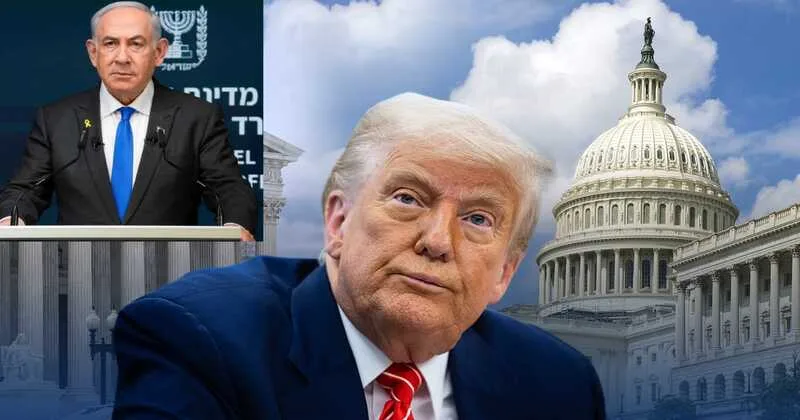
International crude oil prices plunged following US President Donald Trump’s announcement that Israel and Hamas had taken the “first” step towards peace in Gaza. Trump revealed that both sides had entered the initial phase of a ceasefire and would engage in a prisoner exchange. This marks the most significant development since the onset of the anti-Hamas conflict. Following the announcement, West Texas Intermediate (WTI) crude prices fell to $62.11 per barrel, while Brent crude declined to $65.87, both losing around one percent. The recent price movements contrast with expectations following an OPEC+ decision, led by Saudi Arabia and Russia, to increase crude production. While the announcement should have triggered a sharp drop in oil prices, the market had recently seen prices rise due to delays in the anticipated production increase.
Oil prices had surged to $70 per barrel amid the Israel-Hamas and Israel-Iran tensions, driven by fears that conflict could disrupt oil supplies from West Asia to global markets. With the announcement of a potential path to peace, prices have returned to a declining trend. For India, which imports 85-90% of its crude oil consumption, the fall in prices represents a significant economic advantage.
India currently imports substantial quantities of oil from Russia at discounted rates. If West Asian oil prices also decline, Indian companies can diversify their imports, reducing reliance on Russian supplies and easing tensions with the United States over its Russian oil purchases. Additionally, India is exploring contracts with Gulf countries and West African nations for 2026 oil supplies, reflecting a strategic effort to balance imports.
US Congress urges Trump to address India tensions, markets gain
Meanwhile, the US Congress has urged President Trump to resolve differences with India. Trump’s imposition of heavy tariffs has strained relations with India, pushing the country closer to China and Russia. As a Quad member alongside the US, Australia, and Japan in the Indo-Pacific defense alliance, India’s alignment is critical for US strategic interests. Members of Congress, including Deborah K. Ross, Brad Sherman, Pramila Jayapal, Frank Palon Jr., and Raja Krishnamurthy, have called on Trump to engage in dialogue with India and avoid further escalation.
US financial markets responded positively as the Federal Reserve signaled plans to cut interest rates twice more in 2025. In its last policy meeting, the Fed reduced rates by 0.25%. Investors are also awaiting the release of last month’s unemployment figures, which have been delayed due to the Trump administration’s ninth day of government shutdown. The absence of such economic indicators could unsettle the market, but optimism prevailed in futures trading. US futures advanced on strong performances from artificial intelligence and semiconductor firms, with the Dow, Nasdaq, and S&P 500 rising up to 0.2%. In Asia, Japan’s Nikkei continued its rally, gaining 1.34%, while China’s Shanghai Composite rose 0.65% and Hong Kong’s index dipped 0.09%. In Europe, the FTSE 100 added 0.69%, reflecting broad market optimism.
Indian Stock Market Shows Signs of Recovery
In India, the Gift Nifty rebounded by 60 points today after facing pressure in recent sessions, suggesting that both the Sensex and Nifty may start gaining momentum. Following profit-taking yesterday, the Sensex had slipped 0.19%, while the Nifty fell 0.25%. Foreign institutional investors (FIIs), who had been net sellers of Indian stocks in recent months, purchased shares worth Rs 81 crore yesterday. Their return is expected to bolster market confidence. Falling crude oil prices coupled with strong stock market performance may help stabilize and strengthen the Indian currency in the near term. India’s corporate earnings season has resumed, starting with IT company TCN, which is set to release its September quarter results today. Strong performance in IT could positively influence broader market sentiment. Other companies reporting results today include Tata Elxy, GM Breweries, Avsarana Finance, Triton Corp, and Senko Gold, which recorded an 18% increase in revenue for the April-September period.
In addition, Maruti Suzuki announced plans to open 500 new service centres across India, a move expected to enhance customer reach and after-sales support. This expansion reflects confidence in domestic demand and the automotive sector’s growth prospects. Overall, the combination of easing geopolitical tensions, falling oil prices, positive global market trends, and returning foreign investment provides a supportive backdrop for India’s economic and financial markets. With both energy costs and corporate performance improving, India stands to benefit from enhanced market stability and potential growth opportunities in the coming months.
















Comments