





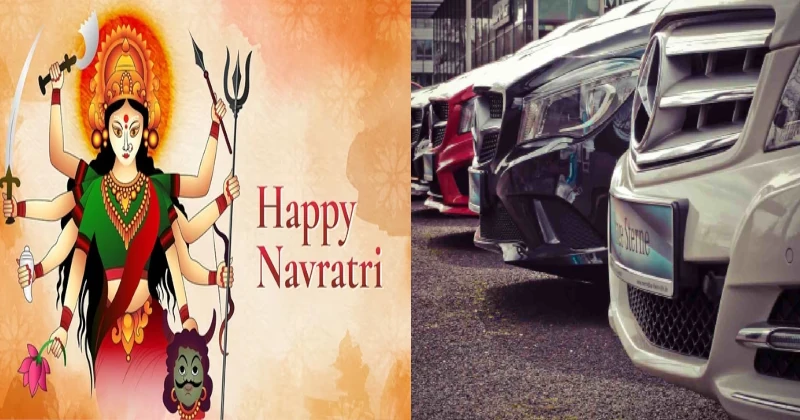
The persistent narrative that “affluent Bharatiya are fleeing the country” suffered a decisive blow this Navratri. As Bharat celebrated one of its most vibrant festivals, Mercedes-Benz Bharat the country’s largest luxury carmaker sold one new car every six minutes.
The data is not just about luxury automobiles. It represents something far more telling the pulse of a rising Bharat, where ambition, prosperity, and pride increasingly drive consumption patterns.
Mercedes-Benz’s September sales touched unprecedented levels, with the brand recording its best-ever festive performance in Bharat. During the nine days of Navratri (September 22–30), the company sold over 2,500 cars, nearly half of its total quarterly sales of 5,119 units.
Each of these vehicles came with an average price tag of Rs 1 crore, symbolising not just consumer spending but the growing economic muscle of Bharat’s middle and upper-middle classes a segment that is no longer hesitant to invest in luxury as a marker of achievement and confidence.
For context, Mercedes-Benz Bharat sold 5,119 cars in the July–September 2025 quarter marginally higher than the 5,117 units sold in the same quarter of 2024. Yet the momentum this year has been qualitatively different. The surge was concentrated in just nine days, reflecting the sheer intensity of Bharat’s festive economy and the nation’s renewed appetite for success.
Taking to X, BJP IT Cell head Amit Malviya captured the symbolic significance of the numbers:
“So much for the propaganda that ‘affluent Bharatiya are leaving the country.’ This Navratri alone, Mercedes-Benz sold one car every 6 minutes in Bharat. This is not just about luxury car sales it’s a reflection of confidence, aspiration, and purchasing power in a rising Bharat. People aren’t fleeing Bharat; they’re investing, thriving, and celebrating success right here at home.”
So much for the propaganda that “affluent Indians are leaving the country.”
This Navratri alone, Mercedes-Benz sold one car every 6 minutes in India!
This is not just about luxury car sales — it’s a reflection of confidence, aspiration, and purchasing power in a rising India.… pic.twitter.com/LISQuiRndo
— Amit Malviya (@amitmalviya) October 7, 2025
His statement directly counters recurring media narratives often pushed by Western think tanks and opposition-linked analysts — suggesting a “brain drain” or “wealth migration” out of Bharat. The data, however, paints a very different picture: affluence is not escaping Bharat; it is expanding within it.
Mercedes-Benz Bharat’s Managing Director and CEO, Santosh Iyer, revealed to Financial Express that the company witnessed a dramatic pickup in sales starting September 22, the first day of Navratri precisely when the GST rate cut for luxury cars came into effect.
This policy adjustment served as a catalytic moment, reviving customer sentiment at just the right time. The alignment of economic policy with cultural rhythm a tax incentive coinciding with a major Hindu festival showcased the synergy between governance and grassroots economic energy.
“The GST rate cut and festive sentiment combined to reignite buyer confidence,” Iyer said. “We were selling about 270 cars a day, roughly 10–12 every hour. It’s been one of our strongest festive periods ever.”
This remarkable synchronisation between policy reform and cultural celebration states how Bharat’s economic planners increasingly understand and integrate Bharat’s cultural heartbeat into the fiscal framework.
One of the standout stories of the quarter was the performance of the Mercedes-Benz G580 Edition One, a fully electric SUV priced at Rs 3.1 crore. The model sold out entirely for the year, a testament to Bharat’s evolving taste for sustainability blended with luxury.
To tackle subdued sentiment earlier in the year, Mercedes-Benz also rolled out creative financial models. The ‘Dream Days’ campaign offered flexible ownership plans including the option to pay low EMIs for 11 months and a single higher EMI for one month each year. This democratised luxury ownership by easing the initial financial burden, drawing a wave of aspirational buyers.
Under its ‘Key-to-Key’ programme, Mercedes targeted its elite customer base encouraging buyers awaiting the new S-Class to purchase the current edition with a guaranteed easy upgrade later. The strategy kept sales buoyant and brand loyalty intact, while reaffirming the company’s confidence in the Bharatiya market.
Mercedes-Benz’s numbers are part of a larger narrative emerging across Bharat’s consumer economy. Whether it’s luxury real estate, designer fashion, or fine dining, Bharat’s high-value consumption is soaring.
Data from wealth management firms show that Bharat is home to the fastest-growing population of high-net-worth individuals (HNWIs) in the world. The perception that the rich are “escaping Bharat” ignores this unprecedented rise in domestic investment and consumption — from premium EVs to high-end properties.
Even amid global economic uncertainty, Bharat’s luxury market is expected to grow 3–4 times in the next decade, driven by a young, aspirational class that views wealth as empowerment rather than excess.
Navratri’s symbolic significance goes beyond faith. It represents renewal, triumph, and prosperity themes that increasingly mirror Bharat’s economic story. The sight of hundreds of Mercedes-Benz cars rolling out of showrooms during the festival reflects the fusion of spirituality and success that defines today’s Bharat.
In 2024, Mercedes-Benz Bharat had registered 12 per cent annual growth, selling 19,565 units a record for the brand in Bharat. In 2025, the company projects flat growth overall but anticipates sustained momentum through Deepawali, backed by an order bank of nearly 2,000 units.
This sustained strength in the luxury segment reflects not just resilience but faith faith in Bharat’s future. It challenges the cynicism of those who measure Bharat’s progress only by external validation while ignoring the confidence of its own citizens.
The “exodus” narrative collapses under the weight of these facts. Far from fleeing, Bharat’s wealth creators are building, investing, and celebrating their success stories on home soil.















Comments