





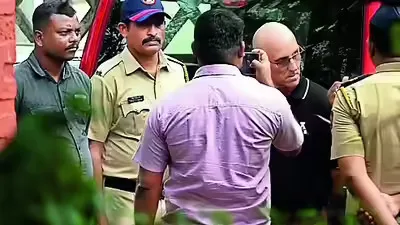
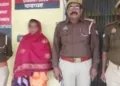
James Watson, the son of a retired United States Navy official, was taken into custody by Thane Police along with two local residents for allegedly conducting unauthorised religious conversions, including baptisms, and promoting “miracle healing” during a prayer gathering in Chimbipada village in Bhiwandi, Maharashtra.
Officials highlighted Watson’s refusal to provide the password to his locked iPhone and the limited police remand, both of which have intensified the concerns of intelligence agencies regarding the depth of his network and its operations in India. A senior police official quoted in CNN News18, “Watson’s activities are not merely spiritual. They show systematic attempts to influence vulnerable populations in strategic areas.”
Top intelligence sources describe Watson’s arrest as a warning signal about missionary fronts being potentially used for soft influence and intelligence gathering. His reported military background raises suspicions about the possible mapping of sensitive social terrain in semi-urban and rural India.
Agencies are particularly concerned about the targeting of tribal and economically vulnerable communities, under the pretext of charity, education, healthcare, and spiritual services. One intelligence officer was quoted saying, “The broader objective appears to be systematic conversions in select tribal belts, which could alter local political alignments and cultural dynamics.”
The Bhiwandi case is reportedly part of a larger foreign-backed operation following a ‘conversion toolkit’ template. Investigations have drawn parallels with prior incidents across Maharashtra, Karnataka, Madhya Pradesh, Odisha, and Meghalaya, where Western nationals on tourist and business visas were implicated in orchestrated religious conversions.
Central agencies have identified several operational patterns:
Targeting Vulnerable Groups: Marginalised communities, including Adivasis, Dalits, and economically disadvantaged villagers, have been primary targets.
Entry Points: Activities often disguise as education, healthcare services, and miracle healing sessions.
Foreign Funding and Hawala Channels: Similar rackets, such as the Chhangur Baba gang, were reportedly funded through US, Canada, and Dubai-based sources, sometimes linked to PFI and SDPI networks, resulting in investigations into over 500 conversions.
Digital Grooming: Recent cases in Agra and Hardoi (2025) suggest an emerging trend of digital influence and grooming, including activity on the dark web.
Visa Misuse: Business, tourist, and volunteer visas have been repeatedly exploited, highlighting a structured international network designed to maintain plausible deniability. Between 2018 and 2025, over 320 cases of foreign visa misuse for religious purposes were reported in India.
Punjab: A case study of conversions
Intelligence reports note Punjab as a concerning example, where Christianity, particularly through Masih practices and baptism, has expanded rapidly. The state has seen a surge in churches and pastors, a trend intelligence agencies are monitoring closely as it could influence political and social structures.
A senior official remarked, “Punjab serves as a template demonstrating how systematic conversions can take root and alter local demographics, which is why we are examining Watson’s network for any similar strategies in Maharashtra and other tribal belts.”
The focus of investigations is now on understanding the full foreign connections, funding, and operational strategies behind Watson’s activities. Sources confirm that intelligence agencies are studying financial flows, social outreach programs, and the potential links to other international religious organisations.
The Watson arrest has prompted heightened coordination between central intelligence agencies, state police, and the Ministry of Home Affairs. Measures are being discussed to:
1. Strengthen the monitoring of foreign nationals in sensitive regions
2., Review visa issuance and ensure strict oversight of religious and social work
3. Map networks exploiting humanitarian and spiritual covers
4. Increase awareness among tribal and rural communities about unauthorised religious activities
An official noted in media, “This is not just about one individual. It’s about decoding a sophisticated toolkit that could have long-term implications for national security and cultural integrity.”
The arrest of James Watson in Bhiwandi has exposed a potentially foreign-funded conversion network operating under humanitarian and spiritual pretexts. With intelligence agencies sounding alarms on the strategic use of religious conversions for soft influence and intelligence-gathering, the case shows the need for vigilance and strict enforcement in vulnerable tribal and rural regions.












Comments