





Despite mounting pressure from the United States, the flow of Russian crude oil to India continues, with Russia remaining the country’s top oil supplier in September. However, imports from Russia have shown a slight decline compared to August, according to a report by Kepler, which tracks global oil movements. India continues to import Russian oil despite US sanctions and persistent calls to halt these purchases. Data indicate that around one-third of India’s oil imports in September, 33.8 per cent, came from Russia, down from 40.26 per cent in April 2025.
Meanwhile, traditional oil suppliers in the Middle East and Central Asia continue to account for a substantial share of India’s imports. In September, these regions contributed 44 per cent of total oil imports, including 18.7 per cent from Iraq, 12.8 per cent from Saudi Arabia, and 12.6 per cent from the UAE. India is also working to diversify its oil sources. Nigeria supplied 4.9 per cent of imports and Angola 2.7 per cent, while the United States accounted for 4.3 per cent. Kepler notes that although US pressure may be influencing India’s oil strategy, it is not entirely deterring Russian imports, as evidenced by the continued significant volume. India is reportedly importing approximately 1.598 million barrels of Russian oil per day, representing a roughly 10 percent decline compared to August. Indian refining companies are declining US compulsion to broaden their oil sourcing .
Starmer’s visit highlights India’s strategic diplomacy and trade engagements
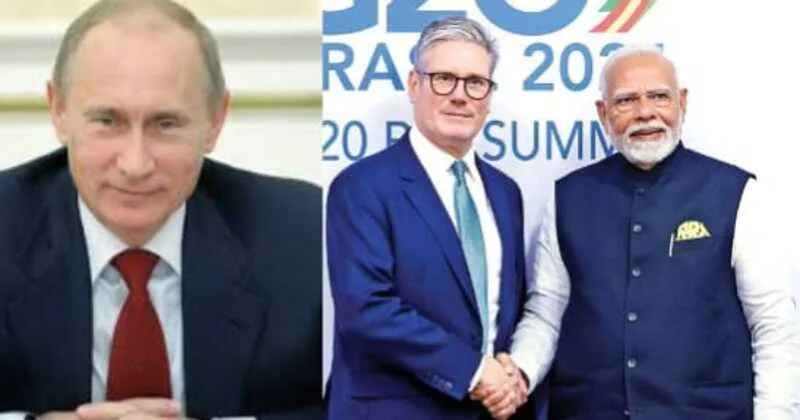
In parallel with energy developments, British Prime Minister Sir Keir Starmer is set to visit India on a three-day official trip, marking his first visit since assuming office. The visit comes after the two countries signed a new trade agreement on July 24, and this will be the first face-to-face meeting between the leaders since that signing. Key topics for discussion are expected to include international security issues such as the ongoing conflicts in Gaza and Ukraine, alongside economic and trade matters.
The talks will also review progress under the ‘Comprehensive Economic and Trade Agreement’ between India and Britain, which has advanced in multiple areas since its inception. Prime Minister Starmer will serve as the keynote speaker at the 6th Global Fintech Fest in Mumbai. The summit will provide an opportunity for both leaders to interact on a broad range of subjects, including trade, investment, technology, defence and security, climate change, energy, health, education, and people-to-people relations.
India’s engagement with Britain comes at a time when its trade relationship with the United States has faced strains, and it reflects India’s broader strategy to maintain balanced ties with major global powers. In recent weeks, India has also advanced discussions with leaders from Russia and China, signalling a careful diplomatic balancing act. For Britain, the visit represents an opportunity to explore further negotiations aimed at maximising the benefits of the trade agreement. The three-day trip is therefore expected to carry significant diplomatic weight, strengthening cooperation across political, economic, and technological domains.
India’s energy diversification and Prime Minister Starmer’s visit together highlight the country’s efforts to manage international relations while ensuring energy security in a complex geopolitical landscape.











Comments