





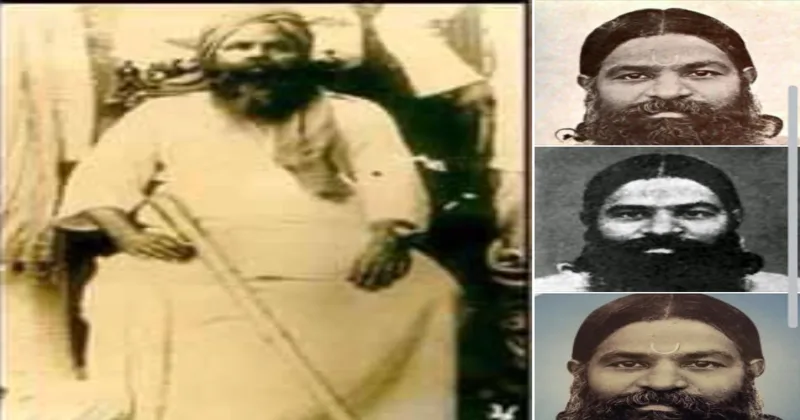
On October 4, the nation, spearheaded by the highest echelons of the Union government, paused to render lavish praise on two formidable yet historically under-celebrated figures from the Indian freedom struggle: Subramaniya Siva and Tiruppur Kumaran. Both sons of Tamil Nadu, their birth anniversaries served as a powerful reminder of the immense personal cost borne by countless revolutionaries in the nation’s quest for independence.
Prime Minister Narendra Modi led the tributes, acknowledging their profound contributions to awakening the spirit of nationalism, particularly in the deep south. This commemoration is more than just a passing tribute; it forms an integral part of the ‘Azadi Ka Amrit Mahotsav’—the 75th-year commemoration of India’s independence—a central initiative dedicated to excavating and celebrating the lives of thousands of unsung heroes whose struggles had, until recently, been obscured from public consciousness.
The renewed focus on Siva, the fiery orator and writer, and Kumaran, the young martyr famed as the ‘Flag Protector,’ signals a national resolve to forge a more comprehensive and inclusive narrative of the freedom movement, ensuring that the hardships and sacrifices endured under the colonial regime are permanently etched into the nation’s collective memory.
The renewed national focus on figures like Subramaniya Siva and Tiruppur Kumaran stands as a direct realisation of the ‘Azadi Ka Amrit Mahotsav’ (AKAM) vision. Launched by the union government to mark 75 years of independence, the initiative has a core mandate: to chronicle and bring to light the contributions of thousands of unsung freedom fighters. This effort, extending far beyond mainstream narratives, seeks to inspire a sense of collective heritage in the ‘Amritkal’—the 25-year journey to the centenary of independence.
In Tamil Nadu, the Dravidian rulers did littler efforts in finding out the names, struggles and compiling them or extending cash assistance to them. They have time to erect statues, memorials and naming after every schemes after Dravidian icons. The forgotten and less remembered list included VoC, Bharathi, Kamaraj, Rajaji, Kattabomman, Dheeran Chinnamalai and others.
On 4th October was the birth day of Subrmania Shiva and Tiruppur Kumaran both are from Tamil Nadu. Subramaniya Sivam, popularly known as Subramaniya Siva was born in Batlagundu village, Dindigul District (Madurai Region) in 1884 to Rajam Iyer and Nagalakshmi. Siva made Brithsers nervous by his activities. Besides a freedom fighter, was a prolific Writer, on his Death CENTENARY was observed on July 23 this year. Shiva e was arrested many times between 1908 and 1922 for his anti-imperialist activities. During incarceration, he got afflicted with leprosy because of which he died in 1925 much before India attained freedom.
According to researcher and writer Vamanan ” Though Siivam spoke of himself as a wayfarer who had the opportunity of conducting the ‘coronation of Swaraj’ in Tirunelveli district, such was the incandescent power and incendiary impact of his Tamil speeches against the British rule, that the colonial regime sought to stamp him out of existence…his patriotic speeches made Tirunelveli district in the deep south reverberate to the revolutionary frequency of West Bengal in the ‘extremist’ phase of the Indian freedom struggle”.
Siva was brought up his maternal grandfather, a village munsiff of Ayyamapalaym. He continued his secondary education Madurai where his parents had moved. Due to poverty, his parents moved to Trivandram( now Thiruvananthapuram) where Tranvancore Samasthanam offered him free dinning hall. Sivam earned sobriquet of bayilvan ( strongman, wrestler) learnt Tamil and English. He had failed in his matriculation exams in a Coimbatore school. He met Sadananda Swami at Trivandran who had worked Kolar Gold mines before becoming Raja yogi. He was attracted to Thakur Kahan Chandra verma speeches , ( arya samaj speake from Lahore) who called for uncompromising nationalism.
Siva who was expelled from Samasthanam, met VO Chidambaram who had founded the Swadeshi Steam Navigation company to compete with British. VOC found siva’s oratory and copted him his nationalistic campaigns. In 1908 they disobeyed the ban and held a public meeting and procession iin March 9 to mark the release of Bipin Chandra pal articles. District collector L M Wynch and his subordinate Rober Ashe had them arrested on charges of sedition. Siva was awarded 10 years transportation, second accused VOC got a double transportation ( being local up in Cellular jail in Andman Islands) for life .
“In 1908, while serving a prison term, he was afflicted by leprosy and was ordered to be shifted to Salem jail. Since leprosy was regarded as a contagious disease, the British authorities forbade him to travel by rail. As a result of this, Subramaniya Siva traversed the whole length of Madras province on foot though his whole body was covered with sores. Fearful of displeasing the British authorities, not many people provided help. However, this did not deter Siva. He continued to fight for independence and suffered numerous prison terms. He eventually succumbed to the disease on 23 July 1925”.
Siva had described his jail experience in a small book “Jail Life”. He The Freedom Movement made him an orator and the jail life made him an author. He published “Gnana Bhanu”, a collection of poems. He was an admirer of Swami Vivekananda and his religious master Sri Ramakrishna Paramhamsa
Another one is Tiurppur Kumaran. Tiruppur Kumaran also known as Kodi Kaatha Kumaran was an Indian revolutionary and freedom fighter who participated in the Indian independence movement. He was inspired by Mahatma Gandhi. His mentor was Shivam Tyagi. Kumaran died at the very young age of 27. He was born on October 4, 1904 to Nachimuthu Mudaliyar and Karupayi Ammal as the fourth of seven children in a family of weavers near Erode. He had to drop out of school after Class V because of his family condnitions. At the age of 10, he moved to his maternal uncle’s house in Pallipalayam and started getting training in handlooms to support his family.
After two years, he returned to Chennimalai and started his own handloom business. To earn money to support his family forced him to move to Tiruppur — today’s knitwear city, then the abode of cotton — in 1922, working in a cotton mill. Kumarasamy, thereafter, was fondly referred to as ‘Tiruppur’ Kumaran, a moniker that stuck with the young freedom fighter. As per the wishes of his parents, he got married when he was 19. He got influenced by the freedom movement that was fast gaining momentum across Bharat. particularly, inspired by Gandhi’s values and objections, he began participating in demonstrations and activities as pepr Gandhi’s directives. He founded Desa Bandhu Youth Association which had mostly youths as its members.
They held numerous protests against British. In 1932, when Gandhi was imprisoned, in Tirupur Thiyagi P S Sundaram on 11th January conducted a march to show their defiance towards the British rulers. They carried Indian national flag which was banned at that time. Kumaran carried one. As they refused to disburse, lathi charge was ordered. Kumaran received blows. He was later found dead holding the flag upright. His sacrifice at the age of 27 earned him the name of Kodi Katha Kumaran ( Kumaran who saved the flag).
PM Modi in a tweet in X said “On this day, we remember and bow to two great sons of Bharat Mata, Tiruppur Kumaran and Subramaniya Siva. Both hail from the great state of Tamil Nadu and dedicated their lives to India’s independence and awakening a spirit of nationalism. Tiruppur Kumaran attained martyrdom while holding our national flag and thus showed what unflinching courage and selfless sacrifice are. Subramaniya Siva, through his fearless writings and fiery speeches, instilled cultural pride and patriotism among countless youth”.
https://x.com/narendramodi/status/1974429905757651346
PM Modi said “ The efforts of these two greats remain etched in our collective memory, reminding us of the struggles and suffering of countless people who ensured our freedom from colonial rule. May their contributions continue to inspire us all to work towards national development and unity”.











Comments