





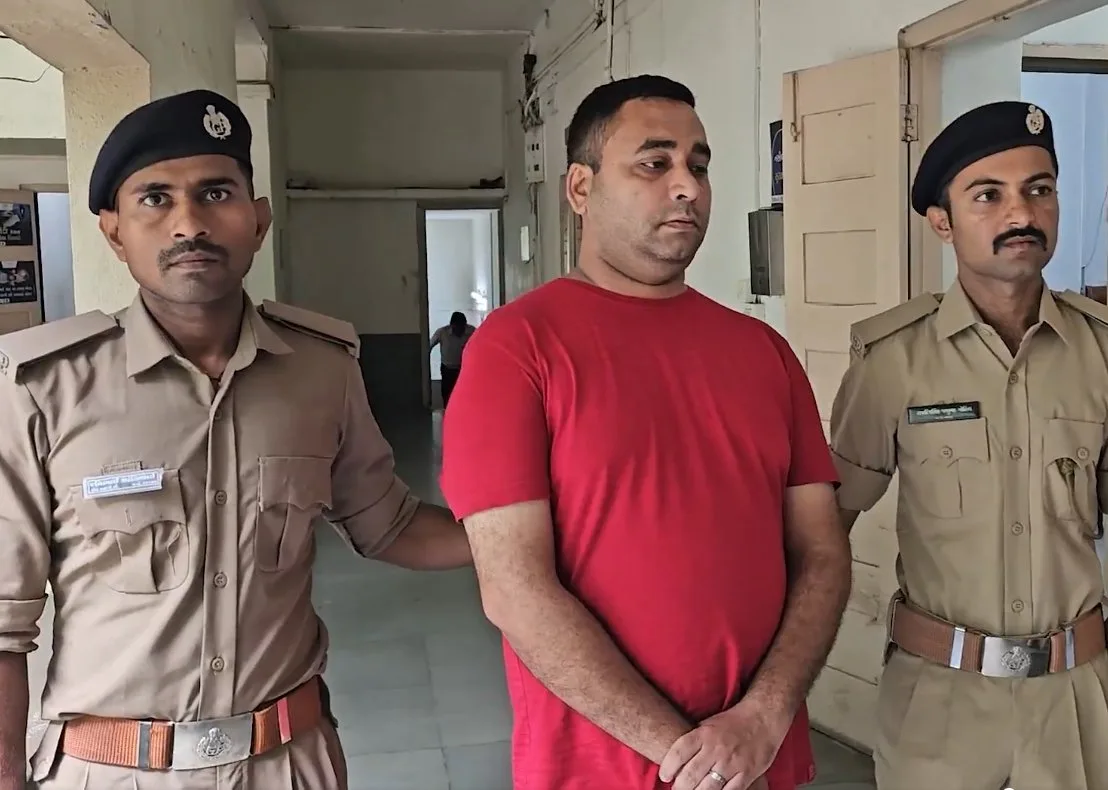
The Nadiad religious conversion case has taken a serious turn with investigators revealing that the main accused, Steven Macwan, and his associates were allegedly receiving foreign funds to lure Hindus, particularly from tribal and Scheduled Caste communities, into conversion. Police say the accused promised money, material aid, and a “better life” to individuals who agreed to abandon their faith.
Kheda Police have identified the conversion racket as part of a broader operation spanning multiple states, with clear indications of financial support from international sources. Authorities believe the accused used religious sentiments and economic vulnerabilities to manipulate hundreds of people across India.
Massive digital evidence points to organised operation
In one of the most significant breakthroughs, forensic experts recovered over 1.57 lakh photos and videos from Steven Macwan’s phone. Many of these files allegedly document conversion ceremonies and meetings designed to promote Christianity among Hindu groups. The recovered material is now under detailed forensic analysis.
Investigators are also examining bank transactions and online communications linked to Steven’s trust to track how many individuals were converted and what incentives were offered. Preliminary evidence suggests that the accused employed a multi-stage approach, beginning with personal contact, followed by emotional persuasion, and finally presenting conversion as a path to “peace and happiness.”
Rs 1 crore transaction sparks suspicion of a foreign hand
During police remand, officers uncovered a Rs 1 crore transaction into Steven’s account, believed to have originated from abroad. This revelation has intensified suspicions that foreign missionary organisations may have financed the network.
Investigators say Steven meticulously studied each region before launching targeted operations. He identified vulnerable, low-income families, especially from tribal and Dalit backgrounds, and enticed them with promises of housing, education, and healthcare benefits in exchange for religious conversion.
Police sources revealed that most conversions were carried out in secrecy under the guise of prayer meetings or social gatherings, often without following the legal procedures mandated under the Gujarat Freedom of Religion Act.
Conversion network spanning multiple states
Authorities have found evidence that Steven held conversion seminars in multiple districts across Gujarat, including Nadiad, Tapi, Narmada, Bharuch, and Anand. His influence, however, extended beyond the state, with victims identified from Rajasthan, Maharashtra, Odisha, Haryana, Punjab, and Delhi.
According to investigators, Steven’s organisation, the Restolation-Revival Foundation Trust, served as a front for these activities. Registered as a charitable entity, the trust allegedly operated unregistered prayer centres, where pastors gathered people from rural or tribal regions and subtly encouraged them to convert.
Forensic teams have traced digital payments and fund transfers between Steven and several pastors believed to be part of his network. These individuals facilitated conversions in remote villages, promising miracles and divine blessings to those who agreed to embrace Christianity.
Violation of financial and charity laws
The probe has also revealed glaring financial irregularities within the Restoration-Revival Foundation Trust. According to officials, the trust failed to undergo mandatory audits, and authorities have now alerted the Charity Commissioner’s office for further scrutiny.
Preliminary findings indicate that over the last three years, the trust handled transactions amounting to Rs 1.33 crore, with a large portion believed to have been routed from foreign accounts. These funds were allegedly used to organise religious meetings, print pamphlets, and offer financial assistance to those who agreed to convert.
Investigators are working to determine whether these transactions violate provisions under the Foreign Contribution (Regulation) Act (FCRA), which governs foreign donations to Indian entities.
A pattern of deception
According to police sources, Steven and his associates preyed on illiterate and economically weak sections, offering small cash incentives, food, or promises of employment. They claimed that embracing Christianity would free them from “suffering” and bring “divine prosperity.”
Victims were reportedly brought from different parts of the country to attend “healing sessions” and “spiritual workshops”, where subtle pressure tactics were used. The accused often presented fabricated testimonies of people whose lives had “changed for the better” after conversion.
Forensic analysis of laptops and mobile devices has revealed documents, videos, and ledgers that directly link the accused to illegal conversion activities.
Conspiracy beyond Gujarat
As the investigation progresses, officials believe the case could expose a larger pan-India network of missionary groups operating through NGOs and unregistered trusts. Police teams are coordinating with other state units to trace the foreign funding trail and identify local collaborators.
A senior police officer from Kheda district stated, “This was not an isolated case. The operation was well-planned, well-funded, and aimed at systematically converting vulnerable groups under the garb of charity.”













Comments