





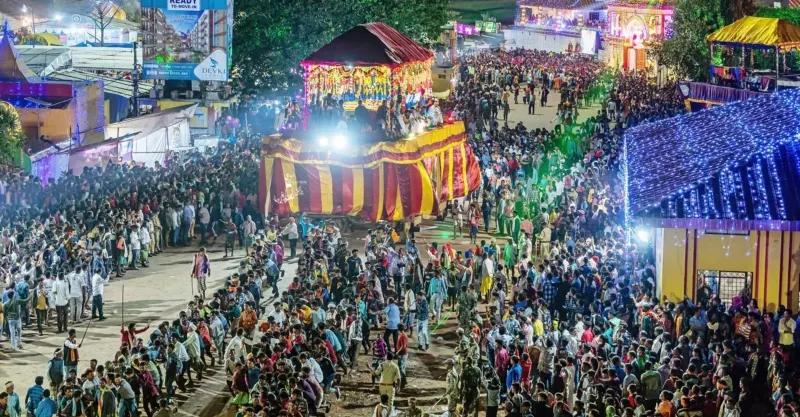
New Delhi: Union Home Minister Amit Shah is set to attend the historic Bastar Dussehra celebrations in Chhattisgarh’s Jagdalpur district on October 4 during his day-long visit to the region, which was once infamous as a Naxal stronghold but is now steadily emerging from the shadow of extremism.
According to the itinerary, Shah will begin his visit by offering prayers at the revered Maa Danteshwari Temple in Jagdalpur.
The temple, dedicated to Goddess Danteshwari, holds immense religious significance among the local tribal communities and is considered a spiritual centre of Bastar region.
The Home Minister will attend the grand celebrations of the Bastar Dussehra Festival at Lal Bagh in Jagdalpur–the centuries-old festival is one of the most prominent cultural events in Chhattisgarh, drawing thousands of participants and visitors every year.
Shah’s visit is being seen as a gesture of cultural outreach and an acknowledgement of Bastar’s rich traditions.
The 75-day-long Bastar Dussehara has a history that spans over 600 years, making it one of the oldest and most unique festivals in India. It was initiated by the Kakatiya dynasty and has been preserved and celebrated by the local tribal communities ever since.
The festival is deeply rooted in the spiritual beliefs of the Bastar tribes, who honour Goddess Danteshwari as their protector and guide.
The cultural importance of Bastar Dussehra lies in its ability to unite the diverse tribes of Bastar, showcasing their traditional customs, music, and dance in a grand celebration of devotion.
This Dussehra celebrations in Bastar, a tribal-dominated area of Chhattisgarh has gained much fame in recent years, attracting tourists from different parts of the country and the world to witness the uniqueness of the two and a half month long festivities.
Bastar Dussehra begins with the greenery of the new moon in the month of Shravan (Savan). On this day, the first wood is brought from the forest to build chariots. This ritual is called ‘Pat Jatra’. This festival runs till Dushara and ends with the ritual of Muria Durbar.
(With inputs from ANI)
















Comments